

Outdoors & Wildlife
Camping in Texas With Your Dog: Campsites, Park Rules, Heat and Wildlife
Camping with a dog in Texas works when the campsite, pet rules, heat plan and overnight setup are settled before arrival. Start with the exact park, not a generic pet-friendly label.
Camping with a dog in Texas can be easier than leaving the dog behind, but only when the campsite actually works for the dog. The reservation tells you where you will sleep. It does not answer whether the dog can use the nearby trail, enter a building, swim at the marked beach or stay comfortable through an afternoon of Texas heat.
Start with the exact campground and campsite
Texas Parks & Wildlife Department says almost all state parks have camping or lodging, but the details vary. Reserve a designated campsite and check the park's current pet information before arrival. If your day depends on a trail, swimming area or cabin, verify that part separately because pet rules can differ by facility and activity.
The statewide pet rules follow you back to camp
TPWD's state-park FAQ says pets must be secured on a leash no longer than six feet, in a vehicle or in a crate, and they cannot be left unattended in the park, including at a campsite or in a vehicle. Pets are not allowed in state park buildings, and they are excluded from designated swimming areas and the surrounding land.
That makes the campsite schedule important. Do not build a trip around activities that require everyone to enter a pet-restricted building while the dog waits alone. Plan meals, showers, visitor-center stops and day trips around who is actually caring for the dog.
Bring proof of current rabies vaccination
TPWD advises campers to have current rabies vaccination and proof for pets in state parks. Keep the record accessible rather than buried at home. Also keep identification current so a campsite escape does not become a mystery for whoever finds the dog.
Heat planning continues after the hike
Shade at 8 a.m. can be full sun by 3 p.m. A campsite that is comfortable for people under an awning can still have hot gravel, concrete or bare ground where the dog is expected to settle. Bring enough water, build a shaded resting place and schedule the active parts of the day for cooler hours.
Plan the dog's whole day before you reserve
A campsite can be pet-friendly while the itinerary around it is not. Before reserving, sketch the day from breakfast through bedtime and mark every stop where the dog would be excluded or could not safely wait. If the plan depends on a building, a designated swimming area or another pet-restricted place, decide who stays with the dog or replace that activity before the trip. This catches the practical problem that a campsite listing by itself cannot show.
Do the same exercise for the hottest part of the day. Identify where the dog can rest in shade, where fresh water will come from and what the group will do if the campsite becomes too hot for a comfortable afternoon. A shorter walk, an earlier meal or an early departure is easier to choose when it is already part of the plan instead of an emergency improvisation.
Food and wildlife need a campsite system
TPWD camping guidance tells visitors to keep food away from animals. Apply that discipline to dog food and treats too: store them securely instead of leaving bowls or bags out overnight. A dog's curiosity can also turn a nighttime wildlife encounter into a close one, so keep the leash and sleeping setup under control after dark.
- Reserved campsite and current park pet policy.
- Leash no longer than six feet plus a secure sleeping/resting setup.
- Fresh water, shade and a heat-aware activity schedule.
- Current rabies record and identification.
- Waste bags and a plan for campsite cleanup.
- Secure storage for human food, dog food and treats.
- A plan for showers, buildings and other places where the dog cannot go.
- A backup indoor or early-departure plan if weather turns unsafe.
The best dog campground is the one with a workable whole-day plan
A pet-friendly campground is only useful if the dog can fit into the rest of the itinerary without being left unattended. Choose the park, campsite and activities as one plan, then recheck weather and park alerts near departure.
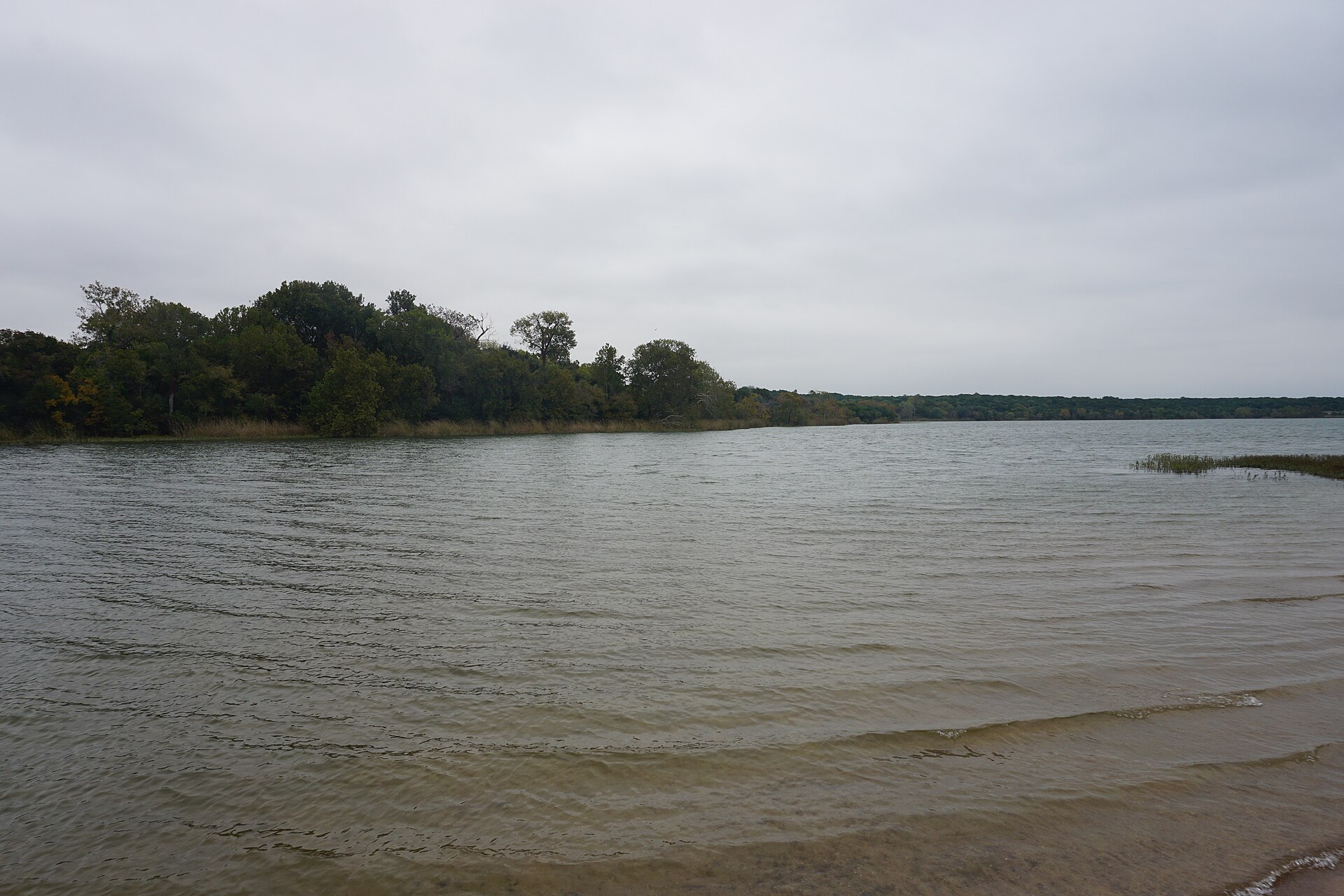
Image credit: Stephen Denny · Public domain · Wikimedia Commons
Primary source: Texas Parks & Wildlife Department — Camping and Lodging ↗
Plan Your Visit
Places connected to this story
Destinations explicitly tied to this article in the Texas Defined guide.
Cleburne · Johnson County
Cleburne State Park
A compact limestone park southwest of Fort Worth centered on spring-fed Cedar Lake, with CCC stonework, wooded trails, fishing, paddling and camping.
Best season: Fall through spring for trails; warm months for lake recreation- Spring-fed Cedar Lake
- CCC stone structures
- Hiking and mountain biking
From the magazine
More stories to read next
Wild Texas
Hiking Texas Trails With Your Dog: Heat, Water, Leashes and Trail Restrictions
September 22, 2026 · About 4 minutes
