sports
Friday Night and the Texas Town
Texas high-school football is only partly about football. The stadium is also a bandstand, reunion, civic stage, student workplace and weekly map of how a community sees itself.
The easiest way to misunderstand Texas high-school football is to look only at the football. On Friday night the field is also a stage for the marching band, drill team, cheerleaders, student media, trainers, booster clubs, parents, alumni, elementary-school kids and half the social calendar of the school district. The scoreboard records one part of what happened.
This is most visible in smaller communities where the high school is one of the few institutions that regularly gathers people across neighborhoods, generations and occupations. But the ritual is not limited to small towns. Suburban districts and big-city programs can fill enormous stadiums, and the University Interscholastic League organizes football across classifications that reflect school enrollment and competition structure.
Why the stadium can feel bigger than the town
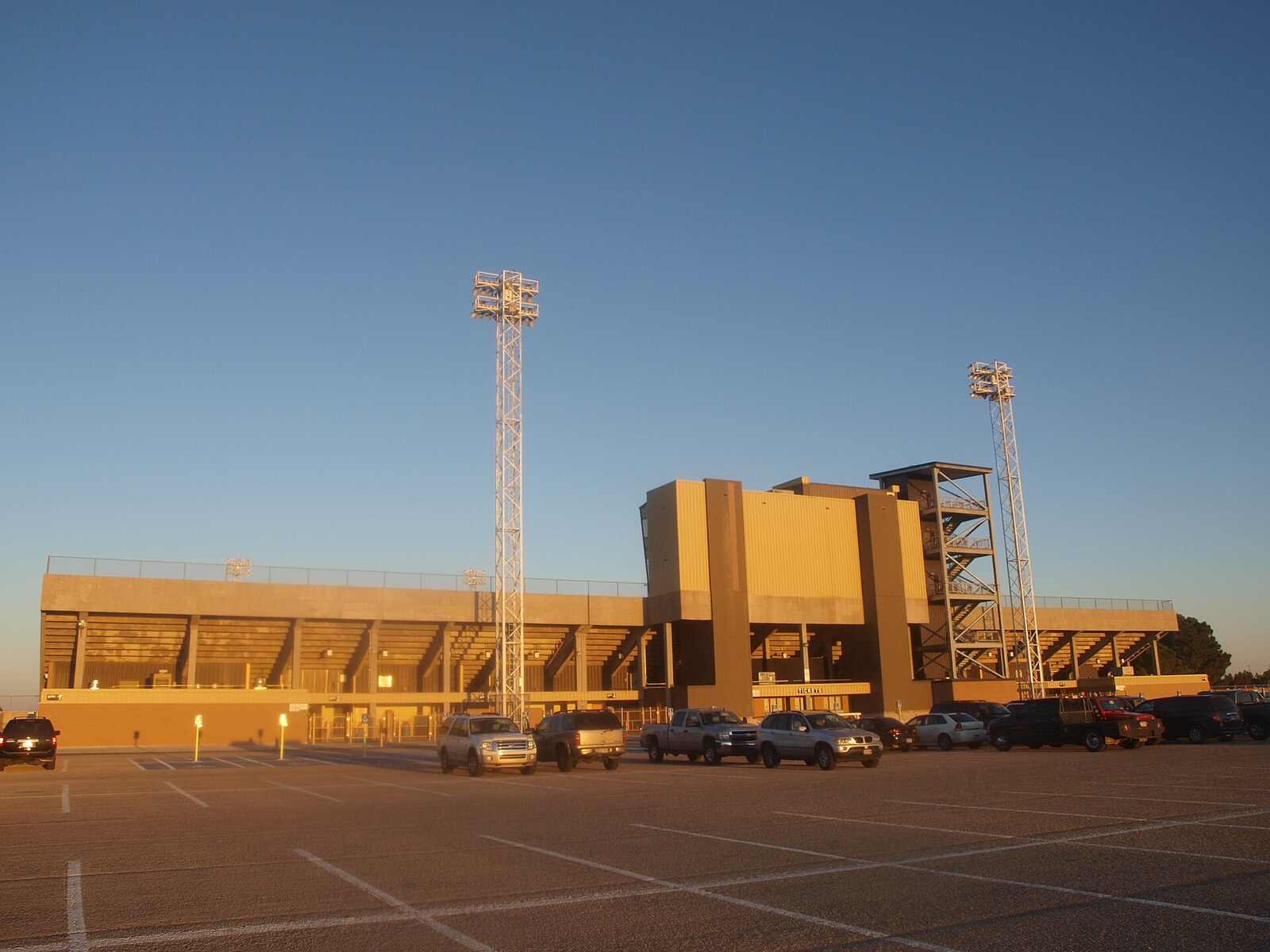
A football stadium is expensive infrastructure, but it is rarely used by football alone. District stadiums can host multiple schools, soccer, track, band competitions, graduations, community events and playoff games. In fast-growing suburbs, one large venue may serve a school system that is much bigger than the municipal population suggested by the mailing address.
That context matters when outsiders use a stadium as shorthand for misplaced priorities. Some facilities are controversial and some costs deserve scrutiny, but the building should be understood as a district asset with a broader calendar. The better question is not simply “How many seats?” but “Who uses it, how often, who paid for it and what other needs competed for the money?”
The marching band is not halftime wallpaper
In many Texas schools, Friday night is one of the largest audiences student musicians will perform for all year. Marching programs spend months on music, movement, equipment and competition preparation. The halftime show is a second major event layered onto the game, and in some families the band schedule is every bit as central as the football schedule.
Arrive early enough to hear the stands change as the band enters. Watch how students move between roles: football players, spirit groups, band members, technical crews, photographers, announcers and student trainers are all producing the event at once. That is why a high-school game can feel more like a weekly town festival than a two-hour sport.
Booster clubs are the invisible logistics
Behind the visible game is a large volunteer economy: concessions, meals, travel support, spirit wear, fundraising, equipment help, hospitality and countless small jobs that make the event run. The details vary by district and program, and public-school finance rules still matter, but the broader point is cultural. Friday night creates a recurring place for adults to volunteer around a shared institution.
What a first-time visitor should know
- Buy or confirm tickets before arriving when the game is a rivalry, homecoming or playoff matchup.
- Check stadium bag, parking and entry rules; school-district venues often have their own policies.
- Arrive before kickoff if you want to understand the event. Pregame entrances, band warmups and the crowd filling in are part of it.
- Sit on the correct side unless you intentionally bought visitor seating. Stadium culture is friendlier when you are not confused about where you belong.
- Stay for halftime. Leaving when the band enters is like walking out of a two-act show after Act One.
- Remember that the people on the field are students. Rivalry energy is not a license to treat teenagers like professional athletes.
Homecoming is a Texas-specific layer
Texas homecoming mums turn one week of the season into a craft tradition of its own. What began with flowers evolved into elaborate ribbons, school colors, names, bells, trinkets and sometimes huge wearable displays. The scale can look absurd to someone seeing it for the first time, which is part of the charm. The mum is a visible archive of relationships, school identity and the specific excess Texas brings to homecoming.
Rivalries turn geography into memory
A rivalry game compresses decades of local history into one night. Families may have attended the same schools for generations; neighboring districts may compete in sports, band, academics and community identity; realignment can interrupt old schedules and create new ones. The result is a map of Texas that does not appear on a highway atlas. Ask which school a town plays on rivalry night and you learn who it thinks its neighbor is.
The season explains the weekly rhythm
August begins with heat, practices and optimism. District play gives each week more consequence. Late fall can bring cold fronts, playoffs and longer travel. As teams advance, games move to neutral sites and larger stadiums, turning the state’s venue network into a tournament map. A December championship game is the endpoint, but the cultural weight comes from the repeated Friday routine that started months earlier.
What Friday night reveals about a town
Watch what happens outside the field. Which local businesses advertise? How early do families arrive? Does everyone recognize the announcer? Are elementary-school players lined up at the fence? Is the stadium old enough that grandparents remember the same concrete ramps, or new enough to reflect a district that doubled in enrollment?
Those details make high-school football useful even if you do not care who wins. The event is a weekly snapshot of how a community organizes itself: school pride, volunteering, public spending, youth activity, music, ritual, competition and the desire to be in the same place at the same time.
The classification number tells you something about the town
The UIL’s 2026–27 and 2027–28 alignment cycle stretches from 1A schools with enrollment below 105 to 6A schools with enrollment of 2,215 or more. Those numbers are not trivia. They help explain why Texas high-school football can look like two different sports under the same Friday-night lights. A six-man game in a tiny community and a 6A district matchup in a fast-growing suburb operate at radically different scales, but both can become the week’s biggest shared event.
In a small district, almost everybody in the stands may be connected to somebody on the field, in the band, on the sideline or in the concession stand. In a suburban district, the stadium can serve multiple high schools and resemble a small college facility. The common thread is institutional: the school district creates a public gathering that repeats every fall and gives generations a reason to return.
The band is not halftime decoration
Texas marching-band culture deserves to be read as part of the same event. Students rehearse for competition, drill teams and cheer programs build their own traditions, athletic trainers and student media work the sidelines, booster clubs run logistics, and younger students watch the older ones model what participation looks like. Football provides the clock; the school community fills the rest of the evening.
That is one reason outsiders can misread a stadium’s importance. The venue may host football, soccer, track, band contests, graduations and playoff games. A bond-funded stadium is never just an emotional monument to one team, even when football is the event that makes it visible statewide.
Six-man football is Texas geography made into a game
At the smallest-school level, six-man football is one of the clearest examples of rules adapting to distance and population. Smaller rosters, a wider-open field and high-scoring games allow communities with very few students to keep a football tradition alive. The game is not a miniature version of 11-man football. It has its own strategy, pace and culture.
A road trip built around a six-man game can also show how enormous Texas is. Towns separated by long stretches of ranch country may share a district because there simply are not many nearby schools of comparable enrollment. The visiting team’s bus route can explain the region as well as a map does.
Realignment redraws rivalries every two years
UIL realignment is one of the hidden engines of Texas school sports. Enrollment snapshots shift schools between classifications and districts, changing travel, schedules and sometimes old rivalries. Rapid-growth suburbs can move upward while rural schools shrink or consolidate. When people argue that a matchup ‘doesn’t feel right anymore,’ they are often reacting to demographic change expressed through a sports schedule.
What a first-time visitor should watch besides the score
- Arrive before kickoff. The parking lot, band warmup, pregame introductions and student sections show how the community organizes itself.
- Notice whether the stadium serves one school or an entire district; that changes the relationship between venue and neighborhood.
- Watch halftime. In many communities, the band and drill team are not side acts but equal reasons families came.
- Read the roster and program for family names that repeat across generations, local businesses and school organizations.
- Stay through the alma mater or postgame gathering when appropriate. The ritual after the clock reaches zero can be as revealing as kickoff.
The stadium is a weekly census of belonging
Texas towns do not agree on politics, growth, schools, taxes or what the place ought to become. Friday night does not erase those disagreements. It simply concentrates people into the same set of bleachers for a few hours and gives them a shared vocabulary of downs, drum cadences, school colors and familiar faces.
That is why high-school football remains useful even for people who do not care much about football. The stadium shows who volunteers, who sponsors, who performs, who comes home, what the school district can build and how a community narrates itself in public. The game is real. So is everything gathered around it.
Primary source: University Interscholastic League — Football ↗
From the magazine
More stories to read next
The Texas Game
Texas Sports Weekends: The Calendar Check Before You Buy Tickets
November 14, 2026 · About 6 minutes
The Texas Game
Texas High School Football 2026 Calendar: Every UIL Week, Playoff Round & State Final
September 19, 2026 · About 6 minutes