
guides
Why Houston Humidity Feels So Bad in Late Summer
Houston’s Gulf moisture, high dew points and warm nights make late summer feel hotter. Learn why humidity lingers and how to read the forecast.
Houston humidity feels different because the city’s heat problem is not just a high afternoon temperature. Warm Gulf air often carries enough water vapor that sweat evaporates more slowly, nights stay warm and the body gets less relief after sunset. By September, people may expect fall to be arriving, but Houston’s climate normals say otherwise.
September is still summer by Houston standards
National Weather Service 1991–2020 normals for Houston Intercontinental put early-September normal highs around 93°F and lows around 74°F. Even late in the month, the normal pattern remains warm. At Hobby Airport, which is closer to the coast, overnight normals are warmer still. That matters because a hot night gives buildings, pavement and people less time to cool before the next day.
Humidity is really about water vapor, not a percentage by itself
Relative humidity can be misleading because it changes as temperature changes. Dew point is often a better way to understand how much moisture is actually in the air. When dew points are high, the atmosphere is already carrying a lot of water vapor. Sweat then evaporates less efficiently, and evaporation is one of the body’s main cooling mechanisms.
Why the Gulf matters
Houston sits close to the Gulf of Mexico and Galveston Bay, with prevailing weather patterns that frequently transport warm, moist air inland. The flat coastal plain does not provide the kind of elevation-driven cooling found in drier parts of West Texas. Sea-breeze circulations can moderate temperature in some circumstances while still feeding moisture into the region.
Why shade does not always feel like enough
Shade removes direct solar radiation, which absolutely helps, but it does not lower the moisture content of the air. On a very humid day, a shaded patio can still feel oppressive because the body is producing sweat faster than the environment lets it evaporate. A breeze or fan feels disproportionately helpful because moving air improves evaporation at the skin.
Why mornings can feel worse than the thermometer suggests
Relative humidity usually rises as air cools overnight, so early morning may have a lower temperature but a much higher humidity percentage. Once the sun comes up, temperature climbs while the absolute moisture can remain high. That creates the classic Houston experience of stepping outside early and immediately feeling damp, then dealing with increasing heat later.
When humidity becomes a safety issue
The practical concern is heat stress, not discomfort alone. Outdoor work, exercise and events should be planned around official heat forecasts and alerts. Hydration, shade, rest breaks and acclimatization matter. People should not use this page as a substitute for a current National Weather Service warning; Houston weather can change quickly and individual medical risk varies.
The useful way to read a Houston forecast
Check temperature, dew point or humidity, heat-index guidance, wind and overnight lows together. A forecast with a slightly lower high can still feel miserable if moisture is high and the night stays warm. Conversely, a drier air mass can make the same thermometer reading feel substantially less oppressive.
Sources and further reading
- National Weather Service Houston/Galveston — September climate normals for Houston IAH: https://www.weather.gov/hgx/climate_iah_normals_sep
- National Weather Service Houston/Galveston — September climate normals for Houston Hobby: https://www.weather.gov/hgx/climate_hou_normals_sep
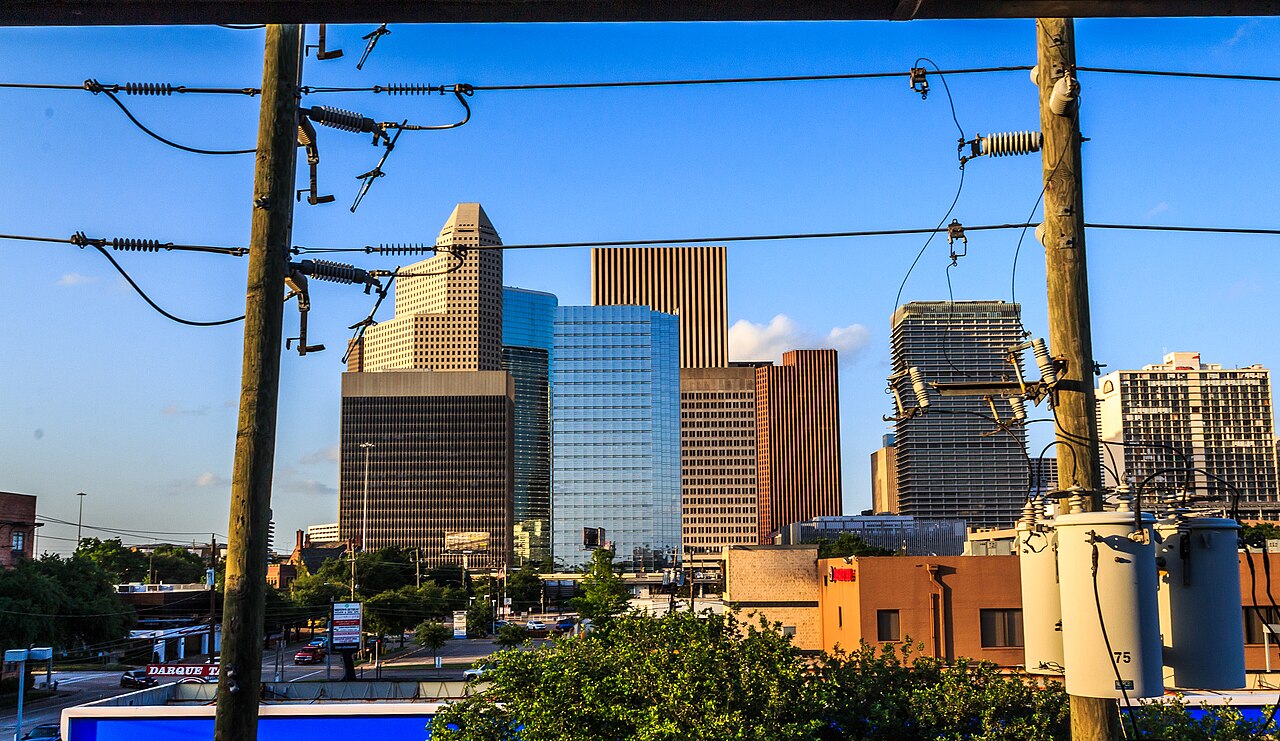
Image credit: Lennart Sikkema · CC BY 3.0 · Wikimedia Commons
Primary source: National Weather Service Houston/Galveston ↗
Filed under
From the magazine
More stories to read next
The Texas Guidebook
Texas Wine Country: Regions, Vineyards and Planning a Wine Weekend
October 12, 2026 · About 8 minutes
The Texas Guidebook
Newman's Castle in Bellville: The Baker, the Moat and His Family's Legacy
October 11, 2026 · About 15 minutes

