Bentsen-Rio Grande Valley State Park is one of Texas's signature birding destinations and the headquarters of the World Birding Center. Its Lower Rio Grande Valley woodlands, thornscrub and resaca habitat support subtropical birds near the northern edge of their U.S. range as well as major spring and fall migration.
Texas Parks and Wildlife Department reports about 360 bird species recorded in the park. Plain Chachalacas, Great Kiskadees and Altamira Orioles are among the South Texas specialties visitors look for, while Swainson's and Broad-winged hawks move through during migration. The two-story Hawk Observation Tower gives a 360-degree view over the canopy and is a focal point during raptor movement.
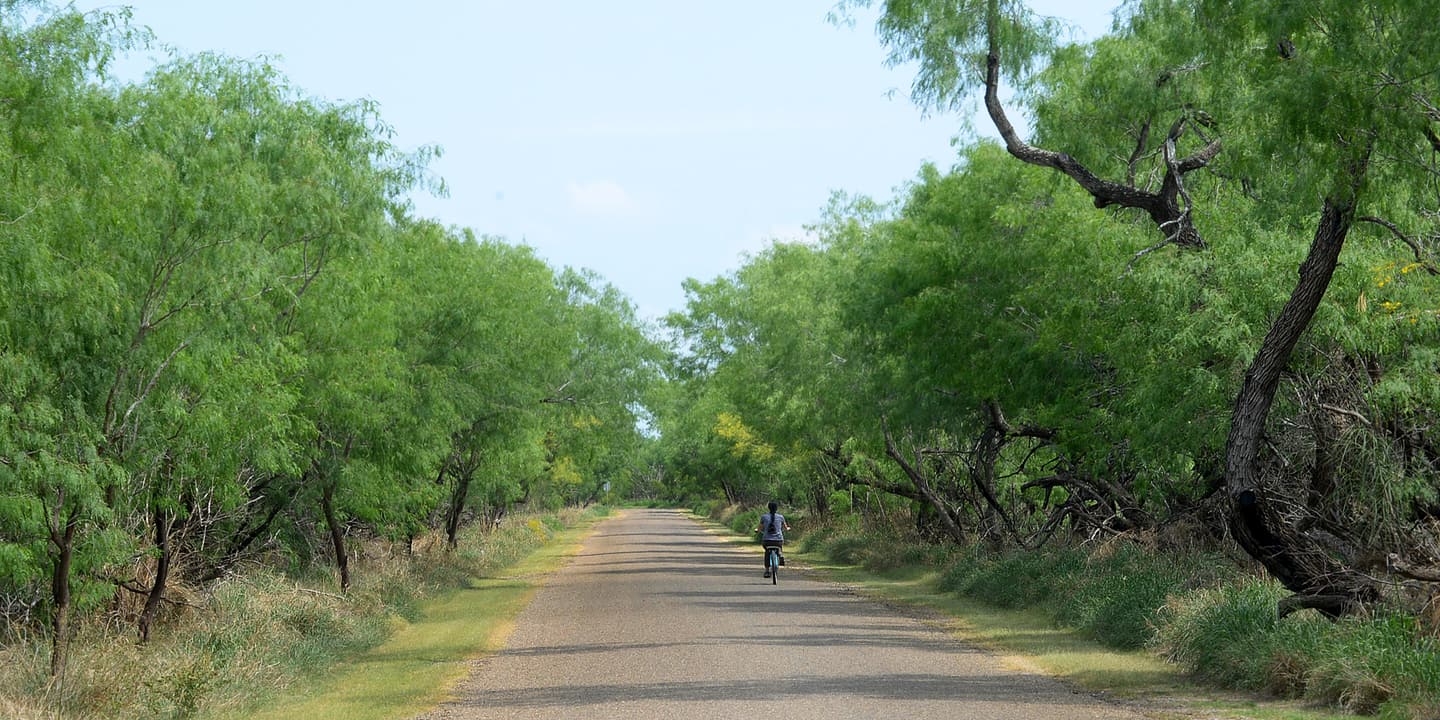
The park interior is intentionally closed to private visitor vehicles. Leave the car at headquarters and explore on foot, by bicycle on permitted paved routes, or by tram when service is operating. TPWD describes roughly seven miles of trail and former park road, making the park easy to explore in pieces rather than requiring one long hike.
For a short visit, Green Jay Trail and Kiskadee Trail are each about 0.3 mile and connect visitors with resaca edges, water features and wildlife-viewing areas. Resaca Vieja Trail is about 1.3 miles, while TPWD's trail page lists the Rio Grande Trail at about 1.7 miles through quieter floodplain forest with access to the Hawk Tower.
Accessibility is stronger than the remote-looking landscape may suggest. TPWD lists an interpretive trail, the Hawk Observation Tower and two wildlife-viewing blinds as wheelchair-accessible, and one tram has a ramp and wheelchair space. The closed interior roads also provide a relatively quiet paved surface for wheelchairs and bicycles.
Visitors can also use the bilingual Exhibit Hall, rent binoculars or bicycles from the park store, join ranger programs and reserve one of five primitive walk-in campsites. The tent-only sites are roughly three-quarters of a mile from the parking lot, so camping here requires carrying gear into the park rather than pulling up beside a campsite.
Start early, bring water and insect protection, and check TPWD's current alerts, tram schedule and reservation status before traveling. The park is both a visitor destination and a protected conservation landscape, so the best trip plan leaves time for slow wildlife observation rather than treating it as a quick roadside stop.