Skip to content
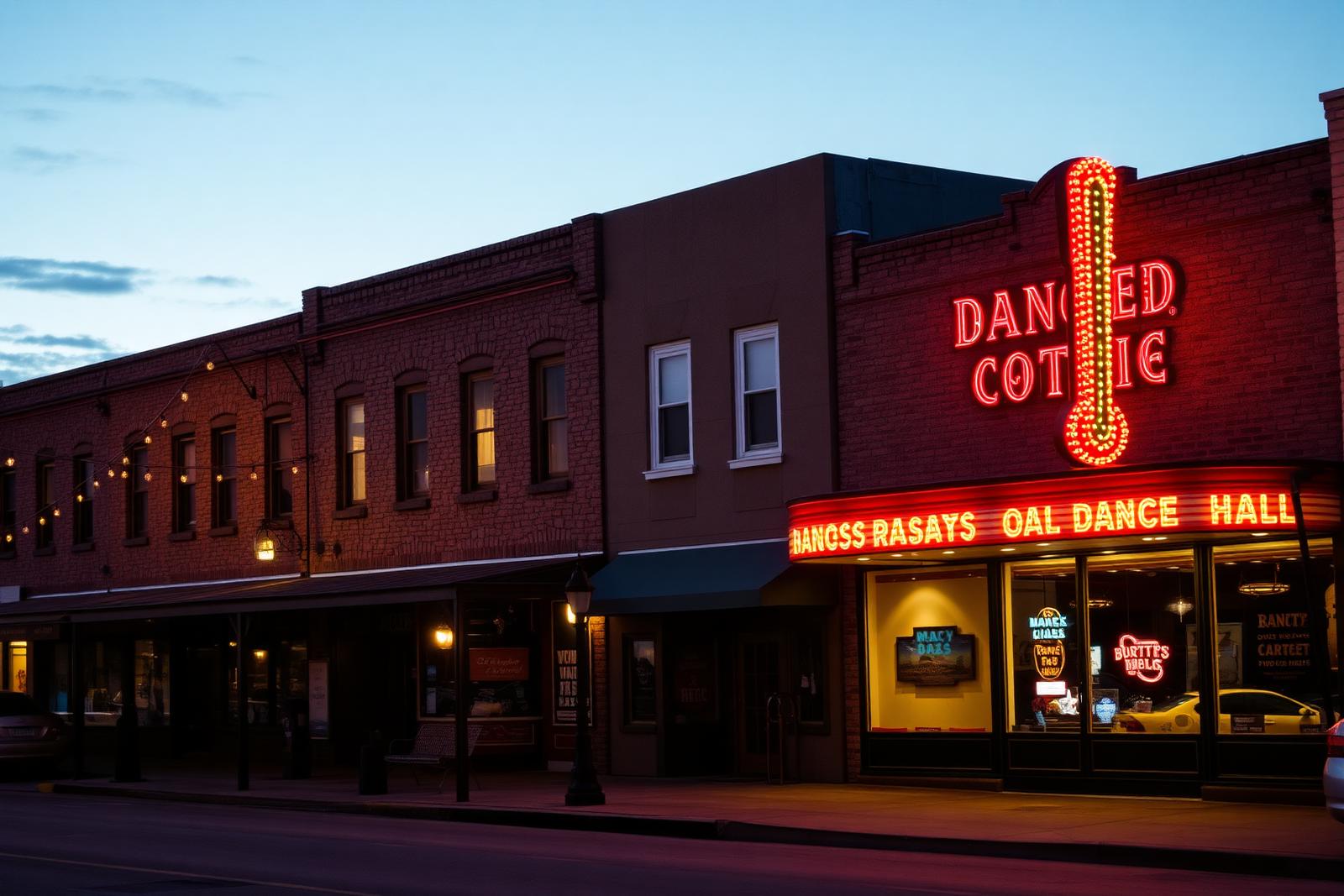
Commercial storefronts and streetscape of Downtown Bryan Historic District in Bryan, Texas

Prairies & Lakes · Historic Sites & Museums

Downtown Bryan Historic District

Bryan's 37-acre National Register district preserves the railroad-era commercial core laid out in 1866, a diamond-shaped grid, 104 resources and a long record of downtown reinvestment. Walkable landmarks include the Carnegie History Center, LaSalle Hotel and Queen Theatre.

Photography: Billy Hathorn · CC BY-SA 3.0 · Wikimedia Commons (2009) · CC BY-SA 3.0 license ↗

Quick trip facts

Downtown Bryan Historic District at a glance

Where is Downtown Bryan Historic District?
Downtown Bryan Historic District is near Bryan, Texas, in Brazos County.
When is the best time to visit Downtown Bryan Historic District?
Pleasant spring or autumn temperatures suit a walk; check the city calendar for markets and festivals and prepare for Texas summer heat.
Do I need to plan ahead for Downtown Bryan Historic District?
The district is made up of public streets and separately operated venues, not a ticketed museum. Downtown parking rules and event street closures can change; use city guidance before visiting.
Who manages Downtown Bryan Historic District?
City of Bryan and individual downtown property/business owners

The experience

The story of Downtown Bryan Historic District

Downtown Bryan was platted by the Houston & Texas Central Railroad in 1866. Its commercial geometry, including a distinctive diamond-shaped street grid, reflects a settlement built to move agricultural products and travelers through the Brazos Valley. The railroad linked the fertile Brazos Bottom's cotton-producing economy to wider markets, giving downtown streets, warehouses, stores and service businesses a historical relationship to the tracks rather than merely to the courthouse.

The National Register district covers roughly 37 acres and contains 104 built resources, including 91 contributing buildings in THC's nomination summary. The contributing count matters because a district can contain newer, altered or otherwise noncontributing properties without losing its collective historical identity. Travelers should not confuse the district's National Register boundary with every building near Main Street or with an individual building's historic designation.

Three identifiable public-facing landmarks help organize an introductory walk. The Carnegie History Center preserves a story of public learning and civic memory. The LaSalle Hotel conveys downtown's hospitality and regional trade era. The Queen Theatre expresses twentieth-century entertainment and adaptive reuse. Each site has different hours, admissions, private events and accessibility requirements; verify those with its current operator instead of treating downtown as one museum campus.

Bryan did not gain this distinction by freezing its buildings in time. The city's historic preservation staff documents a multi-year effort to survey the district and pursue National Register recognition, helped by a 2023 Certified Local Government grant from the Texas Historical Commission. Restoration investments and removal of later facade coverings revealed surviving details. Preservation here is therefore a record of many individual decisions by building owners, city staff and downtown tenants.

National Register status was recorded in January 2026, with THC and City of Bryan announcements following that winter. Recognition can support certain preservation financing options, but listing alone does not impose universal public visiting rights or turn a private business into a civic exhibit. The city administers its own historic landmark program separately. Visitors can read storefront eras, rooflines, masonry and railway orientation from public sidewalks without claiming access to private interior spaces.

Plan a practical visit around the current parking and event environment. Bryan introduced time-limited parking in part of the downtown area in 2026, and a museum, cinema or hotel can follow schedules different from the adjacent businesses. Begin with public streets near Main, 22nd and 28th, compare the railroad-oriented grid, and visit the sites that are actually open. Tie the walking route to the city's broader Brazos County heritage rather than treating every historic facade as interchangeable.

The details

Planning your visit

Area
Bryan, Texas
Best season
Pleasant spring or autumn temperatures suit a walk; check the city calendar for markets and festivals and prepare for Texas summer heat.
Address
Main Street between approximately 22nd and 28th streets, Bryan, TX
Entry & reservations
The district is made up of public streets and separately operated venues, not a ticketed museum. Downtown parking rules and event street closures can change; use city guidance before visiting.
Accessibility
The street-grid area has public sidewalks, but entry accessibility differs by business or historic building. Confirm step-free routes and the current parking zone rules with the City of Bryan; the district designation itself guarantees no particular facility.

Evidence and citations

Research sources

Read the original operator records and supporting research for this guide.

Practical questions

Frequently asked questions about Downtown Bryan Historic District

When did Downtown Bryan become a National Register historic district?
The THC Atlas records the district's listing on January 22, 2026; the City of Bryan announced the designation in February.Check official details ↗
How many historic properties are in the district?
THC describes 104 built resources, of which 91 were considered contributing in the nomination.Check official details ↗
Why is the street grid shaped differently?
It reflects the Houston & Texas Central Railroad's 1866 town plat and the commercial streets oriented to the railroad corridor.Check official details ↗
What are good landmarks to see downtown?
The Carnegie History Center, Queen Theatre and LaSalle Hotel are notable district landmarks; check each operator for admission and hours.Check official details ↗
Where can I park for the historic district?
Some free public spaces have time limits instituted in 2026. Check the city's current downtown parking notices and obey posted time limits, events and signage.Check official details ↗
Can I enter every historic building?
No. District listing recognizes collective significance, not a right to enter privately operated businesses, residences or restricted areas.Check official details ↗

The visit

What the experience is like

Walking & exertion
Low to moderate
Time outdoors
Mixed indoor/outdoor
Plan ahead
Moderate
Families
Good for a family downtown walk with a museum or theater stop planned around the venue's posted hours.
Good for first-time visitors
Understand the railroad-shaped grid and compare the commercial, educational and entertainment buildings on the route.

Texas context

Why Downtown Bryan Historic District matters

Bryan's 37-acre National Register district preserves the railroad-era commercial core laid out in 1866, a diamond-shaped grid, 104 resources and a long record of downtown reinvestment. Walkable landmarks include the Carnegie History Center, LaSalle Hotel and Queen Theatre. Downtown Bryan was platted by the Houston & Texas Central Railroad in 1866. Its commercial geometry, including a distinctive diamond-shaped street grid, reflects a settlement built to move agricultural products and travelers through the Brazos Valley. The railroad linked the fertile Brazos Bottom's cotton-producing economy to wider markets, giving downtown streets, warehouses, stores and service businesses a historical relationship to the tracks rather than merely to the courthouse.

About this guide: Texas Defined Editorial Desk. Official operator pages control changing access and visitor rules. The site-specific research and planning suggestions here supplement, but do not replace, those sources. Editorial assessments describe trip-planning value rather than a star rating. Citation guidance.

Use the time you have

Three ways to visit

One to two hours when access allows

A purposeful first visit

  1. Orient yourself at the railroad-related Main Street grid between 22nd and 28th streets; check parking rules.
  2. Choose the Carnegie History Center, Queen Theatre or LaSalle Hotel only according to current public hours and appropriate uses.
  3. Continue into Brazos County's wider history while distinguishing downtown's collective district from individually listed resources.

Before you travel

History-first preparation

  1. Read the official designation and the primary site's historical background; note the year of each claim.
  2. Verify today's operator, legal public access, current hours and accessible routes rather than assuming National Register designation means open admission.
  3. Use the historic district or landmark's source references to connect the place to its wider Texas region.

Half-day or more

Deeper regional study

  1. Study the site's architecture, community history and preservation changes using the sources below.
  2. Visit only publicly accessible areas and interpret original and later structures separately.
  3. Continue through the relevant town and nearby TexasDefined historic-site and heritage collections.

Before you go

Common visitor questions

How long should I allow for Downtown Bryan Historic District?
Explore the public street grid and choose currently operating venues for interior visits; review parking and event closures before arrival.[1]
What should I know about accessibility?
The street-grid area has public sidewalks, but entry accessibility differs by business or historic building. Confirm step-free routes and the current parking zone rules with the City of Bryan; the district designation itself guarantees no particular facility.

Connected museum guides

Museums to explore nearby

Museum guides relevant to Bryan and its surrounding history. Tickets, hours and travel arrangements are separate at each institution.

Plan the route

Explore related places

Editorially paired stops near Downtown Bryan Historic District appear first, followed by nearby destinations. Distances are approximate straight-line miles.

  • Bryan · Brazos County · Prairies & Lakes

    Brazos Valley Museum of Natural History

    The Brazos Valley Museum of Natural History in Bryan combines natural science, regional cultural history and the adjacent Boonville Heritage Park, with collections spanning wildlife, fossils, minerals, archaeology and the early Brazos Valley.

    Updated Aug 2026
    • Natural history
    • Regional cultural history
    • Boonville Heritage Park
    Explore this place

    Approx. 3 miles away

  • College Station · Brazos County · Prairies & Lakes

    George H.W. Bush Presidential Library and Museum

    The George H.W. Bush Presidential Library and Museum at Texas A&M University preserves the records, artifacts and public history of the 41st president, with galleries on his life, presidency, diplomacy, military service and the end of the Cold War.

    Updated Aug 2026
    • 41st president
    • National Archives presidential library
    • Cold War and Gulf War history
    Explore this place

    Approx. 6 miles away

  • Caldwell · Burleson County · Prairies & Lakes

    Burleson County Historical Museum

    The Burleson County Historical Museum occupies the first floor of the county courthouse in Caldwell and focuses on early settlement, Indigenous history, everyday life and archival resources documenting the county's communities and families.

    Updated Aug 2026
    • County courthouse setting
    • Early settlement history
    • Native American history
    Explore this place

    Approx. 21 miles away

  • Navasota · Grimes County · Prairies & Lakes

    Navasota

    Navasota is a Brazos Valley railroad and music town with a National Register commercial district, Victorian-era streetscapes, the Horlock History Center, parks and a living blues legacy centered on Mance Lipscomb and the city's Blues Capital of Texas identity.

    Best season: Fall through spring for downtown walking and history; spring for wildflower-country drives; year-round for music and cultural eventsUpdated Sep 2026
    • Navasota Commercial Historic District
    • Blues Capital of Texas
    • Mance Lipscomb legacy
    Explore this place

    Approx. 26 miles away

  • Anderson · Grimes County · Prairies & Lakes

    Fanthorp Inn State Historic Site

    Built in the 1830s, Fanthorp Inn became an important stagecoach stop and hostelry on an early Texas transportation route. The inn makes pre-railroad travel tangible: meals, horses, overnight lodging and news all converged at places like this.

    Best season: Year-round; spring and fall are usually the most comfortable for outdoor portions of a visit.Updated Aug 2026
    • stagecoach travel
    • Republic-era Texas
    • historic inns
    Explore this place

    Approx. 26 miles away

  • Approx. 28 miles away

Read next

More from Historic Sites & Museums