2 hours
Stockyards sampler
- Walk Exchange Avenue
- See the historic district and cattle-drive corridor
- Visit one museum, shop or interpretive stop

Prairies & Lakes · Historic Sites & Museums
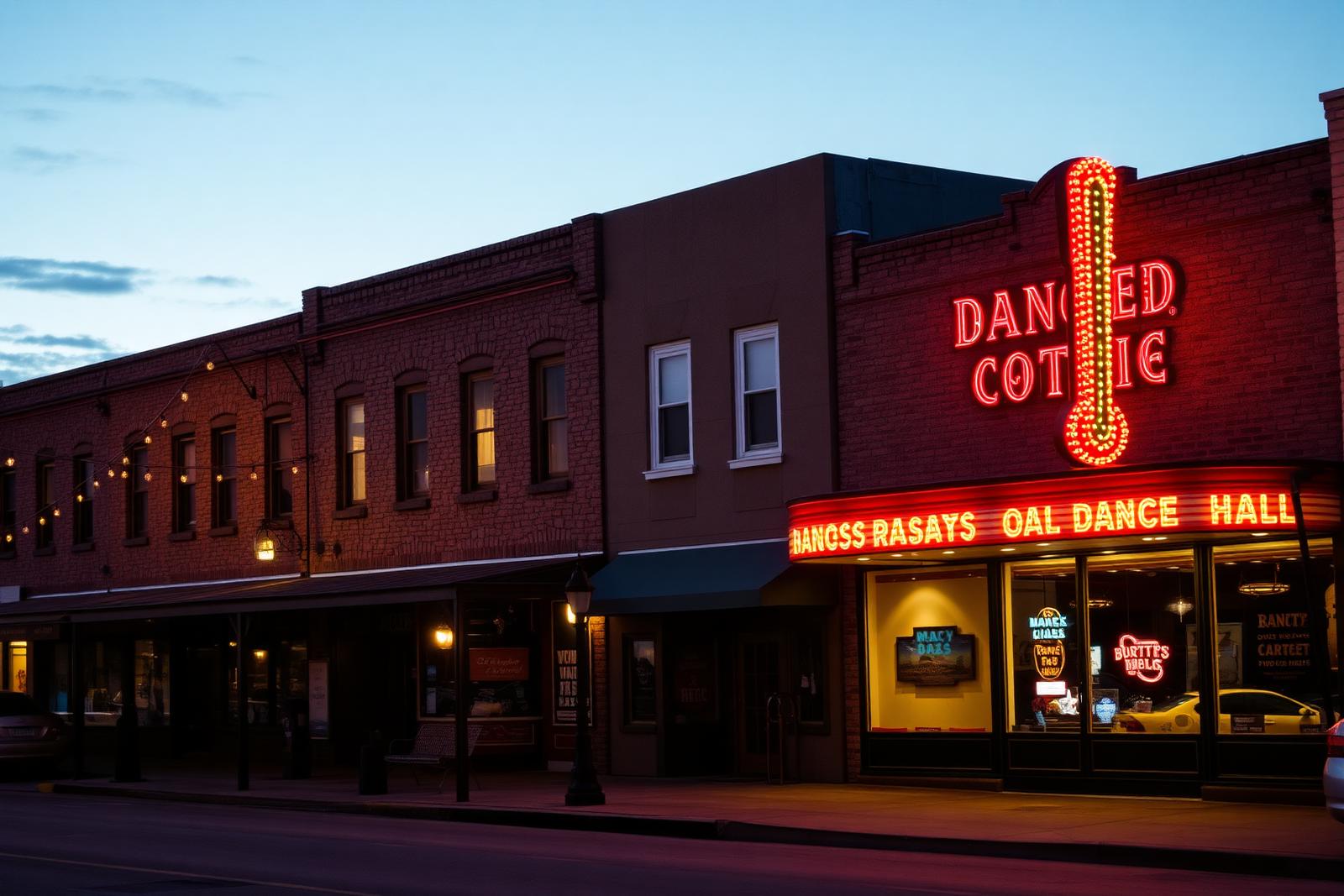
Fort Worth's preserved livestock district, where brick streets, historic stock pens, the twice-daily Fort Worth Herd, rodeo traditions, Western museums, live music and Mule Alley keep the city's cattle-market history active rather than frozen behind glass.
Photography: Renelibrary · CC BY-SA 4.0 · Wikimedia Commons · CC BY-SA 4.0 license ↗
Quick trip facts
The experience
The Fort Worth Stockyards work because the district still behaves like a place, not simply a themed attraction. Fort Worth grew into a major livestock market after rail connections transformed the cattle trade, and the preserved brick buildings, pens, exchange structures and rail infrastructure let visitors read that history while restaurants, rodeos and music venues keep the neighborhood active.
The Fort Worth Herd is the easiest first-time anchor. Texas longhorns move along East Exchange Avenue in a public cattle drive scheduled twice each day when weather and operations allow. Arrive early enough to choose a viewing spot and remember that the drive is brief; the larger value is using it as the opening to explore the Stockyards Museum, Livestock Exchange and surrounding historic blocks.
Cowtown Coliseum keeps the rodeo story connected to the district's working identity. Depending on the calendar, visitors can see rodeo events, Western sports and arena programming rather than only museum interpretation. Nearby Western-history attractions broaden the story from cattle commerce to cowboy culture, performers and the mythology that Fort Worth deliberately embraced as 'Cowtown.'
Mule Alley shows the Stockyards' more recent reinvention. Restored horse-and-mule barns now hold restaurants, shops and hospitality venues, creating a polished counterpoint to the older exchange buildings. Travelers looking for a more traditional honky-tonk experience can continue through the district to live-music venues rather than treating Mule Alley as the entire Stockyards.
A half day is enough for the cattle drive, historic core and one museum, but a full day makes more sense if the itinerary includes a rodeo, dinner or evening music. Weekends are substantially busier, restaurants can fill and parking can become part of the experience, so arriving before the first major event gives more flexibility.
The Stockyards are also a useful gateway into the rest of Fort Worth. Downtown and Sundance Square are only a short drive south, while the Cultural District holds the Kimbell Art Museum, Modern Art Museum, National Cowgirl Museum and major family attractions. That makes the city unusually easy to divide into a Western-history day and an arts-and-museums day.
The details
Evidence and citations
Read the original operator records and supporting research for this guide.
Primary source for current visitor access, operating guidance and attraction information.
Official district history covering the Stockyards' livestock, railroad and Western-heritage development.
Tours & bookable experiences
TexasDefined handles the destination planning. Viator can be useful for guided tours, tickets and organized activities near Fort Worth. Availability changes, so the booking link checks current inventory rather than promising a specific product.
Previously observed Fort Worth inventory categories: Western & ranch · Food & barbecue · City sightseeing. Snapshot reviewed ; this is historical context, not confirmation of currently bookable products. Check current listings before choosing an experience.
Affiliate disclosure: TexasDefined may earn a commission from qualifying Viator bookings, at no additional cost to you.
The visit
Texas context
The Stockyards preserve the commercial and cultural legacy of Fort Worth's livestock economy while keeping Western traditions visible through historic buildings, cattle-related interpretation, rodeo, music and an active visitor district.
Use the time you have
2 hours
4 hours
Full day
Key dates
A short chronology of dates that materially shaped this place. Each entry links to the source used for the date and historical context.
1876
Arrival of the Texas and Pacific Railway helped shift the cattle economy from trail drives toward rail shipment and permanent livestock facilities.
Source: Handbook of Texas — Fort Worth StockyardsMarch 23, 1893
The organized stockyards business became the industrial center of a rapidly expanding livestock market.
Source: Handbook of Texas — Fort Worth Stockyards1902
Agreements with two major meatpackers brought large packing plants beside the stockyards and accelerated Fort Worth's rise as a national livestock center.
Source: Handbook of Texas — Fort Worth StockyardsBefore you go
Connected museum guides
Museum guides relevant to Fort Worth and its surrounding history. Tickets, hours and travel arrangements are separate at each institution.
Fort Worth · Tarrant County
Fort Worth · Tarrant County
Fort Worth · Tarrant County
Fort Worth · Tarrant County
Fort Worth · Tarrant County
Around the area
The Stockyards can fill most of a day on its own, but its location also makes it easy to connect Western history with Downtown Fort Worth and the Cultural District. Use the immediate district for cattle, rodeo and music, then shift south for museums, gardens or city-center dining.
Easy additions that fit naturally around the main stop.
In the district
Small-scale exhibits inside the historic exchange building explain the livestock market and the people who worked here.
On East Exchange Avenue
Historic arena programming keeps rodeo and Western sports tied directly to the Stockyards experience.
In the Stockyards
Collections and inductee stories extend the district's ranching, rodeo and Western-performance themes.
A few minutes on foot
Restored barns now hold restaurants, shops and lodging, making this the district's polished dining-and-evening hub.
Dining districts and food areas worth building into the same outing.
In the historic core
Steakhouses, barbecue, saloons and casual visitor dining keep meals close to the cattle-drive route.
In the district
A more contemporary cluster of restaurants and bars inside restored Stockyards buildings.
About 4 miles south
Independent restaurants, breweries and bars offer a more local neighborhood alternative after the Western district.
About 3 miles south
Downtown dining works well when the Stockyards day continues into theaters, hotels or city-center attractions.
The most practical lodging areas for minimizing driving and maximizing time on the ground.
Walkable
Best for travelers who want cattle-drive access, Western atmosphere and nightlife without driving at the end of the day.
About 3 miles south
A broader hotel base for combining the Stockyards with central Fort Worth restaurants and attractions.
About 4 miles south-west
Useful for travelers prioritizing museums, Will Rogers Memorial Center and a quieter arts-focused second day.
Nearby parts of the city that add character, shopping, history or nightlife.
Immediate area
Historic commercial blocks, pens and entertainment venues form Fort Worth's best-known Western district.
Surrounding the Stockyards
Longstanding residential and commercial neighborhoods add local Mexican and Texan food beyond the visitor core.
About 3 miles south
Historic towers, theaters and public spaces show Fort Worth's urban center beyond its cattle-town identity.
About 4 miles south
Restaurants, creative businesses and neighborhood nightlife make this a useful evening extension.
Good nearby additions when the itinerary includes younger travelers.
East Exchange Avenue
The free longhorn drive is short, visual and easy to build into a family day when the weather cooperates.
About 4 miles south-west
Hands-on science and Texas history in the Cultural District balance a Stockyards morning.
About 6 miles south
One of the city's major family attractions can anchor a separate half day after Western-history stops.
About 4 miles south-west
Gardens and outdoor space provide a quieter family break near the museum district.
Places that justify extending the visit beyond the immediate area.
About 4 miles south-west
Kimbell, the Modern, National Cowgirl Museum and other institutions create one of Texas's strongest museum clusters.
About 3 miles south
Add architecture, restaurants and the Water Gardens for a broader look at Fort Worth beyond the Stockyards.
About 25 miles north-east
Historic Main Street, wineries and seasonal events make a natural DFW side trip for travelers with an extra day.
Plan the route
Editorially paired stops near Fort Worth Stockyards appear first, followed by nearby destinations. Distances are approximate straight-line miles.
Fort Worth · Tarrant County · Prairies & Lakes
Fort Worth's 1936 East Rosedale Street crossing over Sycamore Creek preserves an unusually expressive reinforced-concrete, variable-depth girder design by C. Milo Thelin. The National Register recognized this engineering landmark in February 2026 as part of the state's wider historic roadway infrastructure.
Approx. 5 miles away
Fort Worth · Tarrant County · Prairies & Lakes
The Fort Worth Aviation Museum near Meacham International Airport preserves more than three dozen aircraft and North Texas aviation history through hands-on warbirds, interactive exhibits, educational resources and a flight simulator.
Approx. 1 mile away
Fort Worth · Tarrant County · Prairies & Lakes
Tadao Ando’s concrete-and-glass galleries, reflecting pond and Café Modern make this a distinctive Fort Worth art stop. The galleries are open for In the Making: Stories from the Collection, scheduled through August 15, 2027.
Approx. 3 miles away
Fort Worth · Tarrant County · Prairies & Lakes
Kimbell Art Museum in Fort Worth combines a deliberately selective collection of major European, Asian, African and ancient works with Louis Kahn's landmark museum building and Renzo Piano's companion pavilion.
Approx. 3 miles away
Fort Worth · Tarrant County · Prairies & Lakes
Amon Carter Museum of American Art in Fort Worth presents a free collection devoted to American creativity, with particular strengths in nineteenth- and twentieth-century painting, sculpture, photography and works on paper.
Approx. 3 miles away
Fort Worth · Tarrant County · Prairies & Lakes
Fort Worth Museum of Science and History is a family-focused Cultural District museum combining science, regional history, children's learning spaces, a planetarium and the newly rebuilt Omni Theater experience.
Approx. 3 miles away
Texas Explained
Go beyond the destination with the systems, landscapes and history that explain why this part of Texas looks and works the way it does.
Continue exploring
Read next
Historic Sites
A practical Texas lighthouse guide comparing public access, climbs, viewing methods and trip logistics from Port Isabel to the Sabine gateway.
August 21, 2026 · About 12 minutes
Historic Sites
Missions, battlefields, courthouses and museums make more sense as a road map than a timeline. These are the places that turn state history back into geography.
August 7, 2026 · About 2 minutes