60–90 minutes
Historic downtown orientation
- Visit the Charles Bright Visitor Center at Plaza Principal
- Take a short public-street historical walking tour
- Choose a nearby museum or monument to study further

Piney Woods · Historic Sites & Museums
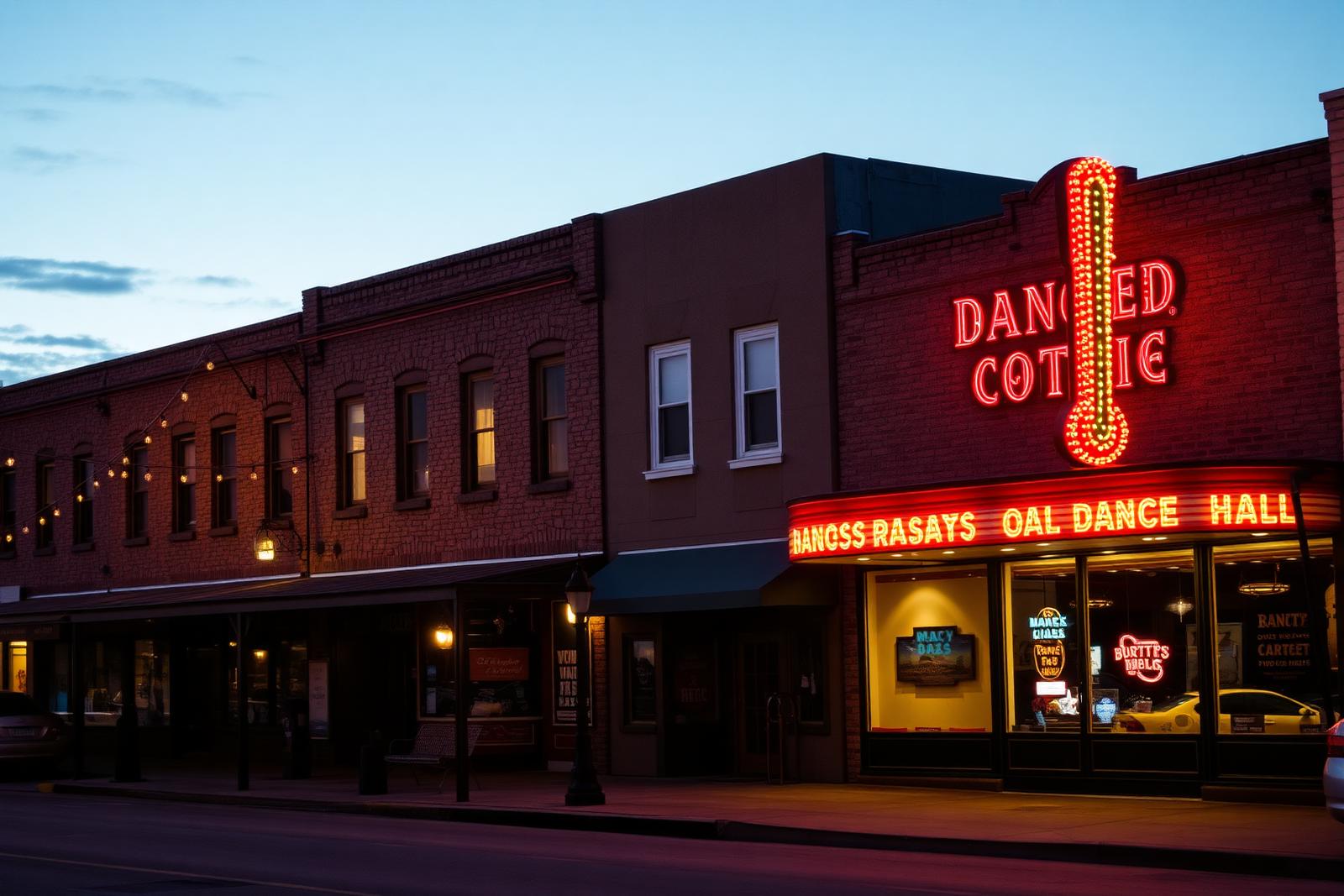
A walkable National Register historic district at the heart of one of East Texas's oldest settlements, linking Caddo history, Spanish and Mexican-era roads, brick streets, public art and surviving downtown landmarks.
Photography: Rwminix · CC BY-SA 3.0 · Wikimedia Commons · Downtown Nacogdoches - 3.JPG · CC BY-SA 3.0 license ↗
Quick trip facts
The experience
The Nacogdoches Downtown Historic District is a defined area recognized in the National Register of Historic Places, not a declaration that every building or every part of the city is individually protected. Texas Historical Commission National Register inventory identifies the downtown district's 2008 listing. It preserves streets and commercial buildings that document the city's growth through different economic and political periods.
Start at the Charles Bright Visitor Center at 200 E. Main Street. Visit Nacogdoches advertises self-guided historic walking and statue tours from this central orientation point, plus mural walks and printed visitor materials. From there, travel public downtown routes rather than using an invented turn-by-turn circuit: construction, event streets and accessible detours can change.
The historical interpretation begins long before storefronts. The broader Nacogdoches region was inhabited by Caddoan communities before Spanish settlement. Main Street follows part of the old El Camino Real de los Tejas corridor, a network of overland routes that Native travelers, missionaries, soldiers and merchants used over time. Antonio Gil Y'Barbo's reestablishment of Nacogdoches in 1779 is one part of that longer history rather than a claim that the place had no previous community.
Look beyond the bricks. The commercial façades, public monuments, county buildings and nearby rail depots reflect different phases of East Texas trade and municipal life. The Stone Fort Museum on SFA's campus helps interpret the colonial period but is a 1936 reconstruction, not a surviving original downtown fort. The Railroad Depot Museum connects the later industrial and passenger-rail era. Zion Hill's African American congregation and the restored 1914 church make the area's Black heritage visible; follow city museum-tour information rather than assuming unrestricted interior access.
Historic downtown should be planned as an active public neighborhood: street parking and private-lot conditions vary, some brick paving and older sidewalks may be uneven, and businesses close on different schedules. Prioritize a comfortable walk, one current guided or self-guided interpretive stop, and a choice of museums suited to the visitor. Keep the wider Sterne-Hoya neighborhood and university gardens as optional distinct destinations rather than folding them into a fictitious short stroll.
The details
Evidence and citations
Read the original operator records and supporting research for this guide.
Downtown visitor center, walking tours and contemporary place use
Self-guided history and public-walk guidance
Official historical designation for downtown district
Site-specific museum schedules and current closure notices
Practical questions
The visit
Texas context
The surviving district documents layers of travel, commerce and civic development that connect Caddo homelands with Spanish and Mexican Texas, the early Republic, railroads and the modern university town.
Use the time you have
60–90 minutes
3–5 hours
6–8 hours
Before you go
Around the area
Treat the downtown district as a walking orientation, then choose separate museums and community-history sites according to their actual visitor operations.
Easy additions that fit naturally around the main stop.
See early Nacogdoches history interpreted in a 1936 Centennial reconstruction at SFA.
Historic early Texas house; the city currently lists museum interiors as closed until further notice.
Dining districts and food areas worth building into the same outing.
Choose locally operated places within the active historic commercial streets; verify current hours.
The most practical lodging areas for minimizing driving and maximizing time on the ground.
Use a walkable base where available for downtown heritage stops, restaurants and events.
Nearby parts of the city that add character, shopping, history or nightlife.
A downtown orientation with preserved buildings, history markers and self-guided walk routes.
Good nearby additions when the itinerary includes younger travelers.
Use a shorter, flexible public-art and history walk; choose accessible routes and breaks as needed.
Places that justify extending the visit beyond the immediate area.
Visit Nacogdoches’ historic Black community landmark and learn about the separately listed residential district.
Extend into the campus botanical landscape.
Follow the El Camino Real east to Mission Dolores and the restored San Augustine courthouse.
Plan the route
Editorially paired stops near Nacogdoches Downtown Historic District appear first, followed by nearby destinations. Distances are approximate straight-line miles.
Nacogdoches · Nacogdoches County · Piney Woods
Nacogdoches is an East Texas university town with deep Spanish and Mexican-era roots, brick-paved historic streets, museums, gardens, trails and Stephen F. Austin State University, making the self-described oldest town in Texas a complete Piney Woods destination.
Approx. 1 mile away
Nacogdoches · Nacogdoches County · Piney Woods
The City of Nacogdoches operates its restored 1911 Southern Pacific depot as a free transportation museum interpreting the passengers, workers and rail connections that transformed one of Texas's oldest cities.
Approx. 1 mile away
Nacogdoches · Nacogdoches County · Piney Woods
A circa-1830 Nacogdoches historic house associated with Adolphus Sterne, the Texas Revolution and the later von der Hoya family. The museum is currently closed for preservation-related maintenance.
Approx. 1 mile away
Nacogdoches · Nacogdoches County · Piney Woods
A restored 1914 Diedrich Rulfs-designed landmark and former home of one of Nacogdoches' oldest Black Baptist congregations, now offering free historic-site tours and community programming.
Approx. 1 mile away
Nacogdoches · Nacogdoches County · Piney Woods
A National Register-listed African American neighborhood in Nacogdoches, documented for vernacular and shotgun-house architecture and Black community life from the late nineteenth century into the twentieth.
Approx. 1 mile away
Nacogdoches · Nacogdoches County · Piney Woods
Stone Fort Museum on the Stephen F. Austin State University campus in Nacogdoches interprets early East Texas history inside the 1936 Texas Centennial reconstruction of Antonio Gil Y'Barbo's eighteenth-century stone house.
Approx. 1 mile away
Texas Explained
Go beyond the destination with the systems, landscapes and history that explain why this part of Texas looks and works the way it does.
Continue exploring
Read next
Historic Sites
A practical Texas lighthouse guide comparing public access, climbs, viewing methods and trip logistics from Port Isabel to the Sabine gateway.
August 21, 2026 · About 12 minutes
Historic Sites
Missions, battlefields, courthouses and museums make more sense as a road map than a timeline. These are the places that turn state history back into geography.
August 7, 2026 · About 2 minutes