Skip to content
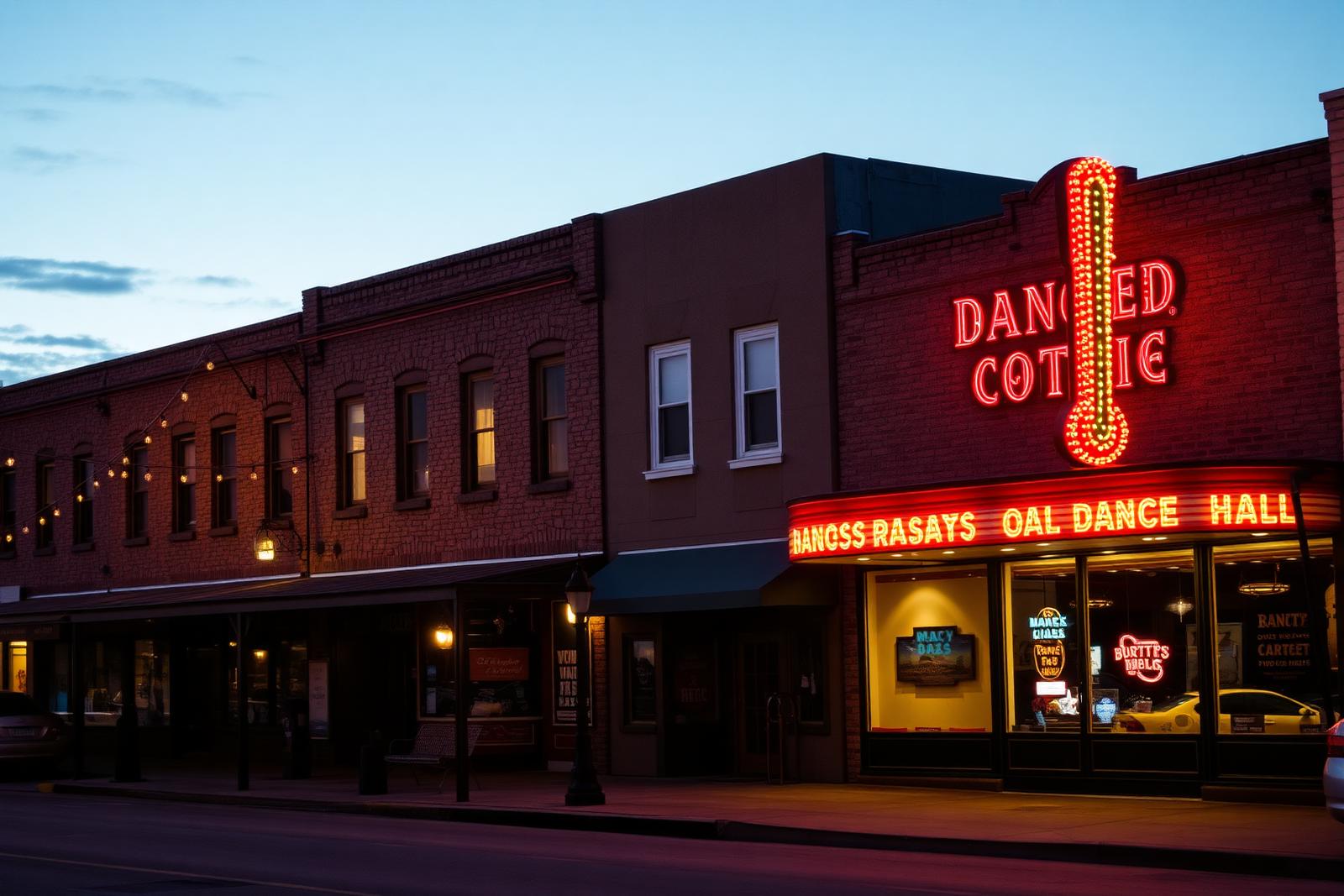
Shops and commercial buildings in the historic Wimberley Square district, photographed in 2015

Hill Country · Historic Sites & Museums

Wimberley Downtown Square Historic District

Wimberley's National Register-listed Downtown Square is the Hill Country town's old mill and commercial core, shaped by Cypress Creek, Ranch Road 12 and more than a century of vernacular wood and masonry buildings. Its architectural record runs from the 1870s to the 1970s, tracing the transition from rural service center to arts and recreation destination.

Photography: Travis K. Witt · CC BY-SA 4.0 · Wikimedia Commons (2015) · CC BY-SA 4.0 license ↗

Quick trip facts

Wimberley Downtown Square Historic District at a glance

Where is Wimberley Downtown Square Historic District?
Wimberley Downtown Square Historic District is near Wimberley, Texas, in Hays County.
When is the best time to visit Wimberley Downtown Square Historic District?
Spring and autumn offer milder temperatures for a walking tour. Summer weekends and market dates are busier; check weather and event traffic.
Do I need to plan ahead for Wimberley Downtown Square Historic District?
Public Square sidewalks need no district admission. Shops, restaurants, church properties, events and accommodations set their own hours and access. Public parking and restrooms are available at Oak Park and other downtown facilities; obey posted restrictions.
Who manages Wimberley Downtown Square Historic District?
City of Wimberley and individually owned downtown commercial and residential properties

The experience

The story of Wimberley Downtown Square Historic District

The Downtown Square owes its location to water and work. Early settlement formed near a gristmill site and Cypress Creek, where families needed access to resources and a common commercial focus. Instead of an imposing county courthouse or a major railroad terminus, the surrounding businesses and residences grew around a local service area. The National Register nomination documents this distinctive commercial and residential core, which remains active near the creek and Ranch Road 12.

The historic district shows how a Hill Country place developed through different kinds of construction. The nomination identifies wood and masonry buildings from the late nineteenth century, Craftsman-influenced houses and roadside commercial uses, and mid-twentieth-century shops and rental cottages. These structures are not all the same age or use; together they record changing routes, tourism, building materials and customer needs. Its nominated period of significance begins with an extant 1870 property and ends in 1973.

Limestone, wood and vernacular forms are important interpretive clues. Unlike an urban commercial district laid out in consistent rows of brick warehouses, Wimberley contains relatively modest and individualized buildings adapted to an evolving town. Historic construction and later alterations sometimes coexist. A careful walk distinguishes surviving early fabric from rehabilitations, newer commercial fronts and the changes a living downtown requires. The meaningful unit of preservation is the ensemble, not any invented claim that every building is individually listed.

Ranch Road 12 became a major thoroughfare across the Square after earlier local roads were improved. Traffic and tourism helped alter a settlement oriented to agricultural services into a destination of art galleries, restaurants, shops and river recreation. The historic nomination recognizes this long transformation as a community-planning story. Its February 2025 National Register listing documents a record of architecture and development, not an authorization to enter private homes or any closed storefront.

Visitor logistics make the Square a more practical family heritage stop than many privately occupied historic places. The city's Oak Park and Welcome Center at 109 Oak Drive provides parking and a public restroom facility. It documents six accessible parking spaces linked to Square sidewalks and more than 130 additional spaces. The destination organization identifies the Community Center as another public parking option. A visit can begin there, letting travelers choose a manageable walking loop without blocking shop loading zones or neighborhood drives.

For interpretation, first notice the creek, the small commercial scale and the varied building types. Then compare how the nineteenth-century mill landscape developed into a twentieth-century roadside and recreation economy. Individual shops and eateries offer modern services but are independent businesses, not museum rooms. To continue with Blue Hole or nearby river access, make an entirely separate plan based on the parks' current reservations and water conditions rather than treating those outings as part of the historic district's public access.

The details

Planning your visit

Area
Wimberley, Texas
Best season
Spring and autumn offer milder temperatures for a walking tour. Summer weekends and market dates are busier; check weather and event traffic.
Address
Wimberley Square, RR 12 and Oak Drive, Wimberley, TX
Entry & reservations
Public Square sidewalks need no district admission. Shops, restaurants, church properties, events and accommodations set their own hours and access. Public parking and restrooms are available at Oak Park and other downtown facilities; obey posted restrictions.
Accessibility
The City of Wimberley identifies six accessible parking spaces with compliant sidewalks at Oak Park, 109 Oak Drive, connecting to the Square. Historical storefront entries vary; verify individual shops and current crossing conditions before planning a step-free route.

Evidence and citations

Research sources

Read the original operator records and supporting research for this guide.

Practical questions

Frequently asked questions about Wimberley Downtown Square Historic District

When was Wimberley Downtown Square listed in the National Register?
It appears in the February 2025 National Register additions reported by THC.Check official details ↗
What is historically important about the Square?
A settlement and commercial core associated with Cypress Creek and a former gristmill preserves varied vernacular building types and the town's transformation into a recreation destination.Check official details ↗
How old are the historic buildings?
The nomination documents a period of significance spanning 1870–1973, with buildings dating from different points in that period.Check official details ↗
Where can I park in downtown Wimberley?
Oak Park at 109 Oak Drive and the Wimberley Community Center are identified public parking options; check current signs and event arrangements.Check official details ↗
Are there public restrooms and accessible parking?
Oak Park has restroom buildings and six ADA parking spaces linked by compliant sidewalks to the Square according to the city. Other downtown facilities may also have restrooms.Check official details ↗
Can visitors enter every historic building?
No. A federal historic-district listing does not turn private properties into tour venues. Shops, homes and other operators set their own access requirements.Check official details ↗

The visit

What the experience is like

Walking & exertion
Low to moderate
Time outdoors
Mostly outdoors
Plan ahead
Moderate
Families
A history-focused visit works for families when public access, weather and traffic are considered.
Good for first-time visitors
Start at Oak Park, 109 Oak Drive, checking public parking and available accessible routes toward the Square.

Texas context

Why Wimberley Downtown Square Historic District matters

Wimberley's National Register-listed Downtown Square is the Hill Country town's old mill and commercial core, shaped by Cypress Creek, Ranch Road 12 and more than a century of vernacular wood and masonry buildings. Its architectural record runs from the 1870s to the 1970s, tracing the transition from rural service center to arts and recreation destination. The Downtown Square owes its location to water and work. Early settlement formed near a gristmill site and Cypress Creek, where families needed access to resources and a common commercial focus. Instead of an imposing county courthouse or a major railroad terminus, the surrounding businesses and residences grew around a local service area. The National Register nomination documents this distinctive commercial and residential core, which remains active near the creek and Ranch Road 12.

About this guide: Texas Defined Editorial Desk. Official operator pages control changing access and visitor rules. The site-specific research and planning suggestions here supplement, but do not replace, those sources. Editorial assessments describe trip-planning value rather than a star rating. Citation guidance.

Use the time you have

Three ways to visit

One to two hours when access permits

First visit

  1. Start at Oak Park, 109 Oak Drive, checking public parking and available accessible routes toward the Square.
  2. Walk the permitted streets and compare older wood/masonry and midcentury storefront forms with the creek-oriented settlement.
  3. Visit an independently open shop or gallery, then reserve separately for any swimming, creek or other outdoor activity.

Before traveling

Research before arrival

  1. Read the official history and designation documents, noting what period each historical claim describes.
  2. Check present-day operator rules, hours, accessible entry and safe parking: National Register listing never promises interior access.
  3. Use the site's county and town history to connect the landmark with the relevant regional heritage collections.

Half day or longer

Deeper contextual exploration

  1. Begin at a permitted public viewpoint or arranged tour, following all ownership and access rules.
  2. Study the buildings or landscape that best illustrate the site's historical significance, separating alterations from original fabric.
  3. Continue to a separately accessible nearby town or museum, checking its independent hours and entry policies.

Before you go

Common visitor questions

How long should I allow for Wimberley Downtown Square Historic District?
A walking architecture and shopping outing is appropriate on public sidewalks, with designated parking and separate admission rules for any operating venue.[1]
What should I know about accessibility?
The City of Wimberley identifies six accessible parking spaces with compliant sidewalks at Oak Park, 109 Oak Drive, connecting to the Square. Historical storefront entries vary; verify individual shops and current crossing conditions before planning a step-free route.

Plan the route

Explore related places

Editorially paired stops near Wimberley Downtown Square Historic District appear first, followed by nearby destinations. Distances are approximate straight-line miles.

  • Wimberley · Hays County · Hill Country

    Wimberley

    Wimberley is a compact Hill Country town on Cypress Creek known for its shaded village center, local art and shopping, Blue Hole Regional Park and easy access to limestone-and-spring landscapes that make it work equally well as a relaxed day trip or weekend base.

    Best season: Spring and fall for comfortable village walking; warm months are popular for swimming, but water access, reservations and drought conditions must be checked before the tripUpdated Sep 2026
    • Cypress Creek
    • Blue Hole Regional Park
    • downtown shopping
    Explore this place

    Approx. 1 mile away

  • Approx. 1 mile away

  • Wimberley · Hays County · Hill Country

    Jacob's Well Natural Area

    A Hill Country artesian spring and karst natural area at the headwaters of Cypress Creek, protected for water, habitat, and public education.

    • Hiking
    • Guided Nature Tours
    • Birding
    Explore this place

    Approx. 3 miles away

  • San Marcos · Hays County · Hill Country

    San Marcos

    A Central Texas city built around powerful artesian springs and the clear San Marcos River, with tubing, paddling, a walkable downtown and a major university presence.

    Best season: Year-round for spring-fed water; warm months are busiest for river recreationUpdated Sep 2026
    • San Marcos River tubing
    • City Park public river access
    • Spring Lake and The Meadows Center
    Explore this place

    Approx. 12 miles away

  • New Braunfels · Comal County · Hill Country

    Gruene Historic District

    A compact National Historic District on the Guadalupe River in New Braunfels where nineteenth-century German-Texan buildings now hold Gruene Hall, shops, restaurants, lodging and live music, preserving the scale of the original township while remaining an active entertainment district.

    Best season: Spring and fall for comfortable walking and river weather; summer is lively but crowded and hot, while evenings are attractive year-round when live music is part of the planUpdated Aug 2026
    • Gruene Hall and its long-running live-music tradition
    • Walkable nineteenth-century commercial buildings
    • Guadalupe River access and Hill Country river culture
    Explore this place

    Approx. 18 miles away

  • Dripping Springs · Hays County · Hill Country

    Texas Hill Country Olive Co.

    Texas Hill Country Olive Co. is a family-owned Dripping Springs culinary destination with guided olive-oil and balsamic tastings, a public orchard, a gourmet shop and a daytime bistro in the Texas Hill Country.

    Best season: The property welcomes visitors year-round. Fall through spring usually makes time around the orchard and patio more comfortable, while the indoor tasting, shop and bistro keep the stop practical during hotter or rainy Hill Country days.Updated Oct 2026
    • Guided extra virgin olive oil and balsamic vinegar tastings
    • Public Dripping Springs orchard setting
    • Gourmet shop centered on olive oils, balsamics and Texas gifts
    Explore this place

    Approx. 18 miles away

Read next

More from Historic Sites & Museums