
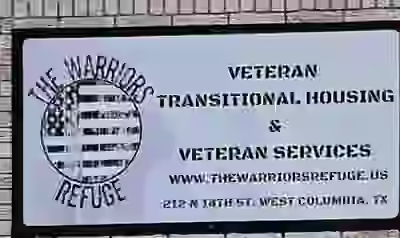
What is The Warrior's Refuge?
The Warrior's Refuge is a West Columbia-based nonprofit founded in 2019. It describes its mission around three connected needs: a safe place to stay while recovering from homelessness, counseling and personal support, and education or employment that can help veterans remain housed. It serves veterans through its West Columbia campus and also lists The Rally Point in Alvin.
Its value as a local resource is the combination of housing and services. Someone seeking help may need more than a bed; transportation, income, benefits guidance and a permanent-housing plan often determine whether a temporary placement leads to stability. The organization's program descriptions address those related needs, although individual services and placement depend on intake.
Programs and what each one does
The provider states its services are free to eligible veterans and families. Availability and eligibility vary by program: housing, counseling, employment and emergency financial aid are not interchangeable. Check official program descriptions and eligibility.
Transitional housing
The organization describes supportive housing under VA Grant and Per Diem (GPD) and Transition in Place (TIP), including meals, transportation and help moving toward permanent housing. An intake conversation determines eligibility and whether space or an appropriate placement is available.
Counseling and recovery
Its published services include individual and group counseling, peer support, mental-health counseling and substance-use recovery support. The organization says counseling may also be available through its Texas Veterans Family Alliance Grant to eligible spouses and children, including families who do not live on campus. Ask intake about eligibility, scheduling and current availability.
Employment and education
The organization's Warrior Empowerment Project lists job training, employment placement, résumé assistance and education enrollment. Its published employment eligibility focuses on veterans without a dishonorable discharge who are homeless, at risk of homelessness or recently released from incarceration. Eligibility and current openings must be confirmed; this is not a promise of immediate employment.
Benefits and case management
Published services include VA benefits assistance, housing navigation and individualized planning. The organization is not the VA and cannot guarantee an official benefits determination.
Who may qualify—and why the program matters
The organization says its transitional-housing program is available to U.S. Armed Forces veterans who do not have a dishonorable discharge. That is the provider's stated housing rule, not a universal rule for all veteran assistance. Ask intake about documentation, current vacancies, referral requirements, accessibility and whether a different program is a better fit.
Its separate Texas Veterans Commission-funded financial-assistance program has different eligibility rules. The provider lists possible qualifying groups including veterans, certain military members, dependents and surviving spouses, and describes additional service-characterization categories for that grant. Do not apply a housing eligibility rule to the financial grant—or assume qualifying for one service automatically qualifies you for another.
Limited emergency financial assistance
The organization's Texas Veterans Commission General Assistance Grant page describes limited help for eligible people in Brazoria, Fort Bend, Galveston, Harris, Jefferson and Matagorda counties. Depending on the approved need, eligible expenses may include rent, mortgage, utilities and transportation.
This is not guaranteed cash or automatic emergency funding. The provider states that eligibility screening, complete documentation, allowable expenses and available grant funds all govern assistance. For this financial-assistance grant, people may request help by phone, using the provider's online application, or as a walk-in; actual services are provided by appointment with an employee or case manager. A walk-in request does not guarantee an immediate appointment or payment.
For financial-aid screening, the provider requires proof of identity, Texas residency, qualifying military service or relationship, and financial need. It says eligible participants may receive assistance up to twice per year, subject to available funds and program rules. Grant funds do not cover taxes included in covered bills or purchases. Confirm the current rules and required documents directly before applying.
Check financial-aid eligibility, restrictions, and the provider's online application link. This is a separate application from transitional housing intake; the provider's site remains the authoritative place to start.
A useful first-call checklist
- Identify the immediate need. Tell intake whether you need a place to stay, help keeping your current housing, counseling, work support or an emergency bill paid.
- Ask about the specific program. Housing, counseling and the grant-funded financial-aid program have different processes; clarify which intake path applies.
- Confirm service area and documents. Have discharge documents and identification available if you already possess them, but ask the provider what is actually required for your circumstances.
- Confirm availability and arrangements. Ask whether a visit needs an appointment and whether transportation, a referral or other steps are required. Do not assume immediate admission.
- Request alternatives when needed. If this organization cannot help immediately, the VA's national homeless-veteran line can connect callers with other nearby resources.
This checklist is Texas Defined's practical guidance, not The Warrior's Refuge's official application instructions.
How Texans can support the mission
The nonprofit invites financial gifts, essential-item donations, event sponsorships, community partnerships and volunteers. The specific items it needs can change, so check the current donation guidance before delivering supplies. Businesses and community groups can ask the organization about sponsorship or service partnerships.
If you need urgent support
Housing crisis: The Department of Veterans Affairs operates the confidential, free National Call Center for Homeless Veterans: 877-424-3838, 24 hours a day, seven days a week. Veterans, family members and people helping veterans can call. Official VA information.
Mental-health crisis: Call 988 and press 1 for the Veterans Crisis Line, or text 838255. Official Veterans Crisis Line. In immediate danger, call 911.
Sources and editorial method
This independent guide prioritizes first-party program descriptions and federal assistance information. Provider hours, staff, funding, placement and admission conditions can change. We checked the following public sources on November 9, 2026; this is not a firsthand inspection of care or a guarantee of eligibility or space.
- The Warrior's Refuge — programs and housing eligibility
- The Warrior's Refuge — organization history and mission
- The Warrior's Refuge — contact, locations and office hours
- The Warrior's Refuge — financial assistance grant and limitations
- The Warrior's Refuge — donations, partnerships and volunteering
- U.S. Department of Veterans Affairs — homeless veterans call center
- Veterans Crisis Line — 988, press 1
See the editorial policy, sourcing methodology and corrections process for factual updates.