
Outdoors & Wildlife
Chasing Bluebonnet Season
Bluebonnet season is a moving Texas weather event, not one magic weekend. Follow bloom timing, soils, rain, safe roads and responsible photography instead of chasing one promised field.
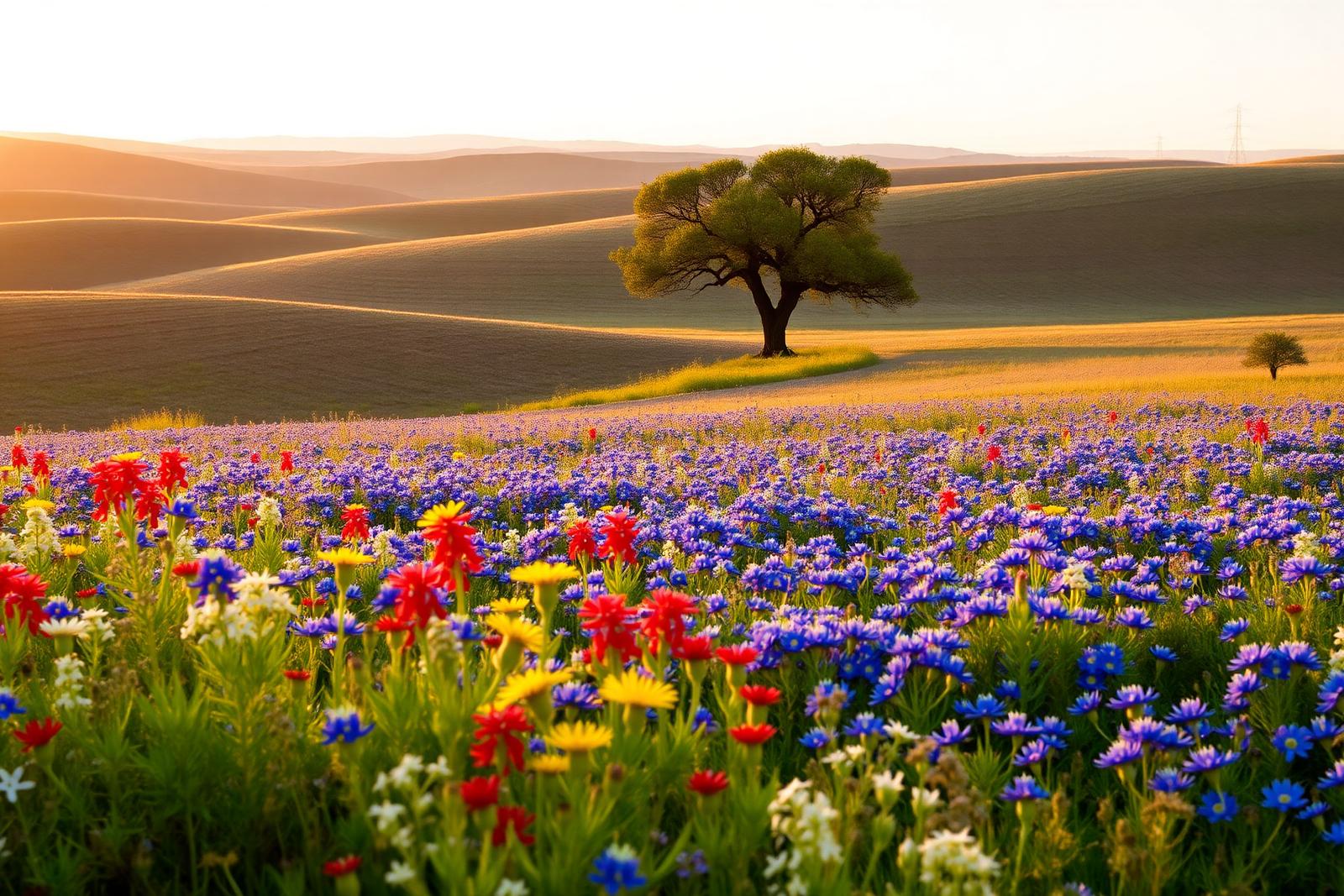
Bluebonnet season is not a single weekend circled on a Texas calendar. It is a moving, weather-dependent bloom that begins earlier in warmer parts of the state and generally works north as spring advances. Rainfall months before the flowers appear, winter temperatures, soil moisture, mowing schedules and local exposure all influence what a roadside looks like in March or April. The practical lesson is simple: plan a route, not one guaranteed field.
TxDOT’s Wildflower Program manages roadside vegetation with native grasses and wildflowers in mind and says more than 5,000 wildflower species grow along Texas roadsides. Bluebonnets are only the most famous part of that system. A strong spring drive may include Indian paintbrush, phlox, coreopsis, verbena and other species mixed into the same right of way, and the best-looking stretch can change from one week to the next.
When bluebonnets usually bloom
TxDOT notes that bluebonnet flowering commonly starts around mid-March in southern parts of Texas while northern areas can be later, and that an individual flowering period is roughly a month. In practice, Central Texas and the Hill Country often draw the largest crowds from late March into April, but there is no statewide “peak day.” A cold snap can slow one region while a warm, wet stretch pushes another ahead.
Treat social-media reports as observations, not forecasts. A photo posted three days ago may already describe a different field, especially after heavy rain, wind, mowing or a hot spell. Local visitor bureaus, parks, wildflower centers and recent community reports can help, but build enough flexibility into the day that a missed field does not ruin the trip.
Where to build a bluebonnet drive
Ennis is famous for mapped spring drives through the Blackland Prairie, while Washington County and the Brenham area are long-running wildflower destinations east of Austin. In the Hill Country, roads around Llano, Burnet, Marble Falls, Fredericksburg and smaller ranch communities can produce dramatic displays when rainfall and timing cooperate. The point is not that every named road blooms every year; it is that these areas give you enough connected countryside to keep exploring.
- Choose a loop with several towns, parks or historic stops so the day still works if the flowers are weak.
- Leave early enough that you are not trying to stop on a crowded shoulder at midday.
- Use public parks, designated pullouts and legitimate parking areas whenever possible.
- Never treat a fence opening, ranch gate or private drive as an invitation to enter a field.
- Have a second route in mind. Wildflowers reward wandering more than certainty.
The roadside safety rule matters more than the picture
The most dangerous bluebonnet behavior has nothing to do with flowers. It is stopping a vehicle where other drivers do not expect it. TxDOT encourages people to enjoy roadside wildflowers but warns against damaging them and stresses safe roadside behavior. Do not leave a vehicle partly in a travel lane, stop on a blind curve, block a ranch entrance or send children across a highway because the better patch is on the opposite shoulder.
A safe location may not produce the most dramatic photograph, and that is fine. The field will not look better because traffic is moving three feet behind you. Public parks, county roads with genuinely safe pull-offs, visitor centers, wildflower centers and community-managed trails are better places to spend time than a narrow highway shoulder.
Do not flatten the flowers for the photograph
TxDOT specifically discourages picture-taking that damages wildflowers because annual plants need to mature and set seed. The easiest way to protect a patch is to photograph from its edge, use a longer lens or lower camera angle and keep groups on existing paths or already-open ground. A family does not need to sit in the center of the densest flowers to make the scene look full.
The old argument over whether picking a bluebonnet is itself illegal misses the more useful point. Roadside access, traffic laws, private property rules, park rules and protection of particular land can all matter. Even where picking a common flower is not separately prohibited, trampling a roadside patch or trespassing for a photograph is still poor stewardship.
A better bluebonnet photo plan
- Photograph early or late when light is lower and traffic can be easier to manage.
- Shoot from the edge of the patch and let perspective make the flowers look deeper.
- Keep children and pets on the traffic-safe side of the scene.
- Watch for fire ants, snakes, uneven ground and roadside debris before sitting down.
- Do not move signs, climb fences or open gates for a cleaner background.
- If a place is crowded enough that everyone is inventing a parking space, keep driving.
Planting your own is a fall project
The biggest home-garden mistake is buying bluebonnet seed while the state is blooming and expecting the same show immediately. TxDOT’s planting guidance says most Texas wildflowers, especially bluebonnets, are best planted in late summer or fall. Seed needs good soil contact, appropriate drainage and the right exposure, and some seed can take far longer than one season to germinate.
Bluebonnets prefer well-drained conditions and plenty of sun. TxDOT advises shallow coverage—no more than about a quarter inch—and warns that heavy fertilization can produce more foliage instead of more flowers. The correct seed mix also varies by region. What thrives on calcareous Hill Country soil is not automatically the best choice for a shaded East Texas yard or a wet Gulf Coast site.
Make the drive about Texas, not just one flower
The best bluebonnet trips have a second reason to exist: a courthouse square, a state park, a barbecue lunch, a historic site, a short hike, a bakery, a river crossing or a town you have never stopped in. That makes the trip resilient when the bloom is early, late or patchy, and it spreads visitors across more than one over-photographed roadside.
Spring is one of the few times when ordinary Texas infrastructure becomes part of the attraction. Farm roads, fence lines, highway rights of way and vacant corners of public land turn into a state-scale garden. The responsible way to enjoy it is to move slowly, park carefully, stay where you are allowed, leave the plants standing and accept that the best field may be the one nobody promised you would find.
Bluebonnets bloom on a biological schedule, not a tourism calendar
Texas spring marketing loves a fixed date. Bluebonnets do not. TxDOT says first flowers can open around mid-March in the southern part of the state while northern areas may not see first bloom until around May 1, and an individual flowering period lasts roughly a month. That statewide spread is the reason one county can look finished while another is just beginning.
The visible bloom is the end of a much longer story. Autumn germination, winter temperatures, rainfall, soil drainage, competition from grasses, mowing and spring warmth all shape the display. A wet week in March cannot fully rescue a poor establishment season, and one hard freeze or hot spell can change a field quickly. The most reliable bluebonnet plan is therefore flexible by design.
The famous routes are famous because they offer options
Ennis, Washington County, Burnet County, Llano County and Hill Country routes draw visitors for good reason, but the real advantage is not that every mile blooms every year. These areas offer networks of farm roads, ranch roads, public parks, towns and side trips. If one stretch is weak, the day can keep moving.
Washington County is especially useful for a magazine-style spring trip because Brenham, Chappell Hill, Independence and the surrounding countryside can support a full day even when flowers are uneven. Ennis has long organized mapped bluebonnet drives. Burnet and Llano sit inside a broader Hill Country road-trip system where granite, lakes, small towns and ranch roads are attractions in their own right.
Rainfall is only part of the forecast
People often ask whether a rainy winter guarantees a spectacular spring. It does not. Rainfall timing matters as much as a seasonal total, and too much rain can create vigorous competing grasses. Soil type matters. Roadside maintenance matters. Temperature matters. A good bloom year is the result of several conditions lining up, which is why local reports made close to the date of travel are more useful than confident statewide predictions made months ahead.
The roadside is habitat, not a set
TxDOT’s wildflower program manages roadsides for native grasses and thousands of wildflower species, not just bluebonnets. A mature roadside can include Indian paintbrush, coreopsis, verbena, phlox, evening primrose and other species layered together. That diversity is part of the spectacle and part of the reason mowing schedules are timed around seed set.
Bluebonnets are annuals. The flowers people photograph in spring must mature and produce seed if the patch is going to renew itself naturally. TxDOT recommends allowing time after full bloom for seeds to mature before mowing. Crushing plants for photographs or repeatedly walking paths into dense stands may seem trivial at one family scale but becomes a real disturbance when thousands of visitors copy the same behavior.
A safe photograph is a better photograph
- Use public land, designated pull-offs, parks and genuinely safe shoulders instead of improvising parking on a blind curve.
- Keep vehicles completely out of travel lanes and never block ranch gates or driveways.
- Photograph from the edge of a patch and use perspective rather than sending people into the densest flowers.
- Watch for fire ants, snakes, uneven ground, roadside debris and traffic before sitting children or pets down.
- Treat fences and gates as boundaries. A beautiful field behind a fence is still private property.
- If a stop feels chaotic, keep driving. Texas has more than one field.
Planting bluebonnets is a fall decision
The moment people want bluebonnets in their yard is usually the moment the plants are already flowering. Establishment works on the opposite schedule. TxDOT recommends planting before mid-December and emphasizes good seed-to-soil contact. Regional wildflower guidance generally points to fall planting because seeds and seedlings can establish before summer heat arrives.
The landscape lesson is bigger than bluebonnets. Native wildflowers perform best when matched to local soil, drainage, sun and region rather than chosen because they succeeded somewhere else in Texas. A seed mix from the Hill Country is not automatically right for a shaded Piney Woods yard or a wet Gulf Coast site.
Plan the second reason for the trip
The strongest bluebonnet road trip has another reason to exist: a state park, historic site, courthouse square, bakery, barbecue stop, walking trail or small town. That makes the trip resilient to weak flowers and spreads visitors across a larger landscape instead of concentrating everybody on the same shoulder.
Bluebonnet season is best understood as a temporary statewide layer laid over ordinary Texas geography. Roadsides, fence lines and open fields become the attraction for a few weeks, then return to being infrastructure and working land. The trick is to enjoy the transformation without behaving as if it was built for you.
Primary source: Texas Department of Transportation Wildflower Program ↗
Plan Your Visit
Places connected to this story
Destinations explicitly tied to this article in the Texas Defined guide.
Fredericksburg · Gillespie County
Enchanted Rock State Natural Area
A massive pink-granite dome north of Fredericksburg with nearly 21 miles of hiking, a famous summit climb, rock climbing, stargazing and a newly opened backcountry trail system.
Best season: Fall through spring for cooler hiking; summer heat and exposed granite can be intense- Summit Trail to broad Hill Country views from the granite dome
- Nearly 21 miles of hiking trails, including new backcountry routes
- Rock climbing and bouldering with required check-in at headquarters
Austin · Travis County
Lady Bird Johnson Wildflower Center
The University of Texas at Austin's native-plant botanical garden in South Austin, where designed gardens, prairie restoration, an arboretum, family garden and nature trails show how Texas wildflowers and native landscapes can be beautiful, resilient and ecologically useful year-round.
Best season: Spring for wildflowers, fall for comfortable trails and native grasses, and year-round for designed native gardens; bloom timing always depends on weather rather than a fixed calendar dateUpdated Aug 2026- Texas native-plant gardens and ecological landscape design
- Seasonal wildflower displays and bluebonnet areas
- Texas Arboretum and walking trails

From the magazine
More stories to read next
Wild Texas
Camping in Texas With Your Dog: Campsites, Park Rules, Heat and Wildlife
September 22, 2026 · About 4 minutes
