
Road Trips
The Two-Lane Loop
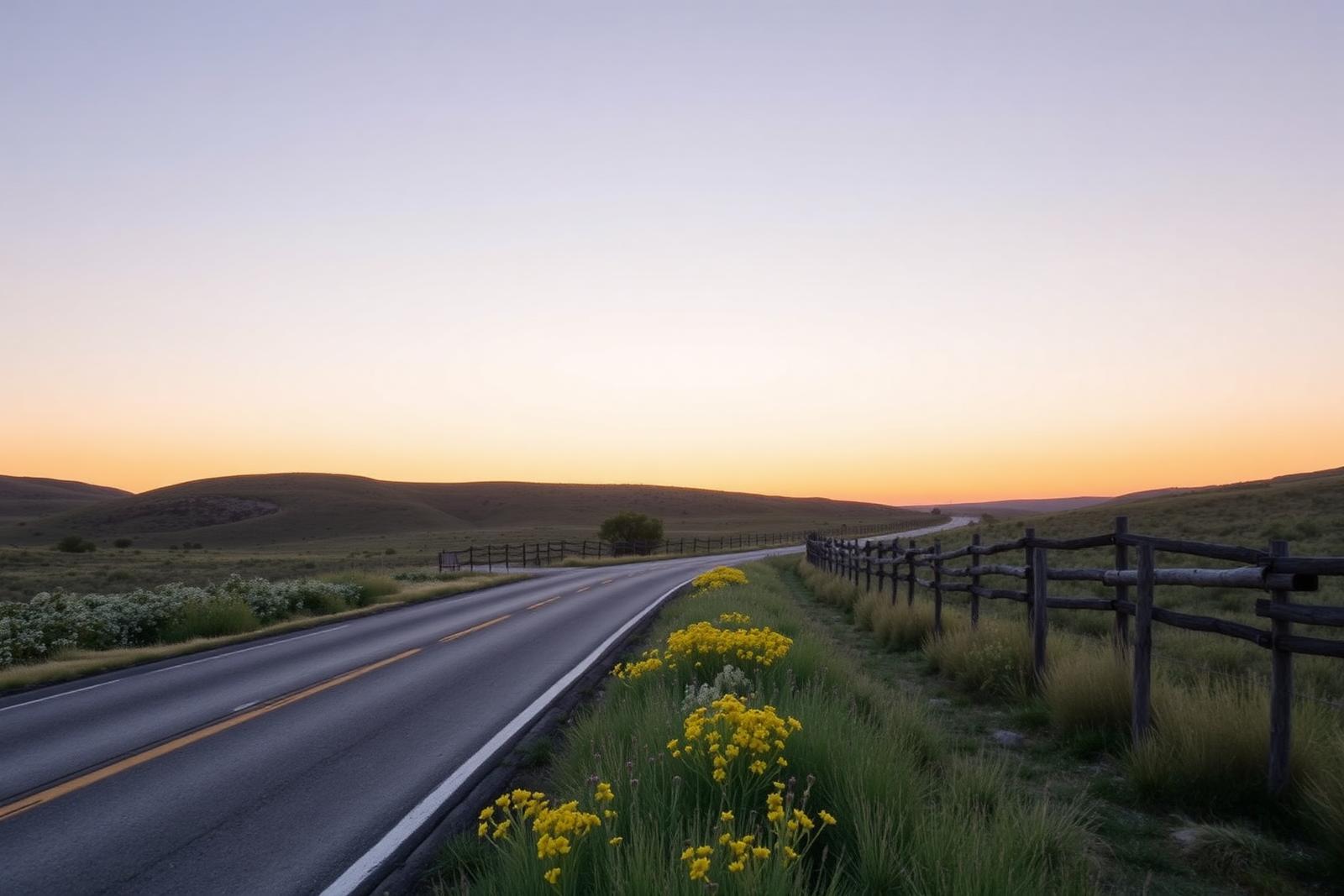
A Hill Country road trip works best as a loose loop through granite, rivers, ranch roads and small towns—planned enough to stay safe, flexible enough to follow the road that looks better than the itinerary.
The Texas Hill Country is easy to reduce to a list of famous places and surprisingly hard to understand from that list. Fredericksburg, Enchanted Rock, Luckenbach, Wimberley and the barbecue towns are useful anchors, but the region makes more sense in the miles between them: limestone cuts, low-water crossings, ranch gates, cedar breaks, peach stands, old stone churches and roads that bend because the land told them to.
This loop is not a rigid turn-by-turn itinerary. It is a framework for a long day or relaxed weekend using Fredericksburg, Llano, Johnson City and the Wimberley/Dripping Springs side of the region as anchors. Exact mileage depends on the roads and detours you choose. That flexibility is a feature, not a flaw, because Hill Country driving changes with flood conditions, construction, park capacity, events and whatever catches your attention.
Start early in Fredericksburg
Fredericksburg works as a starting point because it has fuel, breakfast, lodging and several ways out of town before traffic builds. If Enchanted Rock is part of the day, check reservation and capacity information before leaving. The state natural area can be a destination in its own right, and arriving without a plan on a busy weekend can turn the first leg of the road trip into a parking problem.
From town, Ranch Road 965 leads north toward granite country. The terrain changes gradually and then suddenly: cultivated land gives way to exposed pink granite, low oak and the rounded mass of Enchanted Rock. Even if you are not hiking, this is the point where the drive starts feeling different from the interstate version of Central Texas.
Granite country to Llano
Llano is the natural reset point. Fuel up, walk the courthouse area, cross the river and decide whether the day is becoming a food trip, a wildflower trip or a driving trip. In spring, side roads can be the main attraction. In summer, the practical priority is heat and water. After heavy rain, low crossings and minor roads can move from scenic to dangerous quickly.
- Keep the fuel tank above half when you leave the larger towns.
- Carry drinking water even when every planned stop has a restaurant or store.
- Download or screenshot the route before entering low-service areas.
- Treat every flooded crossing as closed. A scenic-road plan is never worth guessing at moving water.
- Give yourself permission to skip a famous stop if parking, weather or crowds have overwhelmed it.
Willow City is a road, not a theme park
The Willow City Loop becomes famous during wildflower season because the road passes through striking ranch country and steep little valleys. That fame creates a responsibility. Much of what you see is private property. Gates, fields and driveways remain private even when flowers are blooming on the other side of the fence, and a narrow rural road does not become a parking lot because Instagram found it.
If traffic is heavy, take the long view and keep moving. The Hill Country has more than one beautiful road. The entire purpose of a two-lane trip is defeated when everyone stops at the same bend.
Johnson City changes the rhythm
Johnson City gives you another useful hub: food, fuel, historic context and a choice of directions. From here you can angle toward Pedernales Falls State Park, continue toward Dripping Springs, or swing south toward Blanco before working east. A weekend version of the route can slow down here and devote half a day to a park or historic site instead of trying to collect towns.
This is also where first-time visitors should notice a central Hill Country fact: water creates the map. Rivers, springs and creek crossings shaped settlement and still determine recreation, flood risk and the location of the prettiest roads. When the forecast turns wet, check road conditions and park alerts rather than assuming yesterday’s route is available today.
Wimberley and the crowded end of the loop
Wimberley is an easy place to end because Cypress Creek, the town square and nearby swimming areas make it feel like a reward after a driving day. It is also busy. Popular swimming sites can require reservations or have seasonal rules, and weekend traffic can erase the relaxed pace you spent all day finding. Arrive with a backup plan: a meal, a walk, a store, a nearby town, or simply the willingness to keep going.
How to turn one loop into three different trips
- Spring: emphasize wildflower roads, short walks, early starts and flexible photo stops.
- Summer: shorten the driving day, add swimming or shaded stops, and avoid building the itinerary around exposed midday hikes.
- Fall: use the route for parks, patios, dance halls, wineries or town events, but check event traffic before committing to a narrow road.
- Winter: prioritize hiking, historic sites and long views; pack layers because temperature swings across elevations and open country can be larger than expected.
What to keep in the vehicle
A Hill Country road trip does not require expedition equipment, but it benefits from basic self-sufficiency: water, a phone cable and battery, offline directions, a tire-pressure check, a paper towel or two, sunscreen, a light layer, shoes you can walk in, and enough fuel that a closed station does not become the day’s main story. If you are carrying food, swimming gear or hiking equipment, pack it so a sudden change of plans does not require unloading the entire vehicle on a shoulder.
The rule that makes the route better
Do not schedule every hour. Pick two places you would be disappointed to miss, then leave the rest of the day open. The Hill Country is full of small reasons to stop that are impossible to predict from a map: a smokehouse sign, a low stone cemetery wall, a county road dropping into a valley, a farm stand that is actually open, or an empty picnic table beside the river.
The two-lane loop works when the road itself becomes the organizing idea. You are not driving between attractions; the attractions are giving you a reason to stay on the slower roads. That is the version of the Hill Country an interstate cannot show you.
The best Hill Country route is not the shortest line between famous towns
Interstate logic is the enemy of a good Hill Country drive. The region reveals itself on roads that follow water, ranch boundaries, limestone ridges and old settlement patterns rather than the fastest possible path. The objective is not to maximize attractions. It is to keep enough structure that the day has shape while leaving enough slack to stop when a courthouse square, river crossing or bakery gives you a better idea.
A useful backbone begins around Fredericksburg, works north toward granite country and Llano, then bends east and south through Johnson City toward the Wimberley or Dripping Springs side of the region. That is not the only loop. It is simply a route with enough geographic change to show why the Hill Country is more than one tourism town repeated across limestone.
Fredericksburg is a launch point, not the whole trip
Leaving Fredericksburg early has two advantages: cooler roads and fewer crowds. Ranch Road 965 toward Enchanted Rock moves quickly from cultivated land into exposed granite and oak country. If the state natural area is part of the plan, treat its capacity and reservation rules as real constraints. A road trip should not spend its first two hours discovering that the marquee stop is unavailable.
Llano is where the route can change personality
Llano works as a reset because it has fuel, food, a courthouse square and the river. From there the day can become more about barbecue, wildflowers, small towns or empty roads depending on season. In spring, bloom reports may pull traffic toward side roads. In summer, the real issue is heat. After heavy rain, the focus shifts to crossings and road conditions.
This is where DriveTexas earns a place in the trip plan. Scenic rural roads can be affected by flooding, construction or closures that do not show up in somebody else’s month-old itinerary. A low-water crossing should never become an adventure because the route looked pretty on a map.
Willow City requires restraint
The Willow City Loop is famous for spring scenery, but much of the surrounding land is private ranch property. Wildflower season does not convert a fence line into public access or a narrow road into a parking lot. Keep moving when there is no safe place to stop, do not block gates and do not trade somebody else’s property rights for a photograph.
Johnson City is the hinge
Johnson City sits where several versions of the trip become possible. Pedernales Falls can turn the day toward hiking. US 290 can turn it toward food, wineries and heavier traffic. Blanco can pull the route south. Dripping Springs can make the day more suburban and event-oriented. The town is useful precisely because it offers choices rather than one compulsory attraction.
Wimberley rewards the traveler who kept time in reserve
Wimberley is easy to over-schedule because swimming holes, the square, Cypress Creek and nearby drives all look close on paper. Popular swimming destinations may require reservations or operate seasonally. Weekend traffic can absorb the margin that a map pretends does not exist. Arrive with one priority and one fallback instead of six ambitions.
Pack for a road, not a city day
- Keep the fuel tank comfortably above empty; rural detours are easier when range is not part of the decision.
- Carry water even when the route is full of restaurants. Closures and delays happen.
- Download the route or save key turns before entering weak-service areas.
- Check weather and road conditions after heavy rain. Never drive into moving water.
- Respect private property on wildflower and ranch roads.
- Build one unplanned hour into the day. That hour is where the road trip usually becomes memorable.
The loop changes with the season
Spring emphasizes wildflowers and crowd management. Summer shifts the route toward early starts, shade and water. Fall is made for patios, town events and longer walking stops. Winter favors hiking, historic sites and the kind of clear-distance views that summer haze can soften. The same road is not the same trip in April and January.
The Hill Country is best when the road remains the connective tissue rather than dead time between attractions. Drive slowly enough to notice the change from granite to limestone, from ranch gate to river town, and from tourist corridor back to ordinary Texas. That change is the loop.
Primary source: DriveTexas — Texas Department of Transportation ↗
Plan Your Visit
Places connected to this story
Destinations explicitly tied to this article in the Texas Defined guide.
Fredericksburg · Gillespie County
Enchanted Rock State Natural Area
A massive pink-granite dome north of Fredericksburg with nearly 21 miles of hiking, a famous summit climb, rock climbing, stargazing and a newly opened backcountry trail system.
Best season: Fall through spring for cooler hiking; summer heat and exposed granite can be intense- Summit Trail to broad Hill Country views from the granite dome
- Nearly 21 miles of hiking trails, including new backcountry routes
- Rock climbing and bouldering with required check-in at headquarters
Austin · Travis County
Lady Bird Johnson Wildflower Center
The University of Texas at Austin's native-plant botanical garden in South Austin, where designed gardens, prairie restoration, an arboretum, family garden and nature trails show how Texas wildflowers and native landscapes can be beautiful, resilient and ecologically useful year-round.
Best season: Spring for wildflowers, fall for comfortable trails and native grasses, and year-round for designed native gardens; bloom timing always depends on weather rather than a fixed calendar dateUpdated Aug 2026- Texas native-plant gardens and ecological landscape design
- Seasonal wildflower displays and bluebonnet areas
- Texas Arboretum and walking trails

From the magazine
More stories to read next
Road Trips
Fredericksburg to Johnson City: The Complete Historic Hill Country Road Trip
October 12, 2026 · About 11 minutes
