Skip to content
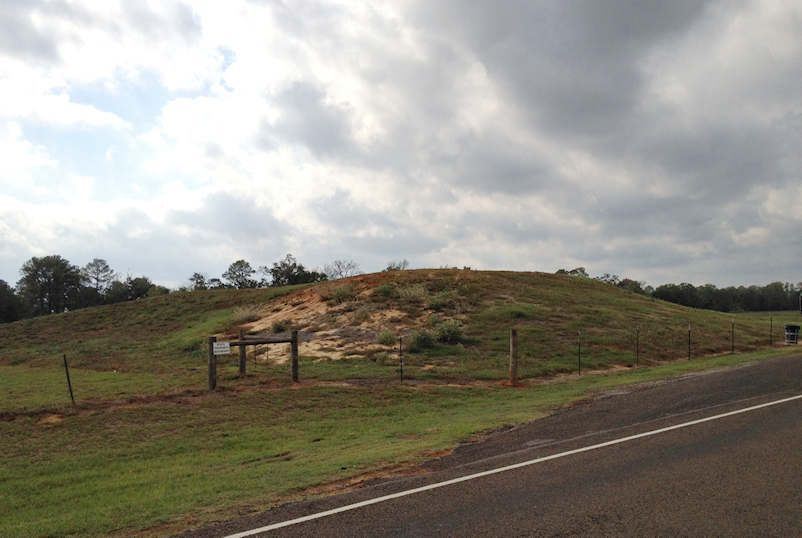
Caddo mound at Caddo Mounds State Historic Site near Alto, Texas

Piney Woods · Historic Sites & Museums

Caddo Mounds State Historic Site

An East Texas archaeological site preserving monumental earthen mounds built by ancestors of the Caddo people along an important regional trade corridor more than a thousand years ago.

Photography: N. Saum · CC BY-SA 3.0 · Wikimedia Commons · CC BY-SA 3.0 license ↗

Quick trip facts

Caddo Mounds State Historic Site at a glance

Where is Caddo Mounds State Historic Site?
Caddo Mounds State Historic Site is near Alto, Texas, in Cherokee County.
When is the best time to visit Caddo Mounds State Historic Site?
Fall through spring for comfortable outdoor interpretation
Do I need to plan ahead for Caddo Mounds State Historic Site?
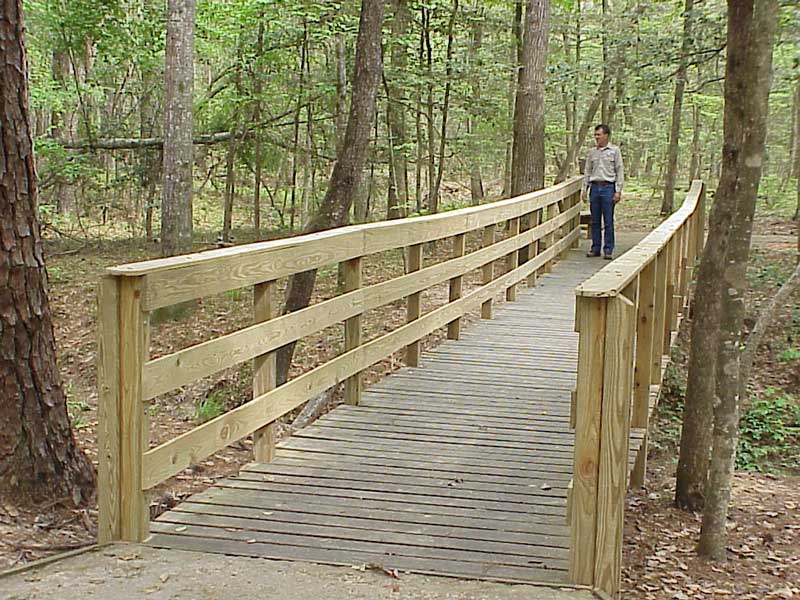
THC currently lists Tuesday–Sunday 8:30 a.m.–4:30 p.m., closed Mondays, with paid admission. Museum, 0.7-mile Mound Trail and other routes have different accessibility conditions; follow the site's posted sacred-mound rules.
Who manages Caddo Mounds State Historic Site?
Texas Historical Commission

The experience

The story of Caddo Mounds State Historic Site

Caddo Mounds challenges the idea that pre-contact Texas lacked large organized communities. The earthen mounds are evidence of a complex ceremonial and political center connected to wider exchange networks.

Modern interpretation increasingly centers Caddo perspectives rather than treating the site only as an archaeological curiosity.

Walk the grounds slowly and use the interpretive materials to understand what the low earthworks represent; the significance is historical and cultural rather than architectural spectacle.

The ancestral Caddo ceremonial and village landscape predates the better-known Spanish, Mexican and Anglo chapters of Texas history by many centuries. Mound construction is evidence of an organized, complex society, not an anonymous prelude to European settlement.

An authoritative interpretation must include the Caddo Nation as a living people whose history did not end when this place stopped serving its earlier functions. Conservation, archaeology, respectful access and the condition of interpretive buildings are core visitor questions; verify current facilities before the trip.

Today the landscape includes three earthen mounds sacred to the Caddo people, a reconstructed grass house, an interpretive museum, a 0.7-mile self-guided Mound Trail and longer nature trails. The village and ceremonial center originated around A.D. 800. The experience should respect ongoing Caddo cultural identity rather than treating the community only as archaeology.

The details

Planning your visit

Area
Alto, Texas
Best season
Fall through spring for comfortable outdoor interpretation
Entry & reservations
THC currently lists Tuesday–Sunday 8:30 a.m.–4:30 p.m., closed Mondays, with paid admission. Museum, 0.7-mile Mound Trail and other routes have different accessibility conditions; follow the site's posted sacred-mound rules.
Accessibility
THC says the museum is fully accessible. The Mound Trail and part of El Camino Real Trail #1 have granite-covered sections generally accessible for most wheelchairs and strollers. Other trails have steep grades, steps or dirt/grass surfaces and are not considered accessible; check current site guidance.

Evidence and citations

Research sources

Read the original operator records and supporting research for this guide.

The visit

What the experience is like

Walking & exertion
Low to moderate
Time outdoors
Mixed indoor/outdoor
Plan ahead
Moderate
Families
The outdoor mounds and grounds help younger visitors understand scale and place.
Good for first-time visitors
Start with the operator's interpretive information to understand Caddo history, then follow the site itself instead of relying only on a photo or commemorative marker.

Texas context

Why Caddo Mounds State Historic Site matters

Ancestral Caddo people built a major village and ceremonial center here more than 1,200 years ago. Treat Caddo Mounds as a foundational Texas-history stop in its own right, placing ancestral Caddo history before the later Spanish, Mexican and Anglo chapters.

About this guide: Texas Defined Editorial Desk. Official operator pages control changing access and visitor rules. The site-specific research and planning suggestions here supplement, but do not replace, those sources. Editorial assessments describe trip-planning value rather than a star rating. Citation guidance.

Use the time you have

Three ways to visit

Short visit

The focused visit

  1. Check Caddo Mounds State Historic Site's official access arrangements and any active preservation or closure notice.
  2. Orient to the site's central story: Caddo history.
  3. Locate the main preserved feature, memorial or interpretive setting; do not enter restricted spaces.

Unhurried visit

Read the place more deeply

  1. Begin with the full historical background: Ancestral Caddo people built a major village and ceremonial center here more than 1,200 years ago.
  2. Compare the site's interpretation of archaeology with its physical setting.
  3. Look for context on Indigenous Texas and distinguish original features from later preservation or commemoration.

Half-day or longer

Regional history route

  1. Visit Caddo Mounds State Historic Site when the site's actual access schedule permits.
  2. Continue to Mission Tejas State Park; confirm whether it is a separate site with different hours and admission.
  3. If time and distance allow, add Mission Tejas State Park as a distinct history stop rather than compressing every destination into one visit.

Before you go

Common visitor questions

How long should I allow for Caddo Mounds State Historic Site?
The operator currently opens Tuesday–Sunday, 8:30 a.m.–4:30 p.m. Start in the museum and consider the 0.7-mile Mound Trail, the shorter Camino Real Trail, or longer natural trails as mobility permits. Mounds remain sacred to Caddo people; follow marked paths.[1]
What should I know about accessibility?
THC says the museum is fully accessible. The Mound Trail and part of El Camino Real Trail #1 have granite-covered sections generally accessible for most wheelchairs and strollers. Other trails have steep grades, steps or dirt/grass surfaces and are not considered accessible; check current site guidance.
What should I pair with Caddo Mounds State Historic Site?
Mission Tejas State Park: A nearby Spanish-mission story best visited after understanding the Caddo landscape on its own terms.
What is a worthwhile side trip?
Mission Tejas State Park: Compare Indigenous and Spanish-colonial histories in the same region.

Around the area

What to do near Caddo Mounds State Historic Site

Treat Caddo Mounds as a foundational Texas-history stop in its own right, placing ancestral Caddo history before the later Spanish, Mexican and Anglo chapters.

NearbyAttractions close by

Easy additions that fit naturally around the main stop.

  • Mission Tejas State Park

    A nearby Spanish-mission story best visited after understanding the Caddo landscape on its own terms.

Eat nearbyWhere to eat and drink

Dining districts and food areas worth building into the same outing.

  • Alto and Nacogdoches

    Use this nearby community as the practical food and overnight base for the historic-site visit.

Stay nearbyWhere to stay

The most practical lodging areas for minimizing driving and maximizing time on the ground.

  • Alto and Nacogdoches

    Use this nearby community as the practical food and overnight base for the historic-site visit.

Explore moreNeighborhoods and districts

Nearby parts of the city that add character, shopping, history or nightlife.

  • Historic landscape

    The Caddo homeland and Piney Woods landscape are part of the interpretation, not merely a backdrop.

With kidsFamily-friendly stops

Good nearby additions when the itinerary includes younger travelers.

  • Family visit strategy

    The outdoor mounds and grounds help younger visitors understand scale and place.

Go fartherWorthwhile side trips

Places that justify extending the visit beyond the immediate area.

Plan the route

Explore related places

Editorially paired stops near Caddo Mounds State Historic Site appear first, followed by nearby destinations. Distances are approximate straight-line miles.

  • Grapeland · Houston County · Piney Woods

    Mission Tejas State Park

    East Texas history centered on a reconstructed Spanish mission and the Rice Family Log Home, with wooded trails, fishing, and camping.

    • History
    • Hiking
    • Camping
    Explore this place

    Approx. 7 miles away

  • Rusk · Cherokee County · Piney Woods

    Heritage Center of Cherokee County

    The Heritage Center of Cherokee County in downtown Rusk preserves the county's Caddo and pioneer past, timber industry, railroads, Rusk prison and hospital history, education, military service and community life through locally rooted collections and exhibits.

    Best season: Year-round museum; spring and fall pair especially well with the Texas State Railroad, downtown Rusk and other Piney Woods heritage sites.Updated Aug 2026
    • Caddo and pioneer artifacts
    • Texas State Railroad history
    • Rusk prison and hospital history
    Explore this place

    Approx. 14 miles away

  • Rusk · Cherokee County · Piney Woods

    Jim Hogg Park

    Rusk's city-operated 178-acre Piney Woods park preserves part of the old Mountain Home Plantation where James Stephen Hogg was born, along with Hogg-family memorial features, a historic-site museum tradition and a walking trail.

    Best season: Year-round; fall and spring are especially comfortable for the wooded trail and outdoor historical features.Updated Sep 2026
    • Portions of the old Mountain Home Plantation and James Hogg birthplace landscape
    • Hogg family cemetery and governor memorial features
    • Historic museum tradition centered on a replica of Hogg's birth cabin
    Explore this place

    Approx. 14 miles away

  • Nacogdoches · Nacogdoches County · Piney Woods

    Stephen F. Austin Experimental Forest Interpretive Trails

    A 2,560-acre USDA research forest southwest of Nacogdoches with a paved 0.8-mile Jack Creek Loop and a 1.5-mile natural-surface Management Loop on the operator's detailed map; the agency's descriptive webpage instead calls the latter 2.0 miles.

    Best season: Year-round, especially spring and autumn for comfortable hiking; mosquitoes and humidity can be significant in summer.Updated Oct 2026
    • 2,560-acre congressional research forest
    • 0.8-mile Jack Creek accessible loop
    • 1.5-mile Management Loop (official map; conflicting 2.0-mile web description)
    Explore this place

    Approx. 24 miles away

  • Crockett · Houston County · Piney Woods

    Crockett

    Crockett is an East Texas county seat on historic El Camino Real de los Tejas, pairing an Art Deco courthouse and active downtown with Davy Crockett National Forest access, lakes, piney-woods scenery and deep Republic-era history.

    Best season: Fall through spring for downtown and forest hiking; spring and fall for wildlife viewing; warm months for lake recreation with heat precautionsUpdated Sep 2026
    • Houston County Courthouse
    • historic downtown
    • El Camino Real de los Tejas
    Explore this place

    Approx. 26 miles away

  • Nacogdoches · Nacogdoches County · Piney Woods

    Alazan Bayou Wildlife Management Area

    Alazan Bayou WMA protects 2,063 acres of bottomland hardwood forest, old fields and floodplain habitat along the Angelina River and associated East Texas bayous south of Nacogdoches.

    Best season: Fall through spring for cooler wildlife viewing; winter and early spring can bring flooded bottomland conditions and strong waterfowl use.Updated Sep 2026
    • Angelina River bottomlands
    • Mature hardwood forest
    • Waterfowl and woodland wildlife
    Explore this place

    Approx. 27 miles away

Read next

More from Historic Sites & Museums