Skip to content
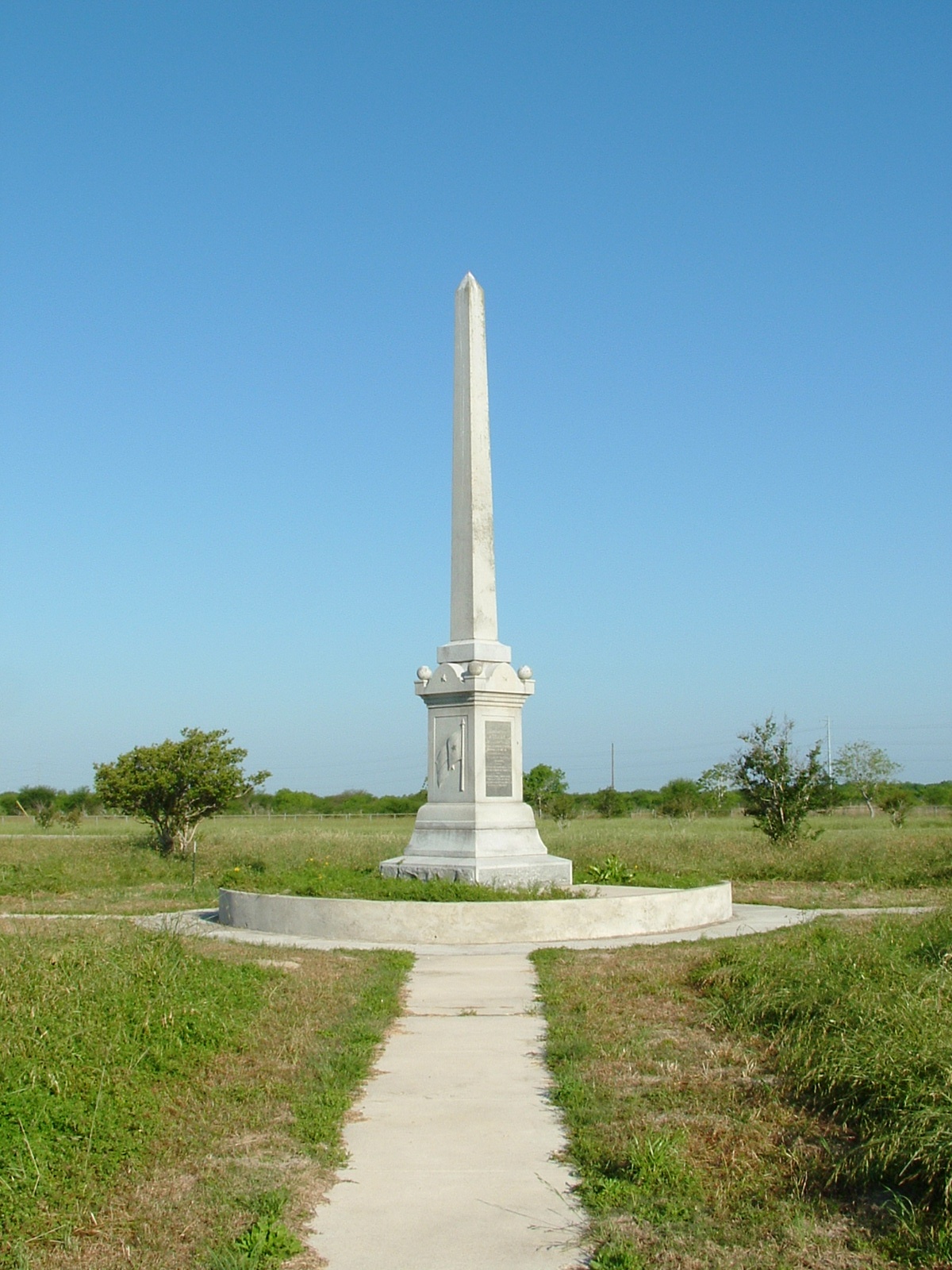
Memorial obelisk at Fannin Battleground State Historic Site in Texas

Gulf Coast · Historic Sites & Museums

Fannin Battleground State Historic Site

The site preserves the landscape associated with the 1836 Battle of Coleto, where James Fannin's command was surrounded during the Texas Revolution. Pair it with Presidio La Bahía to follow the events that led from the Coleto surrender to the Goliad executions.

Photography: Ernest Mettendorf · Public domain · Wikimedia Commons

Quick trip facts

Fannin Battleground State Historic Site at a glance

Where is Fannin Battleground State Historic Site?
Fannin Battleground State Historic Site is near Fannin, Texas, in Goliad County.
When is the best time to visit Fannin Battleground State Historic Site?
Year-round; spring and fall are usually the most comfortable for outdoor portions of a visit.
Do I need to plan ahead for Fannin Battleground State Historic Site?
THC currently opens Fannin Battleground daily 8 a.m.–5 p.m., with free self-guided visits of roughly 30 minutes. The operator lists wheelchair-accessible grounds and restrooms but NO visitor center; guided group tours have separate reservations.
Who manages Fannin Battleground State Historic Site?
Texas Historical Commission

The experience

The story of Fannin Battleground State Historic Site

The site preserves the landscape associated with the 1836 Battle of Coleto, where James Fannin's command was surrounded during the Texas Revolution.

Pair it with Presidio La Bahía to follow the events that led from the Coleto surrender to the Goliad executions.

The Coleto battlefield is where James Fannin’s troops were surrounded during their retreat in March 1836. The open terrain, their attempts to move and the subsequent surrender need to be understood before the events at Presidio La Bahía can be put in proper sequence.

This is a landscape and interpretation stop rather than an intact fortress. The clearest regional trip begins at Coleto and continues toward Goliad, while a separate Mission Espíritu Santo stop reveals the much older Spanish colonial setting associated with the same region.

The March 1836 Battle of Coleto and James Fannin's surrender preceded the execution of prisoners at Goliad, a distinct site about 10 miles west. A stone monument and interpretive display preserve the memory of the battlefield, while separate guided group programs explain the geography of the surrender.

The details

Planning your visit

Area
Fannin, Texas
Best season
Year-round; spring and fall are usually the most comfortable for outdoor portions of a visit.
Entry & reservations
THC currently opens Fannin Battleground daily 8 a.m.–5 p.m., with free self-guided visits of roughly 30 minutes. The operator lists wheelchair-accessible grounds and restrooms but NO visitor center; guided group tours have separate reservations.
Accessibility
THC states all areas at Fannin Battleground are wheelchair accessible, with parking and restrooms near the pavilion; there is no staffed visitor center or gift shop.

Evidence and citations

Research sources

Read the original operator records and supporting research for this guide.

The visit

What the experience is like

Walking & exertion
Low
Time outdoors
Fully outdoors
Plan ahead
Low
Families
A battlefield-first, presidio-second sequence gives younger visitors a clearer narrative.
Good for first-time visitors
Start with the operator's interpretive information to understand Texas Revolution, then follow the site itself instead of relying only on a photo or commemorative marker.

Texas context

Why Fannin Battleground State Historic Site matters

The site preserves the landscape associated with the 1836 Battle of Coleto, where James Fannin's command was surrounded during the Texas Revolution. Visit the Coleto battlefield before Presidio La Bahía to follow the Goliad campaign in sequence, from the surrounded Texian column to the surrender and its aftermath.

About this guide: Texas Defined Editorial Desk. Official operator pages control changing access and visitor rules. The site-specific research and planning suggestions here supplement, but do not replace, those sources. Editorial assessments describe trip-planning value rather than a star rating. Citation guidance.

Use the time you have

Three ways to visit

Short visit

The focused visit

  1. Check Fannin Battleground State Historic Site's official access arrangements and any active preservation or closure notice.
  2. Orient to the site's central story: Texas Revolution.
  3. Locate the main preserved feature, memorial or interpretive setting; do not enter restricted spaces.

Unhurried visit

Read the place more deeply

  1. Begin with the full historical background: The site preserves the landscape associated with the 1836 Battle of Coleto, where James Fannin's command was surrounded during the Texas Revolution.
  2. Compare the site's interpretation of James Fannin with its physical setting.
  3. Look for context on Goliad campaign and distinguish original features from later preservation or commemoration.

Half-day or longer

Regional history route

  1. Visit Fannin Battleground State Historic Site when the site's actual access schedule permits.
  2. Continue to Presidio La Bahía; confirm whether it is a separate site with different hours and admission.
  3. If time and distance allow, add Presidio La Bahía as a distinct history stop rather than compressing every destination into one visit.

Before you go

Common visitor questions

How long should I allow for Fannin Battleground State Historic Site?
The outdoor battlefield memorial is free and generally takes 30 minutes; THC lists daily 8 a.m.–5 p.m., accessible grounds and restrooms, but no visitor center. Goliad's presidio is a separate stop.[1]
What should I know about accessibility?
THC states all areas at Fannin Battleground are wheelchair accessible, with parking and restrooms near the pavilion; there is no staffed visitor center or gift shop.
What should I pair with Fannin Battleground State Historic Site?
Presidio La Bahía: The essential companion stop for understanding what followed Fannin's surrender.
What is a worthwhile side trip?
Presidio La Bahía: Continue the Goliad campaign story at the presidio.

Around the area

What to do near Fannin Battleground State Historic Site

Visit the Coleto battlefield before Presidio La Bahía to follow the Goliad campaign in sequence, from the surrounded Texian column to the surrender and its aftermath.

NearbyAttractions close by

Easy additions that fit naturally around the main stop.

  • Presidio La Bahía

    The essential companion stop for understanding what followed Fannin's surrender.

Eat nearbyWhere to eat and drink

Dining districts and food areas worth building into the same outing.

  • Downtown Goliad

    Use this nearby community as the practical food and overnight base for the historic-site visit.

Stay nearbyWhere to stay

The most practical lodging areas for minimizing driving and maximizing time on the ground.

  • Downtown Goliad

    Use this nearby community as the practical food and overnight base for the historic-site visit.

Explore moreNeighborhoods and districts

Nearby parts of the city that add character, shopping, history or nightlife.

  • Historic landscape

    The open Coleto Creek terrain is central to understanding the battle.

With kidsFamily-friendly stops

Good nearby additions when the itinerary includes younger travelers.

  • Family visit strategy

    A battlefield-first, presidio-second sequence gives younger visitors a clearer narrative.

Go fartherWorthwhile side trips

Places that justify extending the visit beyond the immediate area.

  • Presidio La Bahía

    Continue the Goliad campaign story at the presidio.

  • Texas Revolution road trip

    Place this stop in chronological context from Austin's colony and the independence convention through Goliad, San Jacinto and the early Republic.

  • Plan a Goliad history weekend

    Visit the Coleto battlefield first, then follow the campaign chronologically to Presidio La Bahía and the wider Goliad landscape.

  • Texas military history timeline

    Place this site inside the longer military chronology from the Texas Revolution and frontier Army through the Civil War, border mobilizations and the world wars.

Plan the route

Explore related places

Editorially paired stops near Fannin Battleground State Historic Site appear first, followed by nearby destinations. Distances are approximate straight-line miles.

  • Approx. 9 miles away

  • Goliad · Goliad County

    Goliad

    Goliad is a South Texas courthouse town on the San Antonio River where Spanish mission history, Presidio La Bahía, the 1836 Goliad campaign, historic downtown streets and nearby parkland create one of the state's most concentrated Texas Revolution destinations.

    Best season: Fall through spring for historic touring and river walks; summer visits work best with early outdoor stops and midday time in museums or shaded sitesUpdated Sep 2026
    • Presidio La Bahía
    • Mission Espíritu Santo
    • Goliad campaign history
    Explore this place

    Approx. 9 miles away

  • Goliad · Goliad County · Gulf Coast

    Presidio La Bahía

    The Spanish colonial presidio, established at its present site in 1749, later became central to the Goliad campaign of the Texas Revolution. This is one of the state's richest places for connecting Spanish Texas, Mexican Texas and the revolution in a single physical setting.

    Best season: Year-round; spring and fall are usually the most comfortable for outdoor portions of a visit.Updated Aug 2026
    • Spanish Texas
    • Texas Revolution
    • Goliad
    Explore this place

    Approx. 9 miles away

  • Goliad · Goliad County · Gulf Coast

    Zaragoza Birthplace State Historic Site

    Ignacio Zaragoza was born in the Goliad area and later commanded Mexican forces in their 1862 victory over the French at Puebla, commemorated by Cinco de Mayo. The birthplace connects Texas borderlands history to a major event in Mexican national memory and adds another layer to a Goliad history trip.

    Best season: Year-round; spring and fall are usually the most comfortable for outdoor portions of a visit.Updated Aug 2026
    • Ignacio Zaragoza
    • Cinco de Mayo
    • Texas-Mexico history
    Explore this place

    Approx. 9 miles away

  • Victoria · Victoria County · Gulf Coast

    Museum of the Coastal Bend

    The Museum of the Coastal Bend at Victoria College interprets roughly 13,000 years of regional history, from Indigenous cultures and archaeology through French, Spanish and Mexican colonial encounters, ranching and the formation of modern South Texas.

    Updated Aug 2026
    • 13,000 years of Coastal Bend history
    • Fort St. Louis and La Salle
    • Public archaeology
    Explore this place

    Approx. 18 miles away

  • Yorktown · DeWitt County

    Yorktown Historical Museum

    Yorktown Historical Museum preserves the DeWitt County town's local and family history inside the historic C. Eckhardt & Sons Building, with community collections, indexed photograph albums and a landmark mercantile building that ties the museum directly to Yorktown's nineteenth-century commercial past.

    Updated Sep 2026
    • Yorktown and DeWitt County local-history collections
    • Indexed photograph albums available for historical and family research
    • Historic C. Eckhardt & Sons mercantile building at Main and Eckhardt streets
    Explore this place

    Approx. 26 miles away

Read next

More from Historic Sites & Museums