2 hours
Main Street walk
- Walk the historic commercial core
- Stop at Marktplatz
- Choose one museum, church or historic building

Hill Country · Historic Sites & Museums
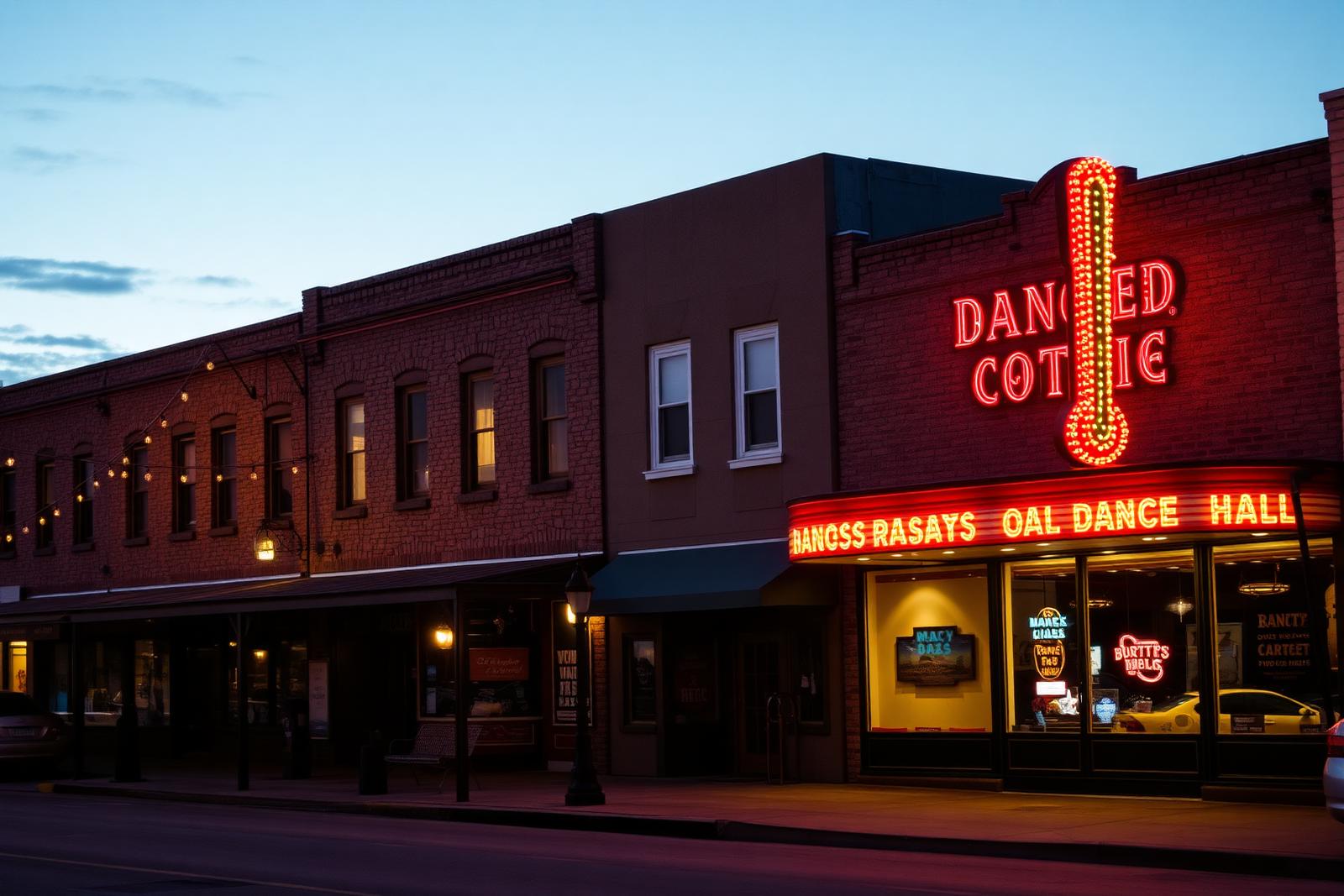
Fredericksburg's National Historic District centers on a broad Hill Country Main Street lined with limestone commercial buildings, German-Texan landmarks, museums, churches and more than 80 points of historic interest that turn the town's nineteenth-century immigrant story into a walkable living district.
Photography: Larry D. Moore · CC BY 4.0 · Wikimedia Commons · CC BY 4.0 license ↗
Quick trip facts
The experience
Fredericksburg's historic district is the best place to understand why the town feels different from almost anywhere else in Texas. German immigrants founded Fredericksburg in 1846, and the broad Main Street, limestone buildings, churches and civic spaces still reflect the settlement patterns and building traditions that developed as the community took root in the Hill Country.
The district is large enough that a walking map is more useful than simply wandering storefront to storefront. Visit Fredericksburg identifies more than 80 points of historic interest, ranging from commercial buildings and churches to civic structures and residential architecture. Starting at the Visitor Information Center or Marktplatz gives the walk a clear orientation before the shopping district takes over the visitor's attention.
Vereins Kirche at Marktplatz remains one of the town's visual anchors and connects directly to Fredericksburg's early community life. Farther west, Pioneer Museum expands the story through historic structures and artifacts associated with German-Texan settlement. Those sites help explain the architecture on Main Street rather than leaving visitors with only a decorative idea of 'German' Fredericksburg.
The National Museum of the Pacific War gives downtown another layer that is not directly about nineteenth-century settlement. Fredericksburg native Chester W. Nimitz became one of the central American commanders of the Pacific War, and the museum complex has grown into a major national military-history institution. It deserves its own substantial block of time rather than being treated as a quick stop between shops.
Modern Fredericksburg is also a working tourism town, so preservation and commerce sit side by side. Restaurants, tasting rooms, galleries and shops occupy many historic buildings, which keeps the district lively but can make weekend visits crowded. Early morning is the best time to notice architecture before Main Street becomes primarily a shopping corridor.
The district is the natural base for a larger Gillespie County trip. Enchanted Rock adds granite-dome hiking north of town, the LBJ ranch corridor and Stonewall extend east along Highway 290, and wineries spread across the surrounding Hill Country. A strong weekend gives one day to Fredericksburg itself and another to the landscape beyond Main Street.
The details
Evidence and citations
Read the original operator records and supporting research for this guide.
Primary source for current visitor access, operating guidance and attraction information.
Official destination-organization history of Fredericksburg's 1846 founding and German-Texan heritage.
State historic-preservation record for the National Register district, boundaries, significance and listing status.
The visit
Texas context
Fredericksburg's historic core preserves the street pattern, architecture and cultural imprint of a German-Texan community that became one of the Hill Country's defining towns. The district works best as a living townscape rather than a single monument.
Use the time you have
2 hours
4 hours
1–2 days
Key dates
A short chronology of dates that materially shaped this place. Each entry links to the source used for the date and historical context.
May 8, 1846
German settlers established Fredericksburg as the second Texas town founded by the Adelsverein immigration society.
Source: Visit Fredericksburg — German HeritageMarch 2, 1847
Fredericksburg's historical interpretation commemorates negotiations between German pioneers led by John O. Meusebach and Comanche leaders.
Source: Visit Fredericksburg — MaibaumOctober 14, 1970
The Fredericksburg Historic District was listed for its significance in settlement, European ethnic heritage, art and architecture.
Source: Texas Historical Commission AtlasBefore you go
Connected museum guides
Museum guides relevant to Fredericksburg and its surrounding history. Tickets, hours and travel arrangements are separate at each institution.
Fredericksburg · Gillespie County
Around the area
Fredericksburg is compact enough that the historic district, museums, food and lodging overlap in one walkable core, while the strongest side trips spread north and east into Gillespie County's granite, ranch and wine country.
Easy additions that fit naturally around the main stop.
In the historic district
A major museum complex centered on the Pacific theater and Fredericksburg native Admiral Chester Nimitz.
West Main Street
Historic structures and collections explain German-Texan settlement and daily life.
Central Main Street
The civic square and reconstructed Vereins Kirche remain the district's most recognizable community landmarks.
West of the center
Historic church architecture adds another important layer to Fredericksburg's immigrant and religious history.
Dining districts and food areas worth building into the same outing.
In the district
German-Texan restaurants, cafes, bakeries and tasting rooms make the historic core the easiest dining area.
East of downtown
Wineries, tasting rooms and restaurants extend the food-and-wine experience beyond the historic blocks.
West side of downtown
Restaurants and local businesses are mixed with historic buildings and Pioneer Museum sites.
About 13 miles south-east
Music, casual food and Hill Country atmosphere create a simple evening excursion.
The most practical lodging areas for minimizing driving and maximizing time on the ground.
Walkable
Historic inns, guesthouses and small hotels put Main Street museums and restaurants within an easy walk.
East of downtown
Lodging near wineries works well for travelers prioritizing the wine corridor.
Outside town
Rural lodging shifts the trip toward scenery and quiet nights while keeping Fredericksburg close.
Near US 290/87
A practical hotel base can be easier for travelers continuing toward Enchanted Rock or Mason.
Nearby parts of the city that add character, shopping, history or nightlife.
Immediate area
The primary commercial and architectural corridor combines preserved buildings with active shops and restaurants.
Center of downtown
Public lawns, Vereins Kirche and surrounding blocks form the town's central gathering space.
West
Pioneer Museum and older residential/commercial structures deepen the settlement story.
East
The transition from downtown to Highway 290 leads directly toward wineries and Stonewall.
Good nearby additions when the itinerary includes younger travelers.
West Main
Historic buildings and household artifacts make early Fredericksburg easier for children to visualize.
Central downtown
Open lawns and public space give families a break between museums and shops.
Downtown
Large exhibits and artifacts can engage older children and teens when enough time is allowed.
About 18 miles north
A granite-dome hike and broad Hill Country views create the strongest outdoor family extension.
Places that justify extending the visit beyond the immediate area.
About 18 miles north
Climb the granite dome or use shorter trails for a landscape-focused half day.
About 18 miles east
The LBJ ranch corridor and Sauer-Beckmann living history connect Fredericksburg with twentieth-century Texas history.
About 13 miles south-east
Music and a tiny historic settlement add an easy Hill Country evening stop.
East toward Stonewall
Wineries and vineyards can fill a separate adult-focused day without leaving Gillespie County.
Plan the route
Editorially paired stops near Fredericksburg Historic District appear first, followed by nearby destinations. Distances are approximate straight-line miles.
Fredericksburg · Gillespie County · Hill Country
Fredericksburg is a German-Texan Hill Country destination built around a walkable historic core, museums, independent shops and restaurants, with Texas Wine Country and major outdoor stops close enough to turn a downtown visit into a full weekend.
Approx. 1 mile away
Fredericksburg · Gillespie County · Hill Country
The Fredericksburg museum is devoted to the Pacific Theater of World War II and grew from the hometown story of Fleet Admiral Chester W. Nimitz. Its scale makes it a destination in its own right rather than a quick museum stop; allow enough time for galleries, artifacts and outdoor exhibits.
Approx. 1 mile away
Fredericksburg · Gillespie County · Hill Country
A volunteer-run nonprofit gallery founded in 1971, the Fredericksburg Art Guild connects Hill Country artists, exhibitions and classes a short walk from the National Museum of the Pacific War.
Approx. 1 mile away
Fredericksburg · Gillespie County · Hill Country
Fort Martin Scott was established in 1848 and became an early U.S. Army post on the expanding Texas frontier. Its Fredericksburg location makes it easy to connect German immigration, federal military expansion and Hill Country settlement in a single day.
Approx. 1 mile away
Fredericksburg · Gillespie County · Hill Country
Messina Hof Hill Country Winery is the Fredericksburg outpost of a Texas wine family that began in Bryan in 1977, with a nearly 10-acre Highway 290 property, its own vineyard, more than 60 wines in the tasting-room portfolio and four onsite Manor Haus cottages.
Approx. 9 miles away
Fredericksburg · Gillespie County · Hill Country
Mendelbaum Cellars is a Highway 290 tasting room east of Fredericksburg built around Texan and Israeli wines, a biblical storytelling concept and guest cabins, giving the wine corridor one of its most distinctive cross-cultural tasting experiences.
Approx. 9 miles away
Texas Explained
Go beyond the destination with the systems, landscapes and history that explain why this part of Texas looks and works the way it does.
Continue exploring
Read next
Historic Sites
A practical Texas lighthouse guide comparing public access, climbs, viewing methods and trip logistics from Port Isabel to the Sabine gateway.
August 21, 2026 · About 12 minutes
Historic Sites
Missions, battlefields, courthouses and museums make more sense as a road map than a timeline. These are the places that turn state history back into geography.
August 7, 2026 · About 2 minutes