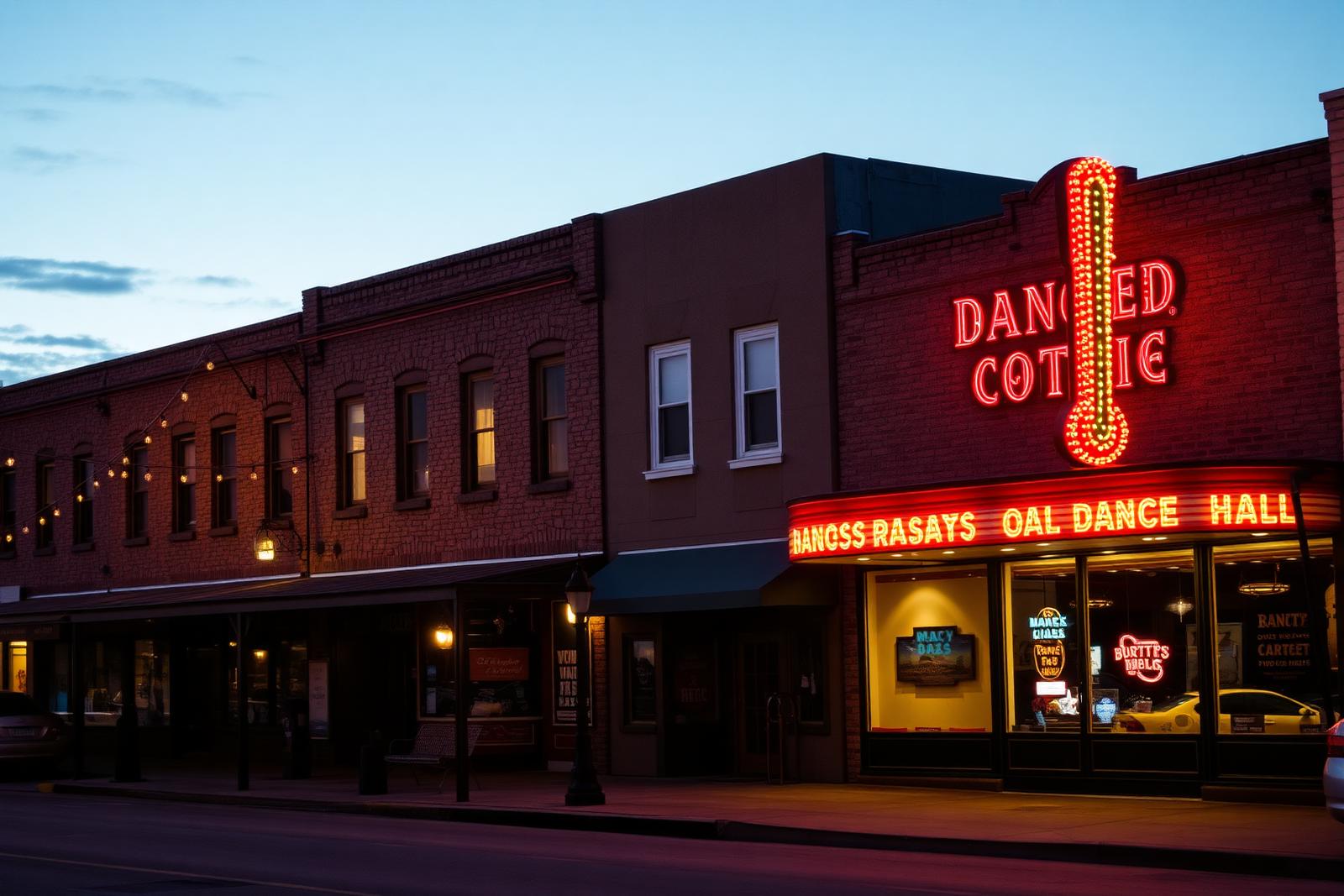
The Roy Orbison Museum tells a music story that is inseparable from Wink itself. Orbison was born in Vernon, but his family moved to Wink in 1946 when his father found oilfield work. As a student he began performing with friends in the Wink Westerners, playing local venues and appearing on regional radio before later versions of the group helped launch his recording career. The City of Wink continues to present the museum as one of the community's defining attractions because the collection preserves that formative period rather than treating Orbison only as an already-famous performer.
Inside the compact storefront, the emphasis is on memorabilia with direct personal or community connections. Current museum material documents records, photographs, school-era objects, Orbison's trademark eyewear and other donated pieces tied to his career and the people who knew him. The scale is intimate rather than institutional: visitors come for a concentrated archive of one artist's relationship with a West Texas town, often with volunteer interpretation that adds local context to the objects.
The museum gives Winkler County a cultural-history destination distinct from its oilfields, sandhills and county-government landmarks. The county guide explains how Wink's petroleum boom created the town in which Orbison spent his teenage years; the museum turns that narrative into a visitable place. It also remains separate from the broader Winkler County Historical Museum, whose current public-access details are not clear enough to recommend as a visitor stop.