
Skip to content

2026–27 Texas white-tailed deer guide

Texas White-Tailed Deer Hunting Guide

2026–27 Texas deer season dates, county limits, antler rules, licenses, tagging, CWD and screwworm precautions, public hunts and regional planning, with links to TPWD.

TPWD season sources 2026–27 · official data snapshot November 17, 2026

Editorial responsibility: TexasDefined. Guide reviewed November 15, 2026; official-date data snapshot November 17, 2026. These dates track different checks. The independent publication is not a government regulator or a substitute for checking the exact TPWD county rules.
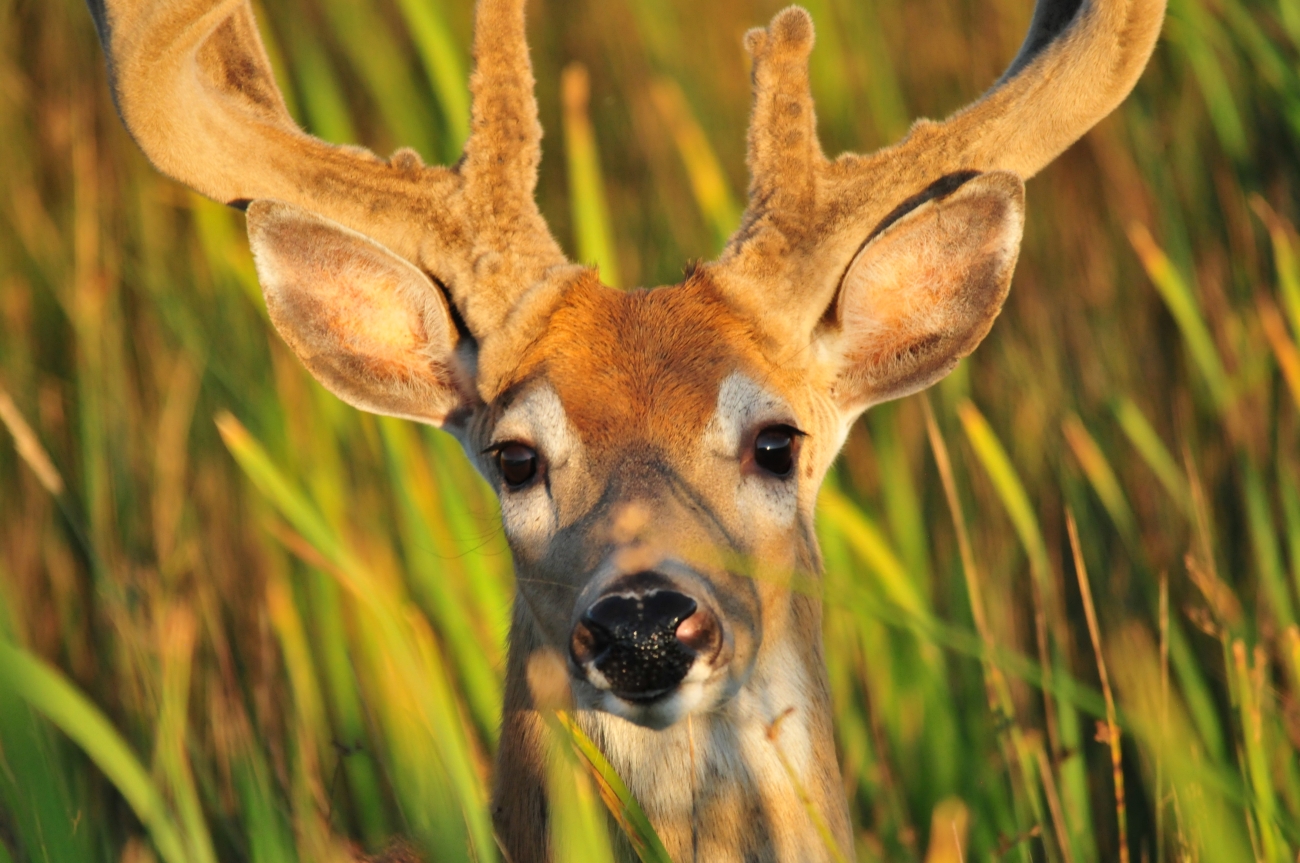
Close view of a white-tailed buck standing in tall grass
White-tailed deer (representative species photograph). Tom Koerner / U.S. Fish & Wildlife Service, public domain. Photo source and rights.

Quick answer

Texas's 2026–27 white-tailed deer archery-only season runs October 3–November 6, 2026. General season runs November 7, 2026–January 3, 2027 in the North Zone and November 7, 2026–January 17, 2027 in the South Zone. Those are statewide zone frameworks, not permission to hunt every county or property: check the exact county's season, legal deer, bag and antler limits, access, and harvest requirements with TPWD before you go.

2026–27 season at a glance

Texas white-tailed deer hunting dates

This table summarizes TPWD's zone calendar. Dates do not override county-specific legal deer, antler restrictions, land access or special permit requirements.

Archery only

Counties with an open season

Oct. 3–Nov. 6, 2026

General season

North Zone

Nov. 7, 2026–Jan. 3, 2027

General season

South Zone

Nov. 7, 2026–Jan. 17, 2027

Early youth-only

Eligible counties

Oct. 30–Nov. 1, 2026

Late youth-only

North Zone

Jan. 4–17, 2027

Muzzleloader-only

Designated counties

Jan. 4–17, 2027

Special late

North Zone, where offered

Jan. 4–17, 2027

Special late

South Zone, where offered

Jan. 18–31, 2027

Late seasons have limits on legal deer; youth-only hunts have age restrictions. Always check the official county listing before hunting.

TPWD date snapshot recorded November 17, 2026; the full legal guide has a separate editorial review date, and GitHub rechecks the official calendars weekly.

Official county regulations

Check the exact county before you hunt

TPWD maintains different bag limits, antler restrictions, permitted hunt dates and special notices for each county. This selection opens TPWD’s latest official county page directly, rather than showing a potentially outdated copy. CWD testing zones can cross county boundaries; verify those separately.

Select a county to open official rules

A worked 2026–27 trip decision

Same November weekend, three different county rulebooks

Suppose you are considering a November 21, 2026 deer hunt. These are examples of county-wide TPWD rules for a regular license-tag hunter, not booked hunts or permission to enter a property. Grayson changes the legal weapon; Washington changes which days a license-tag doe is eligible; Gillespie has a different county bag limit and late-season structure.

Grayson County

Bag and buck rules
4 deer total: at most 2 bucks and 2 antlerless. Only one buck may have an inside spread of 13 inches or more.
Legal deer / means
Even during its Nov. 7–Jan. 3 general season, lawful deer methods are archery equipment and crossbows only; additional restrictions apply to crossbows during archery-only season.
Reporting
Both bucks and antlerless deer taken under license tags must be reported to TPWD within 24 hours.
Access check
Secure written private-land permission or verify an exact public-hunt unit and its methods; a general-season date does not permit rifle hunting here.

Washington County

Bag and buck rules
4 deer total: at most 2 bucks and 2 antlerless; its 13-inch antler-restriction framework limits qualifying bucks.
Legal deer / means
During Nov. 14–29, 2026, its expanded general-season antlerless period allows license-tag antlerless harvest, subject to the county and property rules. It is not an all-season doe permit.
Reporting
License-tag antlerless harvest must be reported within 24 hours; TPWD does not list Washington among its four mandatory buck-reporting counties.
Access check
Verify landowner or lease permission and whether MLDP tags replace license tags on the chosen property.

Gillespie County

Bag and buck rules
5 deer total, no more than 2 bucks, all seasons combined under the county's ordinary license-tag rule.
Legal deer / means
Its Nov. 7–Jan. 3 general season differs from the Jan. 4–17 special-late season, when only antlerless deer and unbranched-antlered bucks are eligible.
Reporting
Gillespie is not on TPWD's current statewide list of counties requiring 24-hour license-tag white-tailed-deer harvest reporting; separate MLDP and property rules still matter.
Access check
Confirm access and individual property tags; do not infer that a nearby park or public parcel allows hunting.

Do the CWD and land check separately for every property

A county name does not resolve a CWD zone boundary. Check the exact hunting location against TPWD's live zones and check stations before travel. Where mandatory CWD testing applies, TPWD requires the intact, unfrozen head at a designated station within 48 hours; statewide carcass-disposal rules also apply outside those zones. For public access, use the TPWD area's current Legal Game box and permits rather than relying on the county calendar.

Source comparison checked November 15, 2026 against TPWD's Grayson, Washington and Gillespie county pages, statewide reporting list, CWD/after-harvest regulations and public-access instructions. These are independently assembled planning examples—not firsthand hunting reports, a professional wildlife-biologist review or legal advice. Read the claim-by-claim source record.

Claim-by-claim TPWD source record

TexasDefined's November 15, 2026 desk comparison uses the current 2026–27 TPWD county rules and statewide documents. Each row connects a consequential planning claim to its official source and identifies what the source does not establish.

Grayson — legal means and reporting. The county white-tailed-deer rules control the archery/crossbow restriction, buck and antlerless bag ceiling and 24-hour reporting. They do not grant access to a particular property.

Washington — 2026 antlerless days and reporting. The official county page identifies eligible general-season antlerless days, county bag limits and antlerless reporting; it does not convert a license tag into an MLDP permit.

Gillespie — general versus special-late harvest. The official county page distinguishes its five-deer limit and special-late deer eligibility; check the entire current entry before taking a buck.

CWD and transport. The TPWD zone and testing instructions and after-harvest rules control mandatory testing, transport and carcass disposal. County identity alone cannot prove a property's zone.

Access and permits. TPWD's public hunting area / Legal Game finder controls specific public-property permissions; this comparison does not assert any publicly available hunt, landowner consent or actual field visit.

Method: desk-based primary-source comparison; independently synthesized planning implications. No firsthand hunt, professional wildlife-biologist assessment or outside expert reviewer is claimed. TPWD may revise any rule, so follow the live pages before hunting. The underlying editorial source ledger is retained with the guide's repository revision history.

TexasDefined's regional comparison

Choose a hunting region for the right reasons

This original planning matrix compares habitat, field tradeoffs and access questions; it is not a county-rule table or a prediction of deer abundance. Use it to narrow a trip, then confirm access, exact seasons, tags and safety with TPWD and the property manager.

Texas deer habitat and hunt-planning comparisons by region
RegionLandscape to scoutPractical tradeoffAccess question
Hill Country / Edwards PlateauOak-juniper ridges, creek bottoms and openingsFood and water distribution can shift movement sharply with drought; do not assume neighboring ranches have equal deer density.Mostly permission or lease planning; check any individual public hunt notice.
South Texas PlainsThornscrub, mesquite, senderos and riparian corridorsCover can limit visibility; ranch management and individual property rules vary.Private ranch access is common; verify MLDP tags if the property participates.
Pineywoods / East TexasPine-hardwood forest, cutovers and bottomlandsShorter sightlines make safe shot selection and a known backstop especially important.Search TPWD public-area legal-game listings; do not assume every forest tract allows deer hunts.
Cross Timbers / North TexasOak woodland, pasture edges and agricultural mosaicsProperty boundaries and neighboring activity matter; typical breeding timing differs from South Texas.Confirm parcel boundaries and the exact county's legal deer and reporting rules.
West TexasLocalized draws, brush and transition countryWhite-tailed and mule-deer ranges overlap in places; verify species identification and species-specific rules.Check the property and TPWD county listing before assuming either deer species is legal.

Source context: TPWD deer ecology and regional rut research; the comparisons and planning judgments are TexasDefined editorial synthesis, not TPWD legal classifications.

Regulatory freshness

TPWD 2026–27

Published TPWD data snapshot November 17, 2026

TexasDefined is an independent planning and educational publication, not the legal authority for Texas hunting rules. Verify current seasons, county rules, legal means and methods, endorsements, tagging, reporting requirements and bag limits with Texas Parks and Wildlife Department before hunting.

Statewide TPWD rule-change notice, public-access program and source links checked; every hunt still requires current unit and county verification.

01

2026–27 Texas white-tailed deer season dates

Use the season table above for the eight statewide white-tailed deer date ranges. It includes both general-season zones and archery-only dates. This table is a planning reference—not a license to hunt in every county, or a mule-deer calendar.

The early youth-only season is October 30–November 1, 2026. The North Zone also has a late youth-only season January 4–17, 2027. Muzzleloader season is January 4–17, 2027 only in designated counties. Special late season runs January 4–17, 2027 (North) and January 18–31, 2027 (South) where offered; TPWD currently restricts eligible harvest to antlerless and unbranched antlered deer (a buck with at least one antler that has no more than one point); confirm the county.

TPWD lists white-tailed deer seasons in 252 of Texas's 254 counties for 2026–27, but county exceptions, land-management permits and restrictions on methods or sex of deer matter. Use the official county selector rather than assuming a North/South date applies automatically. MLDP properties can have different authorized frameworks.

02

Start with the county, not just the season zone

The North/South zone tells you which general-season framework may apply; it does not tell you whether you may take a buck or antlerless deer on a particular date. Locate the property on a map, establish the county, and read TPWD's county-specific white-tailed deer rules for the type of hunt planned.

Check whether the county has an open season for your method, whether antlerless harvest is limited to specific days, and whether antler, reporting or CWD restrictions apply. TPWD expanded antlerless doe days to November 14–29, 2026 in 21 designated counties or portions of counties; it is not a statewide antlerless season. Boundary descriptions sometimes use highways, so the property location matters.

Private-property permission, hunting leases, Wildlife Management Area (WMA) hunt notices and other public-land permits are separate from the statewide season. A legal season does not itself authorize entry or hunting on a property.

03

Bag limits and what counts as a legal buck

TPWD sets deer bag limits by county. Its current statewide ceiling for regular license-tag harvest is 5 white-tailed deer annually, no more than 3 of them bucks; that statewide annual limit does not apply on MLDP properties. County-specific limits may be substantially lower.

In counties with special antler restrictions, TPWD currently describes a legal buck as one with at least one unbranched antler or an inside spread of 13 inches or greater. Limits on legal bucks and branched antlers also apply: check the complete TPWD wording and county listing before harvest. The ear-tip-to-ear-tip comparison is an estimation aid, not a legal measurement.

Do not assume any antlerless deer can be taken on any general-season day. County restrictions, antlerless-only days, legal means and MLDP conditions may change the answer. The person taking the animal must also have an appropriate available tag or permit.

04

Licenses, archery endorsement and hunter education

Obtain the appropriate current Texas hunting license for your residency and age before hunting; a public-land hunt may require an additional permit. TPWD requires an archery endorsement when hunting during archery-only season. Confirm legal equipment and county-specific means and methods rather than treating archery, firearm and muzzleloader seasons as interchangeable.

For the 2026–27 license year, review TPWD's current hunter-education birthdate, age, supervision, deferral and exemption requirements. The requirements are distinct from buying a hunting license, and acceptable proof of education should be available in the field.

Youth-only white-tailed deer seasons have TPWD age, licensing, supervision and education requirements. Use TPWD’s current eligibility rules rather than relying on an old age cutoff before booking a family hunt.

05

Deer tagging, harvest logs and digital licenses

For paper licenses, follow current TPWD rules for the correct buck or antlerless tag, harvest date, attachment and license harvest log. The timing of each step matters, and special-issued tags such as MLDP tags use their own procedures. Consult the current TPWD instructions before field dressing or moving a harvested deer.

Fully digital license holders should follow TPWD’s current Texas Hunt & Fish digital tagging, carcass identification and reporting process; online and offline procedures may differ. A paper license purchased online is not necessarily a fully digital license. Use TPWD’s official instructions for required timing and physical documentation.

Keep the necessary proof of sex and documentation with the animal during transportation and consult TPWD guidance before quartering, transferring or taking a carcass out of a CWD zone.

06

Which counties require deer harvest reporting?

For hunting-license-tag harvest in 2026–27, TPWD currently requires buck and antlerless deer reporting within 24 hours in these counties: Collin, Dallas, Grayson, Rockwall. Confirm the county’s complete legal-method requirements before hunting.

TPWD currently requires antlerless deer reporting in these additional counties or portions of counties: Austin, Bastrop, Caldwell, Colorado, Comal (East of I-35), De Witt, Fayette, Goliad (North of US 59), Gonzales, Guadalupe, Hays (East of I-35), Jackson (north of US 59), Karnes, Lavaca, Lee, Travis (East of I-35), Victoria (North of US 59), Waller, Washington, Wharton (North of US 59), and Wilson. Boundary qualifiers matter; check the latest official county map and listing.

Report as required through Texas Hunt & Fish or TPWD's online reporting service. Executing a valid digital tag also serves as mandatory reporting where applicable. Do not assume the absence of a statewide reporting rule means your county has none.

07

Chronic wasting disease: testing and carcass movement

Chronic wasting disease (CWD) is a fatal neurological disease affecting deer and certain other cervids. TPWD uses containment, surveillance and other designated zones where harvest testing, carcass movement and disposal restrictions may apply. Zone boundaries and check-station details can change, so consult the current map for the exact property.

TPWD may require timely testing, designated check-station submission, and specific specimen handling in CWD zones. Testing windows and requirements vary by zone and season; consult the current TPWD CWD zone instructions before field dressing or transporting a deer.

Avoid moving high-risk carcass parts contrary to TPWD requirements, and consider voluntary testing outside mandatory zones. Report visibly sick animals to TPWD.

New World screwworm is a separate 2026 wildlife-health concern, not a form of CWD. TPWD advises hunters to inspect harvested animals for suspicious wounds or live larvae and promptly report suspected infestation in living native wildlife to a local TPWD biologist or (512) 389-4505. Do not transport or dispose of a potentially infested carcass without consulting current TPWD guidance; check the official, changing NWS zone map before a trip. Avoid handling suspicious larvae without appropriate precautions.

08

Where to hunt: Texas deer habitat by region

The regional comparison above identifies useful differences between Texas landscapes, but a region name cannot tell you how deer use a specific property. During a scouting visit, locate legal entry points, likely food sources, water, cover and travel corridors without crossing a boundary you do not have permission to enter.

For a dry fall, prioritize recent signs near dependable water and forage rather than last year's trail patterns; after heavy rain, use fresh tracks and browse to reassess. In timber, look at safe visibility and backstops. In open country, plan distance, wind and approach routes without treating a long sightline as permission to shoot.

Before deciding on a region, check the current county-specific legal deer, access type and whether the area's public-hunting dates actually overlap the trip. Neither this editorial comparison nor an observed deer track proves a property is open to hunting.

09

The Texas rut is not the same week everywhere

Deer breeding activity varies considerably across the state's ecological regions. TPWD's white-tailed deer rut research places typical Cross Timbers breeding activity in mid-November, while the South Texas Plains commonly peaks later, around mid-to-late December; local patterns and individual-year conditions still vary.

A useful hunting plan accounts for the region, actual deer sign and pressure rather than relying on a single statewide 'rut week.' The first legal season day is not necessarily the peak movement period in a particular county.

Focus on habitat and ethical observation: consider prevailing wind, access routes, suitable visibility, known food and water availability, and the safety of everyone on adjoining properties. Weather and hunting pressure may change daily movement even within the same week.

10

Public-land deer hunting: walk-in and drawn hunts

Texas has public hunting opportunities, but an Annual Public Hunting (APH) Permit is not a blanket deer permit for every public parcel. An APH Permit is separate from a valid hunting license and any required endorsements; verify the current TPWD permit price before purchasing. Each property listing specifies legal game, dates, hunting methods, parking, entry procedures and limits.

Some deer opportunities are drawn hunts, E-Postcard hunts or other permit types with applications, deadlines, fees and designated check-in conditions. State parks, national forests and WMAs cannot be treated as automatically open to general deer hunting. Read the exact area's current legal-game listing before traveling.

Compare drive time, access requirements, terrain, available public-hunting dates and whether a scouting trip is permitted. On a private lease, obtain the landowner's permission and clarify boundaries, guest rules, harvest reporting and any special land-management tags.

11

Practical deer-hunt checklist

Before departure: identify the property and county; verify its exact TPWD season and legal deer; confirm your current license, archery endorsement if applicable, hunter-education compliance and property access; check whether county reporting, MLDP or CWD requirements apply.

For the trip: plan legal and safe access routes; check weather, wind and daylight; carry communication, water, navigation and first aid supplies; confirm firearms and archery safety practices, blaze-orange requirements where applicable, and emergency contact arrangements. Do not trespass to retrieve an animal—arrange legal access.

After harvest: confirm species, sex and antler legality; complete the correct paper or digital tag before movement or field dressing; fill in the required harvest log and county reporting; follow CWD check-station and carcass rules; inspect for possible screwworm larvae and consult TPWD if infestation is suspected; preserve proof of sex during transport.

Quick answers

Frequently asked questions

Can I take an antlerless deer throughout general deer season?+

Not automatically. Antlerless harvest dates, legal methods, tags and limits are county-specific. TPWD expanded 2026 doe days to November 14–29 for 21 designated counties or county portions, but that is not a statewide permission. Check the exact property and county listing.

What if my deer-hunting property crosses a county line?+

Locate where you intend to hunt, check the applicable county or county-portion TPWD regulations for each location, and confirm boundaries and permission with the property owner. Highway-based exceptions and nearby CWD zones can matter. Ask TPWD if a boundary is unclear.

How many bucks can I shoot in Texas?+

TPWD currently sets a statewide regular license-tag ceiling of 3 bucks within 5 white-tailed deer, but counties can have lower limits and antler restrictions. MLDP uses a different permit framework; check the official county entry.

Is a 13-inch spread required for every Texas buck?+

No. The current 13-inch inside-spread measure is part of the rules only in designated counties, and unbranched-antler exceptions may apply. Check the full official county rules and diagrams.

Do Texas deer hunters need to report every harvest?+

Not every county has identical reporting rules. TPWD currently requires reporting within 24 hours for applicable license-tag deer in Collin, Dallas, Grayson, Rockwall, plus antlerless-only reporting in additional counties and county portions. Special tags and fully digital licenses may have different procedures.

Can I hunt deer on public land with just a hunting license?+

Not automatically. The APH program, drawn-hunt permits and specific public properties have additional access requirements, legal-game lists and hunt dates. A valid hunting license is necessary but may not be sufficient.

How quickly must a harvested deer be tagged?+

Follow current TPWD rules for the precise deadline and process. Paper tags, fully digital tags and special-issued management permits can have different attachment, reporting and handling requirements.

When is CWD testing mandatory for a Texas deer?+

It depends on the current TPWD CWD zone requirements, designated check-station procedures, and specimen rules. Look up the exact property and current testing deadline before the hunt; restrictions also govern carcass movement.

What is the best time for the rut in Texas?+

There is no single statewide rut week. TPWD research places typical Cross Timbers breeding around mid-November and South Texas Plains peaks around mid-to-late December, but timing varies by region and year.

Optional gear shopping

Hunting apparel and accessories

Compare clothing and equipment for the weather and terrain. Shop only after checking your hunt's actual needs and official regulations.

Compare hunting pants

Choose layers and fabrics for terrain and weather.

View at Kings Camo ↗

Explore rain protection

Check waterproof outerwear and layering options.

View at Kings Camo ↗

Affiliate disclosure: TexasDefined may earn a commission from qualifying Kings Camo purchases, at no additional cost to you. These third-party products are not TPWD recommendations or substitutes for licensing, season, access, or safety rules.