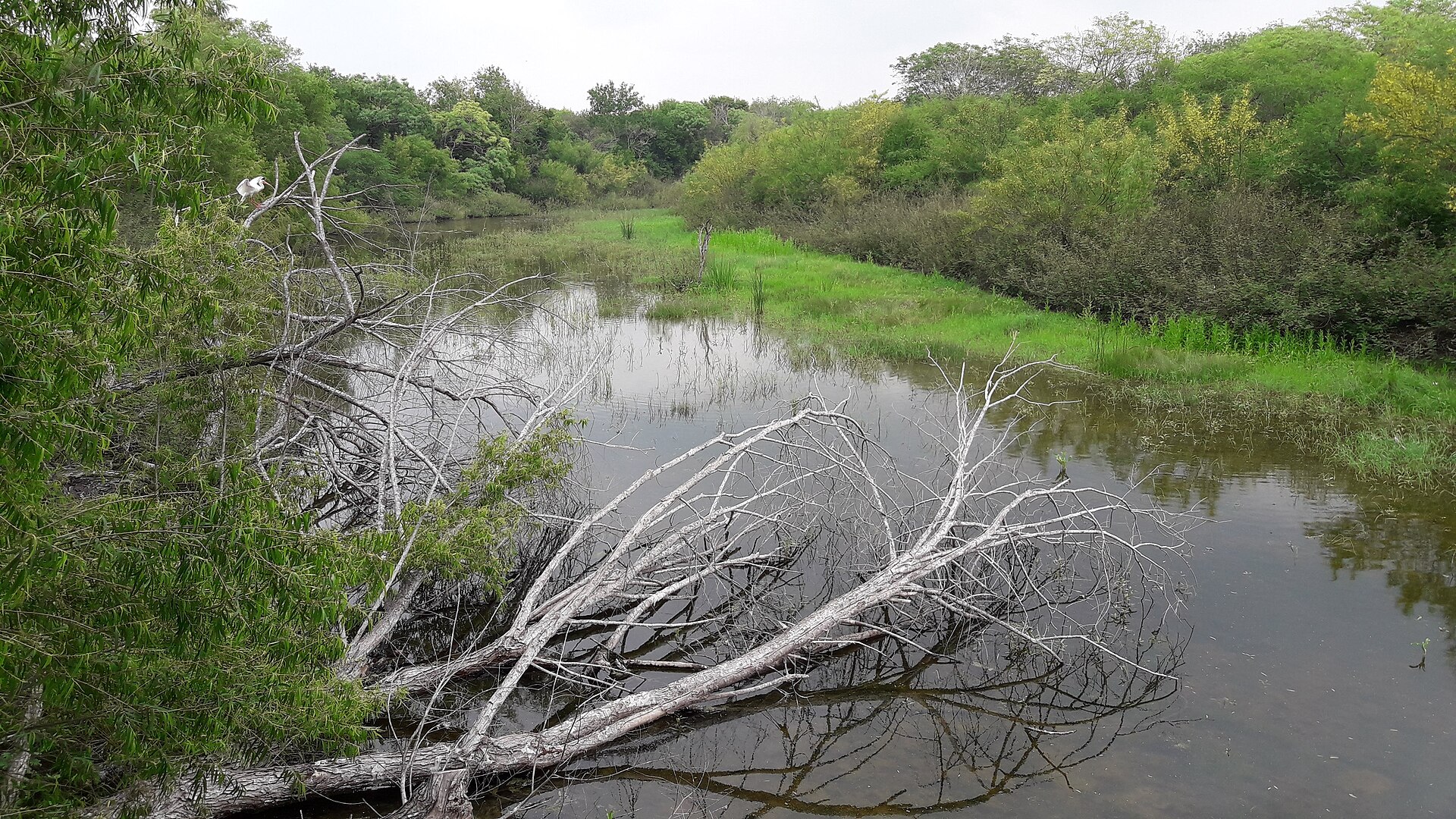
Resaca de la Palma State Park protects a broad semi-tropical landscape shaped by the Rio Grande's former bends, known locally as resacas. The old river channels support wetland edges, while ebony and anacua woodland, savanna and thornscrub support butterflies, resident birds and migrants. Its habitat feels distinct from the urban nature centers near McAllen and from the Gulf shoreline beyond Brownsville.
Texas Parks & Wildlife describes more than eight miles of trails and four observation decks overlooking resaca water. Begin with an easy section near headquarters or plan a longer walk through the native vegetation. Patient stops at the overlooks are often more useful for watching wildlife than trying to cover every mile, and bird sightings depend on the season and water conditions.
Private vehicles are not allowed on the interior roads. Visitors use trails, bicycles where permitted, and tram tours when scheduled; parking and orientation begin at the visitor center. The car-free layout is an important accessibility and time-planning consideration, not an inconvenience to discover after arriving. Check the current park map and ask about conditions or alternative access if mobility is a concern.
This is a conservation-first destination, and part of the visitor area may close for managed hunting or other resource work on certain dates. Consult TPWD's active alerts and day-pass information, especially in fall, and carry water, insect protection and sun cover. The other World Birding Center state parks at Estero Llano Grande and Bentsen-Rio Grande Valley provide different habitats for a separate Valley day.