Sawmill Town history
Exhibits explore the work and everyday lives behind the East Texas lumber boom, an essential complement to seeing only old machinery.

Piney Woods · Historic Sites & Museums
Texas Forestry Museum in Lufkin interprets the forests and forest industries of Texas through sawmill, paper-mill, logging-railroad, conservation and family-learning exhibits, with free admission and an outdoor interpretive trail.
Photography: Billy Hathorn · CC BY-SA 3.0 · Wikimedia Commons · CC BY-SA 3.0 license ↗
Quick trip facts
Practical visitor details
The experience
Texas Forestry Museum tells the story of the forests that shaped East Texas and the industries, communities and transportation networks that grew around them. The museum describes its mission as collecting, preserving, exhibiting and interpreting objects, papers and photographs connected to forests, forestry professions and forest-related industries across Texas, with public education and sound forestry practices central to that work.
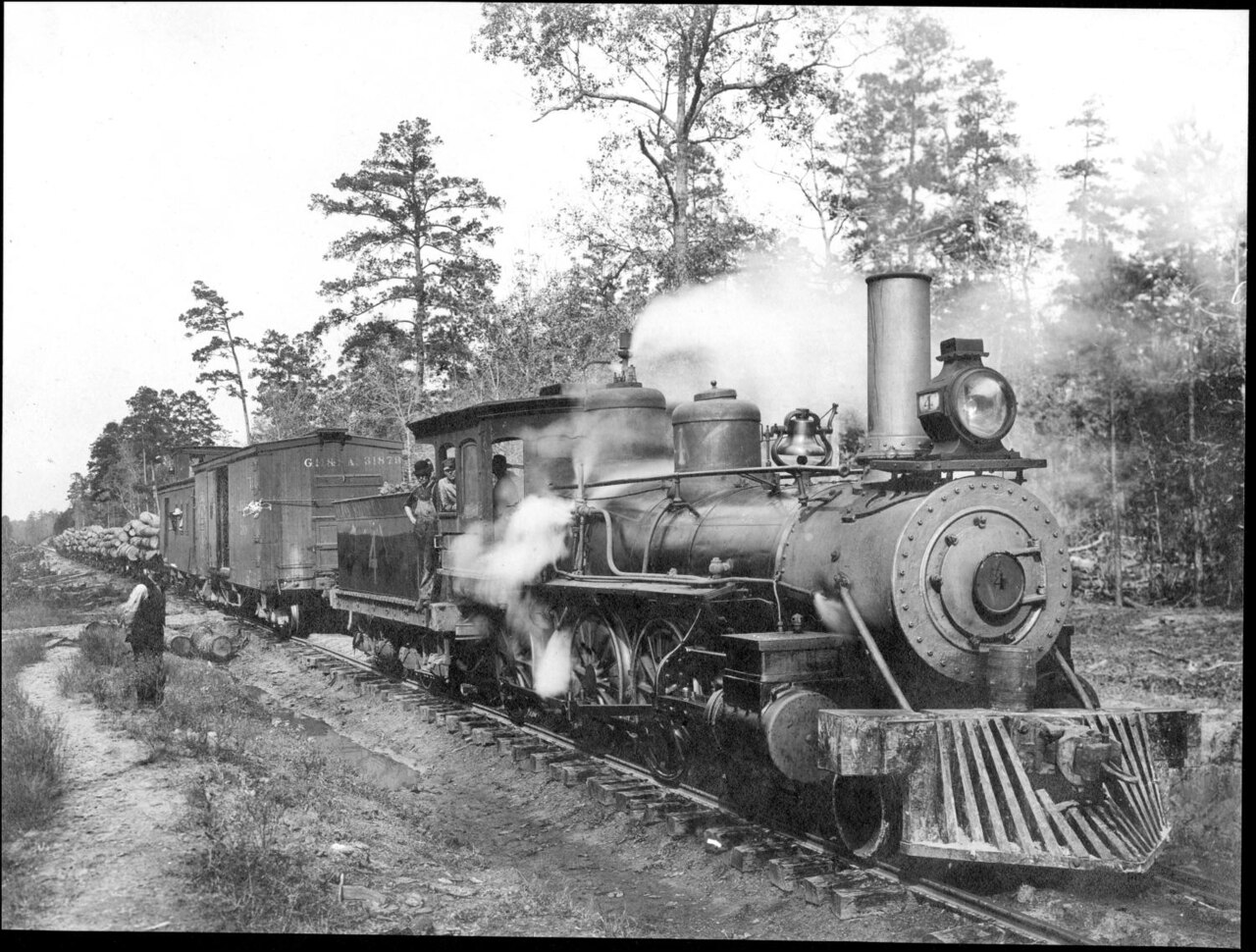
Its visitor experience moves between industrial history and the living forest. Sawmill and paper-mill exhibits explain major regional industries, while the outdoor railroad area preserves a locomotive, caboose and related logging equipment. The museum also maintains collections and research resources documenting forestry, logging, mills and the people whose work transformed timber into one of the region's defining economic foundations.
Opened in 1976, the museum reached its 50th anniversary in 2026. Its exhibits connect the late-19th- and early-20th-century lumber boom with logging towns, railroad transport and the later development of paper manufacturing. The distinction matters: forestry here is presented as both the history of work and a continuing conversation about forest management, not merely a collection of antique machines.
The museum is also built for repeat family visits rather than a single static-gallery stop. Current visitor information highlights a Children's Wing, scavenger hunts, a nature playscape, an accessible paved trail and scheduled educational programs. Free admission and regular six-day public hours make the Texas Forestry Museum a strong standalone stop for understanding both the cultural history and continuing stewardship of the Piney Woods.
For a first visit, start with the sawmill and paper-mill interpretation to understand how standing timber became finished products, then compare those displays with the outdoor locomotive and logging equipment. This sequence connects the industrial exhibits to the transportation systems that moved East Texas lumber. Visitors interested primarily in natural history can reverse the order and begin with the paved outdoor trail when weather is mild.
Families with younger children can plan the Children’s Wing around the train table, sawmill-town playhouse and fire tower. Scavenger hunts and the nature playscape offer a different experience from reading exhibit panels. These are visitor amenities rather than promises that a particular staffed program will run every day; consult the museum calendar for workshops or special activities.
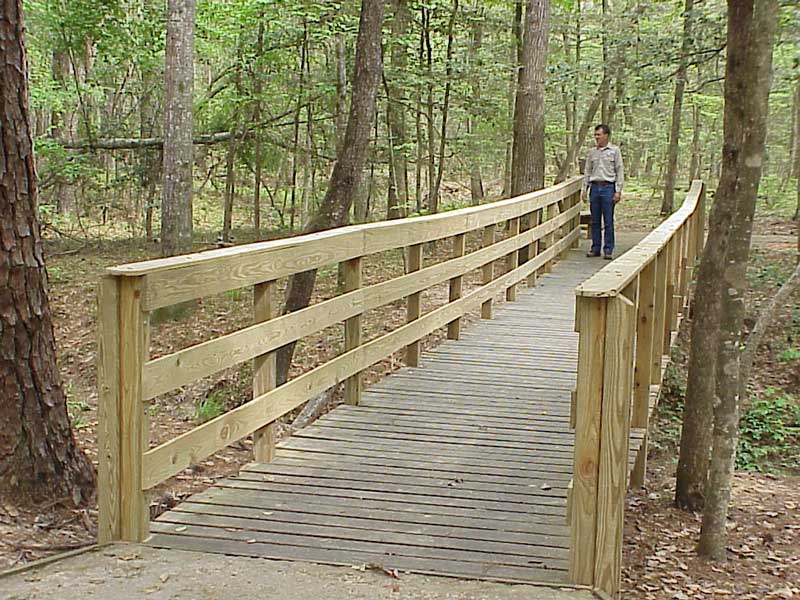
Accessibility planning should include both the indoor galleries and the outdoor equipment area. The operator identifies accessible restrooms, ramps to the locomotive and Children’s Wing, a paved trail, sensory backpacks and a downloadable social story. Those resources are more specific than a generic wheelchair-accessible label, but families should confirm the condition of outdoor routes and the availability of loaned sensory materials before traveling.
The museum’s own online visitor and contact pages have displayed conflicting ZIP codes for the same street address. The contact page and Texas Historical Commission record use 75901; visitors should navigate by the exact street address, 1905 Atkinson Drive, and confirm directions with the museum if a map service disagrees.
The free-admission policy makes a short stop practical, but the museum is closed Sundays and on major holidays. Adult groups seeking a guided history tour must request dates before arriving. The museum's adult-tour booking form states that groups from Angelina County tour free, while groups based outside Angelina County pay $3 per person. That fee is for a booked adult tour, not general admission; school groups should follow their separate field-trip arrangements. Because the site interprets logging, railroads and forest management together, visitors comparing East Texas heritage attractions can use it as a starting point for understanding how the timber economy affected nearby towns.
The details
Texas Defined research guide
The Texas Forestry Museum in Lufkin combines East Texas sawmill-town history, logging technology, working-forest interpretation and hands-on family learning. Its outdoor train display, forest trail and children's activities help visitors connect the state's timber economy to real landscapes rather than treating forestry as an abstract industry.
Exhibits explore the work and everyday lives behind the East Texas lumber boom, an essential complement to seeing only old machinery.
The historical railway equipment illustrates how logs and goods moved across the Piney Woods. A trail or a train exhibit may be weather-dependent, so treat outdoor access separately.
The Southland paper-mill story shows how the wood-products economy diversified and how pulp manufacturing contributed to Lufkin's industries.
Hands-on activity areas and a roughly 0.4-mile interpretive trail provide different ways for toddlers, schoolchildren and adults to learn about forest ecology.
Questions drawn from museum information, visitor discussions and independent visitor research. Answers are checked against linked sources; check the museum for today's operating details.
Yes. The museum says general admission is free, with donations gratefully accepted. Special educational programs, booked group sessions and some events may carry separate charges, so check the specific reservation page before booking.
Checked · Source and current details
Yes. The Children's Wing, indoor train table, sawmill play setting, scavenger hunts, Nature Playscape and nature-art activities are suited to family learning. Adults should choose age-appropriate outdoor activities and supervise children around railroad equipment.
Checked · Source and current details
Highlights include the Sawmill Town history exhibits, Paper Mill Room, historic logging train and caboose, a children's area and outdoor Urban Wildscape Trail. The interpretive focus is Texas forest history and products, not only botanical displays.
Checked · Source and current details
Allow roughly one to two hours for the indoor exhibits and selected outdoor highlights; families using the nature playscape or following the approximately 0.4-mile trail may prefer a longer visit. This is an independent planning estimate.
Checked · Source and current details
The museum advertises accessible restrooms, paved outdoor paths, ramps to the locomotive and Children's Wing, and free sensory backpacks. Not every outdoor surface or event is identical, so ask staff for the recommended route when arranging a visit.
Checked · Source and current details
Yes. The official tour program asks school and organized adult groups to book ahead. Sawmill, paper-mill and outdoor railway topics can be combined. The separate adult tour form lists free adult tours for Angelina County groups and $3 per person for adult groups from outside Angelina County. General museum admission remains free.
Checked · Source and current details
The museum visitor page advertises bottled water, a drinking fountain and outdoor picnic tables, but does not document a full-service on-site restaurant. Plan a picnic or meal elsewhere in Lufkin rather than assuming indoor food service.
Checked · Source and current details
The operator lists Monday through Saturday, 10 a.m. to 5 p.m., with closures on major holidays. Sunday is not included in its regular visiting schedule; consult the official page for holiday events and exceptions.
Checked · Source and current details
Founded in 1976 and marking its 50th anniversary in 2026, the museum documents how logging, sawmill communities, rail transport, paper production and forest conservation transformed Angelina County and the wider Piney Woods. Visitors can ask how extractive industry changed forests and communities over time, and contrast that history with present-day sustainable forestry and recreational forest stewardship.
Connected museum guides
More researched museum guides linked by subject or region. Each museum has its own admission, hours and visitor policies.
Diboll · Angelina County
Wharton · Wharton County
Waco · McLennan County
San Antonio · Bexar County
Austin · Travis County
Plan the route
Editorially paired stops near Texas Forestry Museum appear first, followed by nearby destinations. Distances are approximate straight-line miles.
Lufkin · Angelina County · Piney Woods
Lufkin's Museum of East Texas is a free community art museum in a historic former Episcopal church, presenting rotating exhibitions, East Texas artists, broader American and international work, family programs and one of the region's strongest arts-education calendars.
Approx. 1 mile away
Nacogdoches · Nacogdoches County · Piney Woods
A 2,560-acre USDA research forest southwest of Nacogdoches with a paved 0.8-mile Jack Creek Loop and a 1.5-mile natural-surface Management Loop on the operator's detailed map; the agency's descriptive webpage instead calls the latter 2.0 miles.
Approx. 11 miles away
Nacogdoches · Nacogdoches County · Piney Woods
Alazan Bayou WMA protects 2,063 acres of bottomland hardwood forest, old fields and floodplain habitat along the Angelina River and associated East Texas bayous south of Nacogdoches.
Approx. 12 miles away
Diboll · Angelina County · Piney Woods
The History Center in Diboll offers free visits to historic exhibits, a stationary 1920 steam locomotive, a 1948 caboose, and the region's lumber, railroad and community history.
Approx. 12 miles away
Nacogdoches · Nacogdoches County · Piney Woods
A circa-1830 Nacogdoches historic house associated with Adolphus Sterne, the Texas Revolution and the later von der Hoya family. The museum is currently closed for preservation-related maintenance.
Approx. 18 miles away
Nacogdoches · Nacogdoches County · Piney Woods
Nacogdoches is an East Texas university town with deep Spanish and Mexican-era roots, brick-paved historic streets, museums, gardens, trails and Stephen F. Austin State University, making the self-described oldest town in Texas a complete Piney Woods destination.
Approx. 18 miles away
Texas Explained
Go beyond the destination with the systems, landscapes and history that explain why this part of Texas looks and works the way it does.
Continue exploring
Read next
Historic Sites
A practical Texas lighthouse guide comparing public access, climbs, viewing methods and trip logistics from Port Isabel to the Sabine gateway.
August 21, 2026 · About 12 minutes
Historic Sites
Missions, battlefields, courthouses and museums make more sense as a road map than a timeline. These are the places that turn state history back into geography.
August 7, 2026 · About 2 minutes