

home garden
20 Things to Do Before Opening Your Pool for a Texas Summer
Before the first 95-degree weekend, inspect the equipment, rebalance the water, check circulation and make sure the pool is ready for months of heat.
Pool season arrives early in much of Texas and the heat can make a small chemistry or circulation problem grow quickly. The exact startup process depends on pool type and equipment, but the preparation sequence is broadly similar.
- Remove debris before it reaches the pump basket.
- Inspect the waterline, coping and deck for winter damage.
- Check pump lids, O-rings and unions for leaks.
- Inspect the filter and clean it if needed.
- Confirm valves move freely and are in the right position.
- Prime the pump correctly before extended operation.
- Inspect heater or heat-pump connections before using them.
- Check automation schedules and freeze-mode settings.
- Test water before adding chemicals.
- Balance pH and alkalinity before chasing sanitizer levels.
- Verify stabilizer levels for outdoor chlorine pools.
- Brush walls, steps and shelves.
- Vacuum settled debris.
- Confirm returns are moving water effectively.
- Check skimmer weirs and baskets.
- Inspect lights and GFCI protection.
- Confirm fencing, gates and latches are secure.
- Move summer pump schedules toward the actual heat and bather load.
- Stock the chemicals you routinely use before demand spikes.
- Create a weekly test-and-clean routine before the pool gets busy.
If any electrical, gas, structural or equipment issue looks unsafe, use a qualified professional rather than treating a seasonal checklist as a repair manual.
Opening a Texas pool starts with safety, not chemicals
Before extending pump run time or adding chemicals, inspect the pool area as a system. Confirm barriers and self-closing, self-latching gates work; check drain covers and rescue equipment; and make sure household door or window safeguards used to prevent unsupervised access still function. Federal pool-safety guidance emphasizes layers of protection because no single barrier replaces active supervision. If a drain cover is missing, broken or questionable, keep swimmers out until it is evaluated and corrected.
Walk the equipment pad while equipment is off and look for cracked housings, damaged wiring enclosures, corrosion, winter leaks and debris that could interfere with ventilation. Start circulation only according to the equipment manual, then watch for persistent leaks, abnormal sounds, failure to prime or loss of flow. A pump that will not operate normally is not a reason to bypass a safety device. Electrical faults, gas odors, heater problems and damaged pressure vessels call for qualified service.
Test the water before making corrections
CDC identifies disinfectant level and pH as the first defense against germs in residential pools and hot tubs. Its home-pool guidance recommends pH from 7.0 to 7.8 and at least 1 ppm free chlorine in pools without cyanuric acid; when cyanuric acid or stabilized chlorine is used, CDC recommends at least 2 ppm free chlorine. The product label, installed equipment and local conditions still matter, so measure first and follow the chemical manufacturer's directions rather than relying on a universal dose.
Sunlight, heat, swimmers and debris can change chlorine demand quickly during a Texas summer. CDC recommends testing chlorine and pH at least twice per day and more often during heavy use. That is more frequent than many casual routines, but it highlights the core principle: conditions change. A repeatable test process is more reliable than judging water by clarity or odor alone.
Store and handle pool chemicals deliberately
Pool chemicals can cause fires, toxic gas releases and serious injury when incompatible products contact one another or water reaches stored material. Keep products in their original labeled containers, dry and secured from children and pets, and follow label directions for protective equipment and addition sequence. Never combine leftover products in a common container. If a spill, unexpected reaction or strong irritating vapor occurs, move people away and follow emergency guidance rather than improvising a cleanup.
Make small, measured corrections with circulation operating as directed, allow the manufacturer's specified circulation time, and retest before adding more. If water is extremely out of balance, the pool was neglected for a long period, there is visible contamination or you do not know what was previously added, a qualified pool professional can establish a safer baseline without creating a sequence of competing chemical additions.
Verify filtration and circulation in the real pool
Clean skimmer and pump baskets, inspect the filter according to its manual and confirm that returns are moving water through the pool. Steps, benches and shelves often need brushing even when the main body looks clean. Do not borrow another pool's pressure reading as a universal filter-cleaning threshold; establish the clean operating pressure for the installed filter and follow its manufacturer guidance. A sudden pressure or flow change is a diagnostic clue, not an invitation to defeat a valve or safety feature.
There is no single statewide pump schedule that fits every Texas pool. Variable-speed equipment, plumbing design, sanitizer system, water volume, shade, debris and bather load all matter. Start from manufacturer guidance and measured water quality, then adjust based on performance. Longer run time cannot compensate for broken circulation, inadequate disinfectant or an overloaded filter.
Do not open the season until all safety gates pass
A clean-looking pool can still be unsafe if a gate does not latch, a drain cover is compromised, disinfectant is inadequate or electrical equipment is damaged. Treat startup as five independent gates: controlled access, sound equipment, working circulation, acceptable water chemistry and a supervision plan. Children need continuous, close supervision around water, and adults should know where rescue equipment is and how to respond to a swimmer in distress.
Commission the pool in stages instead of planning opening day around swimmers
Give the system time to prove that it is stable before a party or heavy-use weekend. On the first circulation cycle, watch the equipment pad for leaks and abnormal pressure or flow. Once the pump and filter are operating normally, establish measured chemistry, brush and remove debris, and retest after corrections have circulated for the time required by the product and equipment instructions. If the pool has automation, saltwater chlorination, UV, ozone, a heater or other supplemental equipment, verify each feature independently rather than assuming the controller screen proves the device is working.
Keep a short startup log with free-chlorine and pH readings, major chemical additions, clean-filter pressure, unusual observations and the date baskets or filters were serviced. CDC's testing guidance makes repeated measurement more useful than a one-time 'opening' number because sunlight, swimmers and debris change disinfectant demand. A written baseline also makes later troubleshooting easier: a sudden pressure increase, chlorine-demand change or recurring water-loss pattern is easier to recognize when normal startup conditions were recorded instead of remembered.
Match the first swimming day to verified conditions, not the calendar
Texas can produce swim weather long before a neglected pool is ready. Delay swimming when the water cannot be adequately disinfected, visibility is poor enough to interfere with seeing the bottom, circulation equipment is malfunctioning, a barrier or drain-cover concern is unresolved, or electrical equipment has a safety defect. For contamination events or conditions outside ordinary home maintenance, use current public-health guidance or a qualified pool professional rather than inventing a chemical dose. Opening the pool a day later is a better outcome than rushing multiple corrections without confirming what each one changed.
Primary source: CDC — Home Pool and Hot Tub Water Treatment and Testing ↗
Filed under
Plan Your Visit
Places connected to this story
Destinations explicitly tied to this article in the Texas Defined guide.
Austin · Travis County
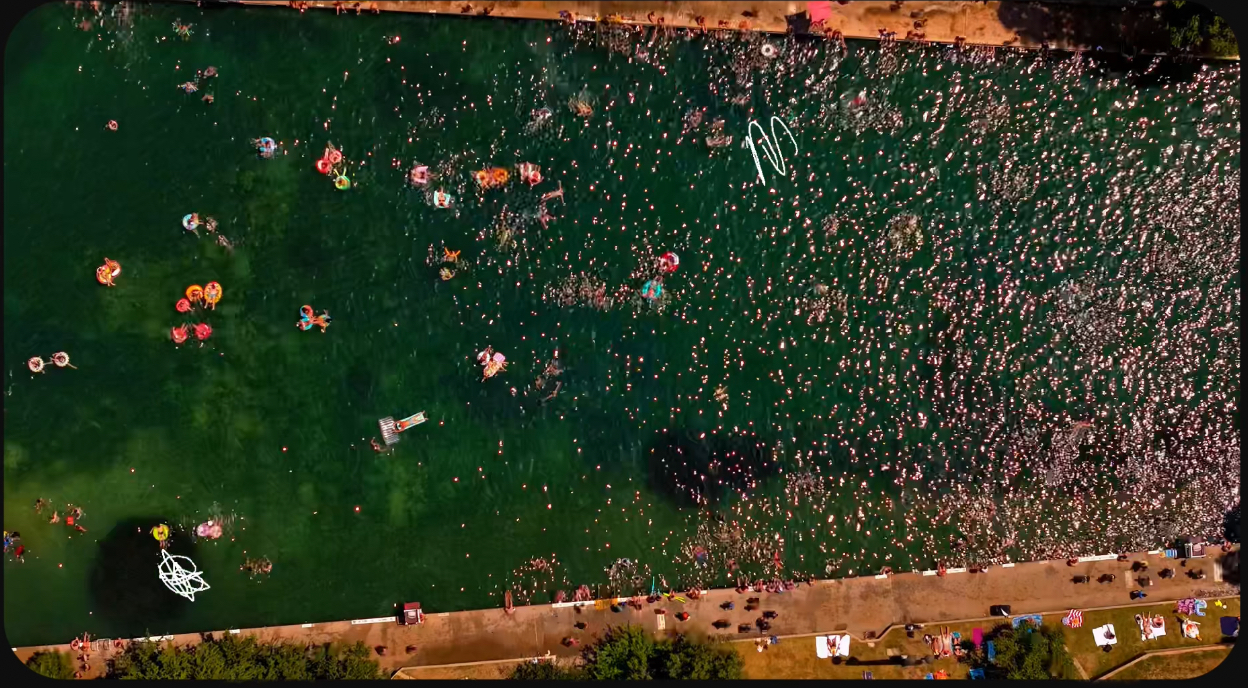
Barton Springs Pool
Austin's landmark spring-fed swimming pool in Zilker Park, supplied by the Edwards Aquifer and holding near 68–70 degrees year-round beneath limestone slopes and mature pecan trees.
Best season: Year-round, with summer the busiest season and cooler mornings quieter- Spring-fed year-round swimming
- Zilker Park setting
- Edwards Aquifer springs
Balmorhea · Reeves County
Balmorhea State Park
A West Texas oasis built around San Solomon Springs and the world’s largest spring-fed swimming pool, where clear 72-to-76-degree water fills a historic CCC-era park in the desert.
Best season: Year-round for the spring-fed pool; summer is busiest, while spring and fall pair swimming with milder desert weatherUpdated Oct 2026- Clear spring-fed San Solomon Springs pool and desert setting
- No lifeguard: supervised swimming, 25-foot depth and seasonal closing rules
- Separate advance-access requirements for scuba divers

From the magazine
More stories to read next
Front Porch
Texas Backup Power Guide: Portable Generators, Standby Systems, Transfer Switches and Outage Safety
August 22, 2026 · About 8 minutes
