texas history
The Last Dance Halls
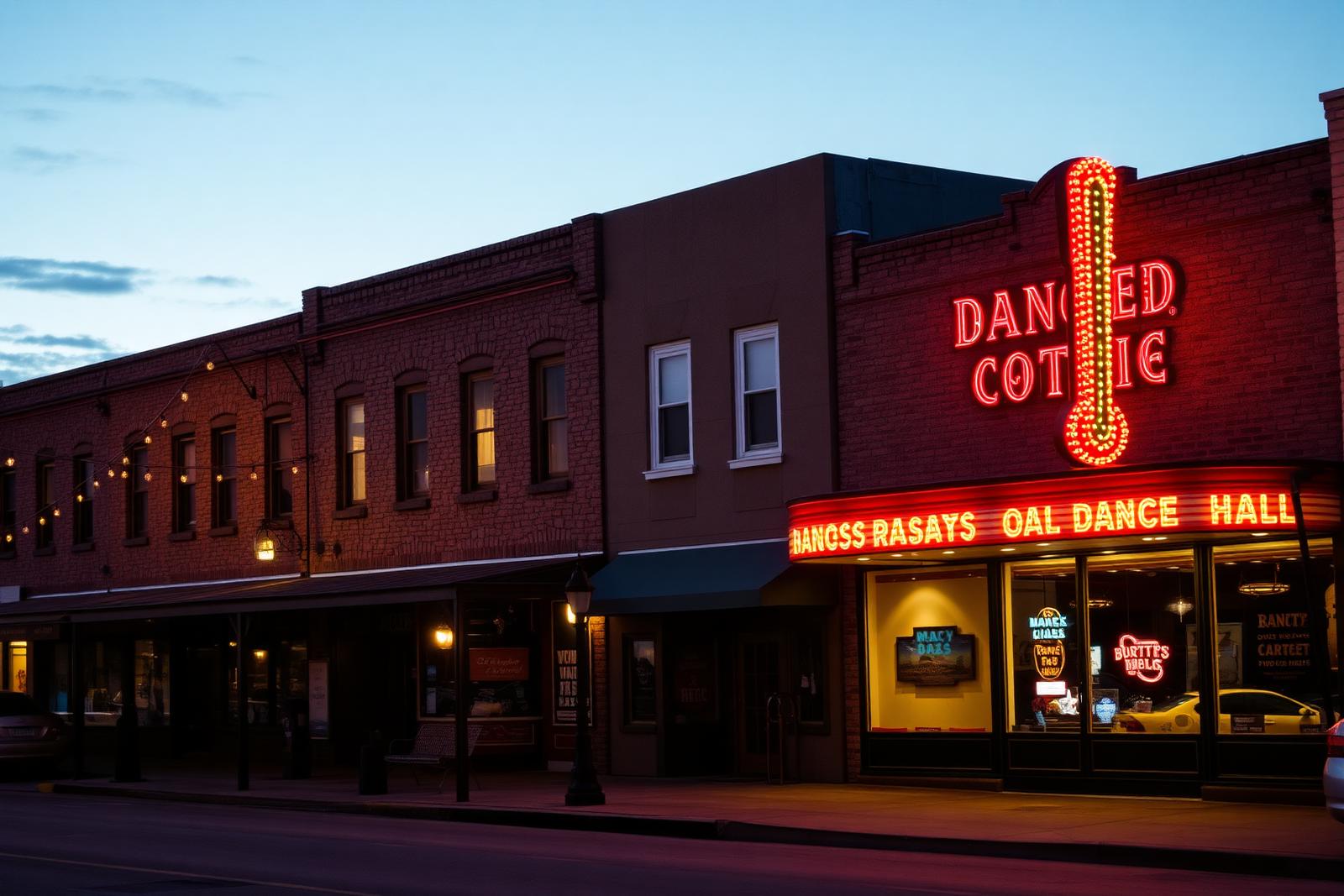
Texas dance halls survive when history remains useful: roofs stay dry, floors stay sound, bands keep playing and communities keep finding reasons to gather under the same old rafters.
A historic Texas dance hall does not survive because people agree it is charming. It survives because someone keeps rain out of the roof, moisture away from the floor, wiring and exits safe, ownership stable, the calendar active and enough community attention on the building that the next repair is worth making.
That is what separates dance-hall preservation from nostalgia. The music matters, but so do foundations, roofs, ventilation, drainage, insurance, accessibility, volunteer labor, nonprofit organization and the unglamorous economics of maintaining a large old room in a small community.
Many halls began as community infrastructure
German, Czech and other Central European communities built halls for more than dancing. Agricultural societies, fraternal groups, mutual-aid organizations, singing societies and local clubs used them for meetings, celebrations, fundraisers and social life. Dancing fit naturally into buildings already designed to gather a community under one roof.
That mixed use is important to preservation. A building that can still host weddings, dances, meetings, festivals, benefits and community events has more ways to justify repairs than a building preserved only as a static artifact.
The building itself is part of the cultural record
Historic halls often rely on long wooden floors, high ceilings, broad rooms and openings designed for ventilation before modern air conditioning. Those features shaped how crowds moved, how musicians sounded in the room and how a summer dance actually felt. Replacing every old feature with a modern equivalent can keep a venue functional while slowly erasing the physical character that made it historically important.
Preservation therefore becomes a balancing act. Owners and nonprofit boards need buildings that are safe and usable, but repairs should respect historic materials and character where practical. Qualified architects, engineers and preservation professionals can help distinguish ordinary maintenance from work that might damage a significant structure.
Water is one of the most ordinary threats
A leaking roof does not look as dramatic as demolition, but repeated water intrusion can damage framing, ceilings, wall materials and dance floors. Drainage problems can undermine foundations or keep crawl spaces wet. Texas Dance Hall Preservation explicitly focuses its grant program on critical repairs and professional condition assessments because small building failures become expensive preservation crises when they are deferred.
A dance floor is not just another floor
The floor carries both the building's use and much of its identity. Generations of shoes, dances, repairs and refinishing become part of the hall's physical history. Buckling, moisture, failed supports or inappropriate replacement can threaten both safety and character. Preserving a floor may require structural work below it rather than simply sanding what visitors can see.
Historic designation can help, but it is not a maintenance plan
National Register listing, Recorded Texas Historic Landmark status or local designation can document significance and may open doors to certain incentives, grants or technical support. Texas Dance Hall Preservation notes that different designations carry different effects and that not every designation automatically prevents alteration or demolition.
Recognition works best when paired with a realistic building plan: who owns the hall, who makes decisions, what condition the building is in, what repairs are urgent, what events generate revenue and who will still be involved five or ten years from now.
The halls that survive usually remain useful
Continuing use is one of the strongest forms of preservation. A hall with regular dances, concerts, weddings, community events or rentals keeps people physically connected to the building. That creates ticket buyers, volunteers, donors, memories and political support for preservation that an empty landmark rarely develops on its own.
Use also creates wear, of course. Preservation is not the absence of use; it is the management of use so the building can keep doing the job that made it important.
Nonprofits and volunteers fill the gap between history and economics
Many halls are too locally important to abandon but too financially marginal to maintain like a commercial venue. Volunteer boards, family owners, local historical groups and preservation nonprofits often bridge that gap. Texas Dance Hall Preservation has worked statewide since 2007, offering technical assistance, education, outreach and preservation support specifically for these buildings.
A preservation grant is leverage, not a substitute for a community
Matching grants can help pay for a roof, structural work or a professional assessment, but a match still requires local fundraising and organizational capacity. That design reflects a basic truth: outside preservation money works best when a local group is already committed enough to organize the project and maintain the result.
What visitors can do that actually helps
- Attend a public dance, concert or fundraiser when the hall has one.
- Buy tickets, food or merchandise from the hall rather than treating the building only as a photo stop.
- Respect private events, neighboring property and rules about access.
- Donate to a hall or preservation organization when a specific repair campaign is credible and transparent.
- Learn the hall's history from local or preservation sources instead of repeating folklore as fact.
- Support the broader town—restaurants, lodging and local businesses—when a dance-hall trip brings you there.
Preservation is the continuation of a relationship
A dance hall can be architecturally important and still disappear if nobody has a reason to unlock it. The strongest surviving halls remain places where history is not separated from ordinary use: people still arrive, hear music, dance, volunteer, repair a roof, clean the floor and argue about what the building needs next.
That is why the survival story is different from a list of famous halls. The broader Texas dance-hall guide can tell you where the music still lives. Preservation explains why some of those rooms are still standing when the next generation arrives.
The dance hall was a piece of civic infrastructure
To understand why Texas dance halls matter, stop thinking of them first as music venues. In many German, Czech and other Central European communities, a hall was one of the places where civic life became physical. Agricultural societies, fraternal groups, mutual-aid organizations, lodges and community clubs needed large rooms for meetings, meals, fundraisers, celebrations and dances. The building earned its keep because a town could use it again and again.
That multipurpose origin helps explain why the surviving halls feel different from purpose-built concert venues. The stage can be modest, the walls thin, the windows open, the ceiling high and the floor disproportionately important. The room was designed around gathering. Music made the gathering better.
The floor is part of the instrument
A good old dance-hall floor changes the night. Long wood spans, a little give underfoot and decades of wear create a surface meant for motion rather than spectacle. The architecture can be simple because dancers, not décor, finish the room. Open windows and tall ceilings once handled Texas heat as well as they could; screened openings, fans and shaded porches turned climate into part of the experience.
That simplicity is deceptive from a preservation standpoint. Water is relentless. A failed roof can damage trusses, walls and the floor that gives the building its identity. Poor drainage can undermine foundations. Electrical systems, exits, accessibility, insurance and modern event requirements must be addressed without stripping away the very character people are trying to save.
Preservation is an operating model, not a plaque
Texas Dance Hall Preservation has documented more than 400 halls through mapping and research and reports direct assistance to more than 40 halls, along with grants and relief funding. Those numbers tell a more useful story than nostalgia does: preservation requires money, technical help, owners or stewards, active calendars and communities willing to solve unromantic building problems.
A hall can be historically important and still disappear if nobody can insure it, repair the roof or fill enough dates to justify the next expense. Conversely, a hall does not have to become a museum to be preserved. Weddings, dances, benefits, reunions, community meetings and concerts can keep the building economically and socially alive.
The music changed, but the social grammar survived
Polkas, waltzes and Central European dance traditions were joined over time by western swing, country, conjunto, rock, Tejano and regional bands. The calendar changed with the audience. What remained was the idea that music belongs in a room where people know how to move around one another—families, older regulars, first-timers, serious dancers and children learning the etiquette by watching.
That is why the best night in a historic hall is not necessarily the night with the biggest touring name. A local benefit dance or community fundraiser can reveal more about the institution than a sold-out destination concert. The hall is most itself when the building is serving the community that keeps it standing.
How to visit an old Texas dance hall well
- Check the hall’s own calendar before building a road trip around it; many historic halls are active only on specific dates.
- Buy a ticket, a drink or merchandise when offered. Preservation is easier when visitors participate in the economics of the room.
- Do not treat a working dance floor like a photo studio. Stay aware of dancers and local etiquette.
- Look at the building before the band starts: roof structure, windows, floor, stage, porches, additions and evidence of repair tell the preservation story.
- Pair the hall with the surrounding town. Churches, cemeteries, lodge buildings, bakeries and historic commercial streets often explain who built it and why.
What Texas loses when a hall closes
A closed hall is not just one fewer place to hear country music. It can erase a room scaled to a particular community, a floor worn by generations, a building tradition adapted to Texas heat and a piece of the social network that made rural and small-town life function. New venues can host the same bands. They cannot manufacture the same continuity.
The last dance halls will survive only if they remain more than the last dance halls. They have to be useful buildings with living calendars. That is the preservation paradox: the best way to honor the past is to keep giving people a reason to show up next Saturday.
Primary source: Texas Dance Hall Preservation ↗
Plan Your Visit
Places connected to this story
Destinations explicitly tied to this article in the Texas Defined guide.
New Braunfels · Comal County
Gruene Historic District
A compact National Historic District on the Guadalupe River in New Braunfels where nineteenth-century German-Texan buildings now hold Gruene Hall, shops, restaurants, lodging and live music, preserving the scale of the original township while remaining an active entertainment district.
Best season: Spring and fall for comfortable walking and river weather; summer is lively but crowded and hot, while evenings are attractive year-round when live music is part of the planUpdated Aug 2026- Gruene Hall and its long-running live-music tradition
- Walkable nineteenth-century commercial buildings
- Guadalupe River access and Hill Country river culture

From the magazine
More stories to read next
Then & Now
El Camino Real de los Tejas in Texas: Historic Trail, Sites and Visiting Guide
October 17, 2026 · About 4 minutes
Then & Now
Butterfield Overland National Historic Trail in Texas: Where to Visit and What Survives
October 17, 2026 · About 3 minutes