texas history
Butterfield Overland National Historic Trail in Texas: Where to Visit and What Survives
Follow the 1858–1861 overland mail route through Texas history, including the Pinery station in Guadalupe Mountains National Park, with accurate access and private-land cautions.
What the Butterfield Overland route actually was
The Butterfield Overland Mail service grew from a federal mail contract awarded in 1857 to John Butterfield. Beginning in 1858, scheduled coaches and horse-and-mule relays carried mail, paying passengers and news between the Mississippi Valley and California on a southern route. The enterprise ran through Texas on its great southward arc, linking frontier stations at a time before transcontinental railroad service. The National Park Service recognizes a nearly 3,300-mile multi-state historical corridor; it is not a single Texas park with one entrance.
The stage operation was relatively brief—1858 to 1861—but its stations, roadbeds, river crossings and the personal stories of drivers, station crews and travelers left a major transportation legacy. The historic trail's designated alignment includes stretches that have vanished or sit on private property. Recognition of the route does not create an unlimited public right to drive, hike or camp on the old road.
A verifiable Texas stop: the Pinery near Pine Springs
One of the most useful starting points for travelers is the Pinery Station ruins at Guadalupe Mountains National Park. The station occupied an important watering and service place on the Butterfield corridor. Today visitors can see structural remains using the park's Pinery Trail near the Pine Springs visitor complex. The trail is a short, developed interpretive walk rather than a long continuous segment of the stage route.
Check the official Guadalupe Mountains trail and visitor information before traveling. Although the walk is short, heat, exposure, wind and accessibility needs still matter in the Chihuahuan Desert. The old stage-site ruins are protected archeological resources: stay on the designated path, do not climb on masonry, and do not remove artifacts.
Other Texas places and research approach
The Butterfield system crossed multiple very different Texas landscapes, from the Red River approach across North and West Texas to its desert travel west of the Pecos. Rather than suggesting that every apparent 'Butterfield Road' marker grants public access, use the official NPS places-to-go map for named, documented stops. Historic markers, museums, preserved stations and actual trail segments each have separate property owners and visiting rules.
Build a Texas road trip around one or two independently verified sites per day, not around a dashed line on an old route map. Historic mileage does not translate into present-day public roads, and former fords or crossings should never be advertised as legal launch or parking areas without a current owner or agency source.
History in context: movement, labor and Indigenous homelands
The history is more complicated than a story of fast mail. Mail coaches moved across lands that Indigenous nations already inhabited and traveled. Expanding U.S. communication routes were tied to settlement, territorial change and military power as well as commercial opportunity. The experience of station workers, mule and horse teams, drivers and travelers also varied sharply across seasons and regions.
At interpretation centers, ask which physical traces survive, how historians know a station's precise location, and whose perspectives appear in the exhibits. Treat an unmarked structure or earthwork as protected history—not as a souvenir stop.
Practical visit plan
For an accessible introduction, choose a mild-weather day near Pine Springs, check Guadalupe Mountains National Park current conditions, visit the Pine Springs information point and take the short Pinery Trail if it is open. Combine this with an independent scenic stop or a visit to the nearby Guadalupe Mountains landscape. Distances between West Texas services are large, so fill the tank and carry drinking water before leaving a town.
For a longer trail-focused trip, first consult the NPS Butterfield places map and build stops that individually state opening hours, fees and permission. Do not assume federal trail designation means an NPS entrance station, NPS-operated campground or single universal fee. Any commercial accommodations should be selected by actual gateway town and travel route, not a fabricated trail headquarters.
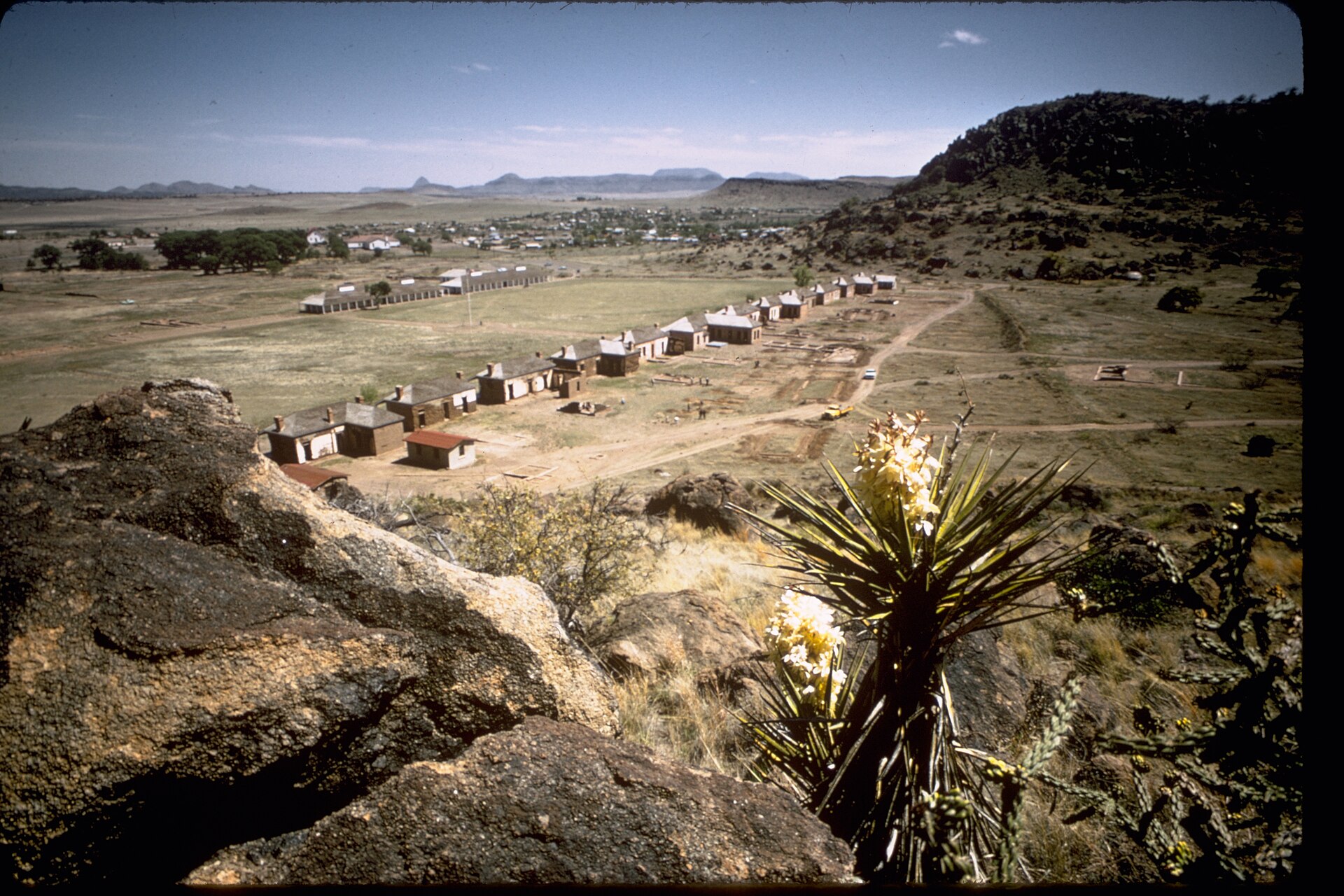
Image credit: NPS photo · Public domain · Wikimedia Commons — Guadalupe Mountains landscape, not the station ruins
Primary source: National Park Service ↗
Sources and further reading
Plan Your Visit
Places connected to this story
Destinations explicitly tied to this article in the Texas Defined guide.
Salt Flat · Culberson County
Guadalupe Mountains National Park
Hike Guadalupe Peak, the Pine Springs area and McKittrick Canyon with accurate Mountain Time visitor schedules, trail elevation gain, short-day gate closures and limited West Texas services.
Best season: Spring and fall for hiking; fall is especially popular for McKittrick Canyon color, while winter can bring strong winds and summer demands conservative heat planningUpdated Oct 2026- Guadalupe Peak: Texas highest natural point, strenuous climb
- Pine Springs visitor center and campground gateway
- McKittrick Canyon day-use gate closes at 5 p.m. Mountain
Fort Davis · Jeff Davis County
Fort Davis National Historic Site
Explore restored frontier military buildings and Buffalo Soldiers history beneath the Davis Mountains, with separate National Park Service visitor-center hours, self-guided interpretation and connecting hiking routes.
Best season: Fall through spring for mild temperatures; summer mornings are more comfortable for walking the open post groundsUpdated Oct 2026- Restored nineteenth-century officers' quarters and army buildings
- Buffalo Soldiers and post-Civil War West Texas military history
- NPS visitor-center museum and introductory film

From the magazine
More stories to read next
Then & Now
El Camino Real de los Tejas in Texas: Historic Trail, Sites and Visiting Guide
October 17, 2026 · About 4 minutes