Texas Defined's History & Heritage Desk covers Texas history, historic people and places, cultural heritage, preservation and archival context using primary records and accountable institutional sources whenever practical.
This is an institutional Texas Defined byline, not a fictional individual. It identifies the editorial desk responsible for the published work. Read the Editorial Policy for centralized sourcing, review, AI-assisted-workflow, independence, and correction standards. These are not repeated on every article.
Editorial archive
Stories from Texas Defined History & Heritage Desk
61 published stories currently carry this desk byline.
How the Fixer Upper couple built Magnolia in Waco, Texas — from their Baylor years and first home store to the Silos, Magnolia Table, Hotel 1928 and a practical visitor itinerary.
Trace the Mexico City–Santa Fe road through El Paso history, with the verified nine-mile Ysleta–Socorro–San Elizario mission corridor, actual addresses and the route's complex Indigenous and colonial legacy.
Understand the Caddo roads beneath the Spanish royal road, mission history and modern public visitor stops without mistaking the Texas-Louisiana corridor for one hiking trail.
Follow the 1858–1861 overland mail route through Texas history, including the Pinery station in Guadalupe Mountains National Park, with accurate access and private-land cautions.
The complete story of USS Lexington: Pacific combat, postwar aviation, service as a Navy training carrier, and the preserved Corpus Christi museum with current visitor details and archival photos.
Before the surviving Battleship Texas BB-35, a different USS Texas fought at Santiago de Cuba in 1898. Discover its unusual design, people, service, renaming, gunnery-test wreck and archival images.
Trace German-Texan immigration from New Braunfels and Fredericksburg to Comfort, Boerne and smaller communities, with historical context, churches, food traditions and a responsible heritage-drive itinerary.
Texas did not begin as a U.S. state—or even with the Republic. Follow Indigenous Texas, Spanish and French incursions, Mexican Texas, the Revolution, the independent Republic and the long road to statehood.
Texas history begins thousands of years before Spanish maps or the Republic. Follow Native peoples, homelands, trade networks and living nations across the region before and after European colonization.
Will and Mike Hogg helped turn a wooded edge of 1920s Houston into one of the city's most influential planned communities—a model of landscape design, private controls and civic ambition that also enforced exclusion.
Follow the Hogg family from James Hogg's East Texas birthplace and marriage through Austin, Houston, oil-era Brazoria County and Ima Hogg's preservation legacy at Winedale.
Will Hogg's estate, Ima and Mike Hogg's decisions and The University of Texas turned one family's fortune into a statewide mental-health institution that has operated since 1940.
William Clifford 'Will' Hogg carried the Hogg family from reform-era public life into Houston business, city planning, River Oaks, university advocacy, arts patronage and the estate that helped create the Hogg Foundation for Mental Health.
Sarah Ann 'Sallie' Stinson Hogg was more than the wife of Governor James Stephen Hogg: she helped shape the family's education, music, public-service ethic and social life before her death in 1895.
James and Sallie Hogg and their children Will, Ima, Mike and Tom became one of Texas's most consequential civic families, linking reform-era politics, oil wealth, mental-health philanthropy, River Oaks, Bayou Bend and historic preservation.
Ima Hogg helped shape Houston music, Texas mental-health philanthropy, historic preservation and American decorative-arts collecting while turning Bayou Bend and Varner-Hogg into public legacies.
A practical and historical guide to three of Texas' major VA national cemeteries—where they are, when visitors can enter, what makes each landscape distinctive and how their veteran stories connect to Texas military history.
From aircraft carriers and battlefields to frontier forts, WASP hangars, glider training and Pacific War collections, this statewide guide turns Texas military history into places you can actually visit.
Audie Murphy, Macario Garcia and Roy Benavidez connect World War II and Vietnam to Texas communities, civil-rights struggles, the National Guard and the country's highest military decoration.
Texas military history is full of women whose service was once treated as auxiliary, temporary or invisible. From Army nurses and Oveta Culp Hobby to the Women Airforce Service Pilots at Avenger Field, their work reshaped who could serve and what military service looked like.
Since the Cold War, Texas installations and Texas National Guard units have supported Desert Storm, Balkan peacekeeping, Afghanistan, Iraq and continuing global missions while BRAC closures and force restructuring reshaped the state's military map.
Texas was already militarized by the Mexican Revolution before U.S. entry into World War I. Then nearly 200,000 Texans served, new camps and airfields reshaped cities, and the 36th and 90th Divisions went overseas.
The 1898 war with Spain marked a turning point for Texas military life. San Antonio helped organize the Rough Riders, Texas volunteer regiments mobilized, and Texans served in Cuba, the Philippines and an expanding overseas military.
Between Mexican independence in 1821 and the Texas Revolution in 1835, military power in Texas shifted from thin presidio garrisons to settler militias and larger Mexican deployments.
On August 18, 1813, a revolutionary army of Tejanos, Mexicans, Anglo-American volunteers and Native allies met a larger Spanish Royalist force south of San Antonio. The Battle of Medina ended in catastrophe—and helped shape Texas decades before the Alamo.
A practical guide to Texas flag position, vertical display, half-staff, the U.S. flag, the state pledge, folding and retirement—grounded in the Texas Flag Code rather than folklore.
Texas did not begin with the familiar blue, white and red Lone Star flag. Its path runs through revolution-era proposals, the Burnet flag, a Republic-era redesign, annexation, a decades-long legal gap and the modern Texas Flag Code.
From B-36 bombers at Fort Worth and Atlas missile silos around Abilene to U-2 missions from Laughlin and nuclear-warhead work at Pantex, Texas became one of the country's most important Cold War military landscapes.
World War II turned Texas into a giant military training ground. Camps, airfields, depots and prisoner-of-war facilities reshaped towns, transportation, labor markets and postwar growth across the state.
Kelly Field, Brooks Field, Randolph, Lackland and Fort Sam Houston turned San Antonio into one of the most important military training and aviation centers in the United States.
Texas citizen-soldier traditions stretch from colonial-era militia and the Republic through Camp Mabry, the 36th Infantry Division, border mobilizations, world wars, disaster response and post-9/11 deployments.
The 1874–1875 Red River War was the U.S. Army campaign that forced Comanche, Kiowa, Southern Cheyenne and Arapaho peoples from the Texas Panhandle onto reservations. Adobe Walls, Palo Duro Canyon and bison destruction explain how the Southern Plains changed so quickly.
After the Civil War, African American soldiers served across Texas in the 9th and 10th Cavalry and the 24th and 25th Infantry. Fort Davis, Fort Concho, Fort McKavett and Fort Lancaster preserve parts of that complicated frontier story.
Texas maintained two small navies between the Revolution and annexation. From Liberty, Invincible and Independence to Austin, Wharton and the Battle of Campeche, the fleet protected supply lines, challenged Mexican blockades and became entangled in the political feud between Sam Houston and Edwin Ward Moore.
The first major battles of the U.S.–Mexican War were fought near Brownsville. This guide connects annexation, the disputed border, Palo Alto, Resaca de la Palma, Texas Rangers, the Treaty of Guadalupe Hidalgo and the war's lasting consequences.
Use Fanthorp Inn, Landmark Inn and the Slaton Harvey House to follow Texas travel from stage roads and wagon freight to the railroad networks that transformed distance, lodging and food on the road.
Connect the Official State Longhorn Herd, Fort Griffin and Goodnight Ranch to the cattle drives, ranch businesses, trail towns and conservation stories that turned cattle into one of Texas' defining symbols.
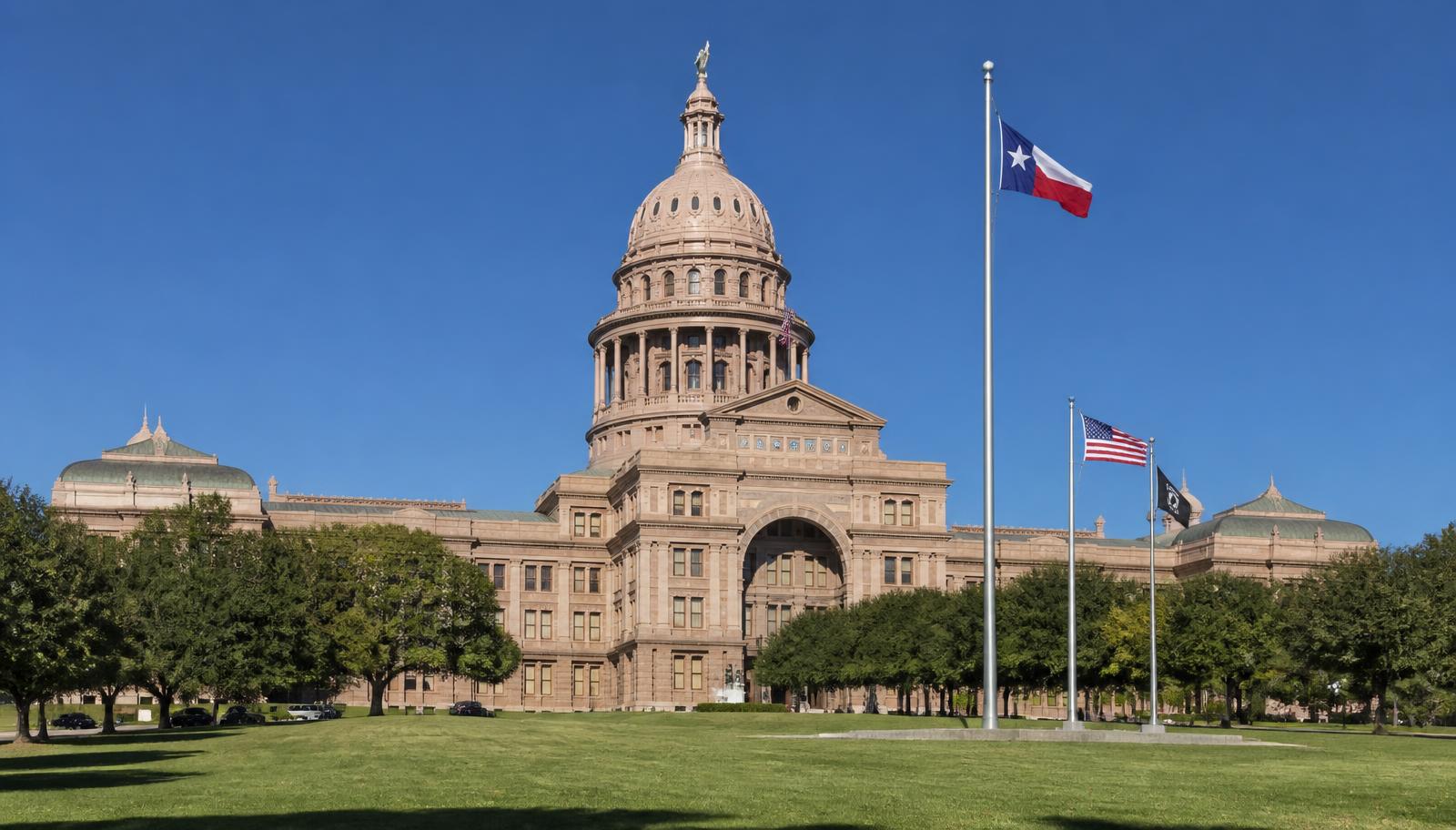
Follow Texas government from Austin's colonial capital and the provisional government through the independence convention, the Republic's first Congress, international diplomacy and the final years before statehood.
Follow Texas from secession and Gulf Coast fighting through Palmito Ranch, Juneteenth, emancipation, Reconstruction and the later places where Texans preserved—and reshaped—the war's memory.
A chronological guide to the battles, frontier posts, state forces, naval history, border mobilizations and global wars that shaped Texas from 1835 into the modern era.
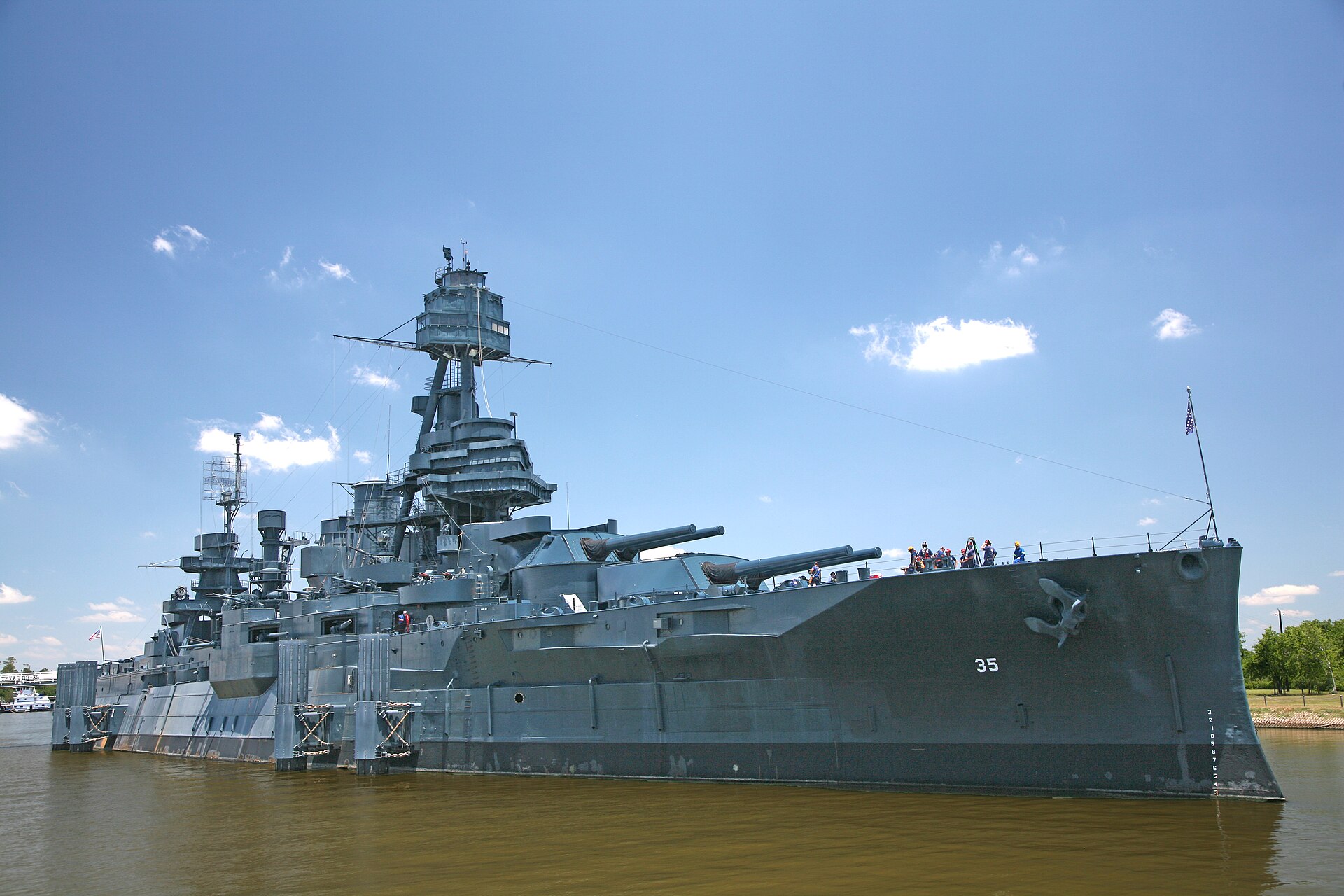
Commissioned in 1914, Battleship Texas served in both World Wars, fired on Normandy, Iwo Jima and Okinawa, became a museum ship in 1948 and is now being restored for a new permanent home at Pier 15 in Galveston.
Battleship Texas, Eisenhower's Denison birthplace, the National Museum of the Pacific War, Harlingen's Iwo Jima monument and Slaton's Harvey House connect Texas to combat, command, memory and wartime mobility.
Connect Old Socorro Mission, Magoffin Home, Casa Navarro, Lipantitlán and Mission Dolores to the Indigenous, Spanish, Mexican, Tejano and American histories that overlap across Texas borderlands.
Levi Jordan and Varner-Hogg preserve two difficult, essential Texas landscapes where enslaved labor, emancipation, Reconstruction, sharecropping, ranching and archaeology can be read together.
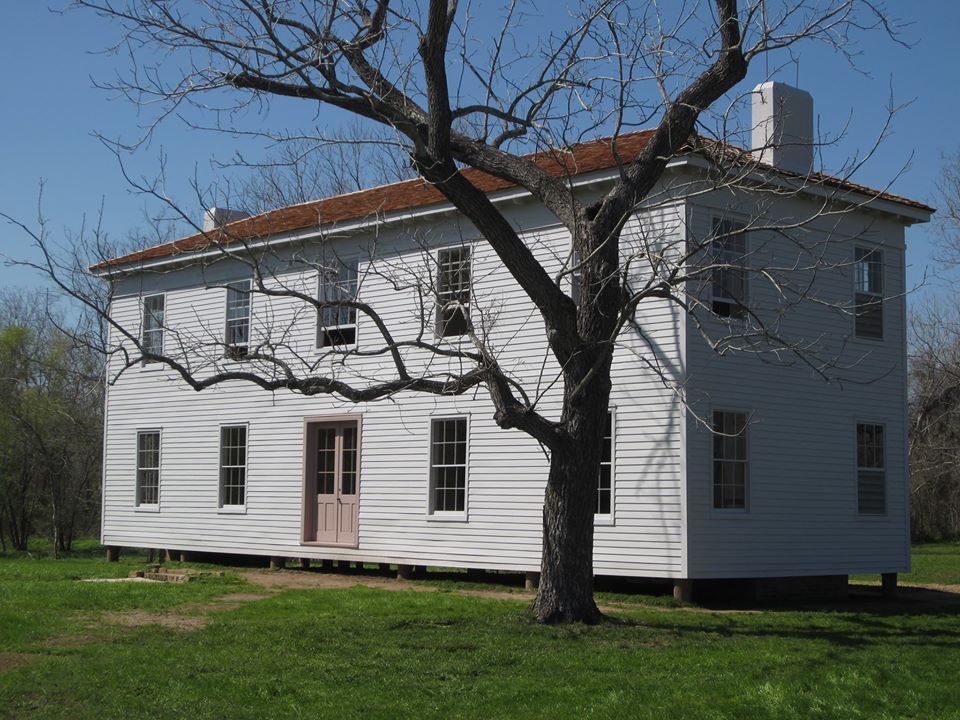
Three modest Texas homes reveal how national political careers grew from railroad towns, oil-boom neighborhoods and rural North Texas rather than monumental settings.
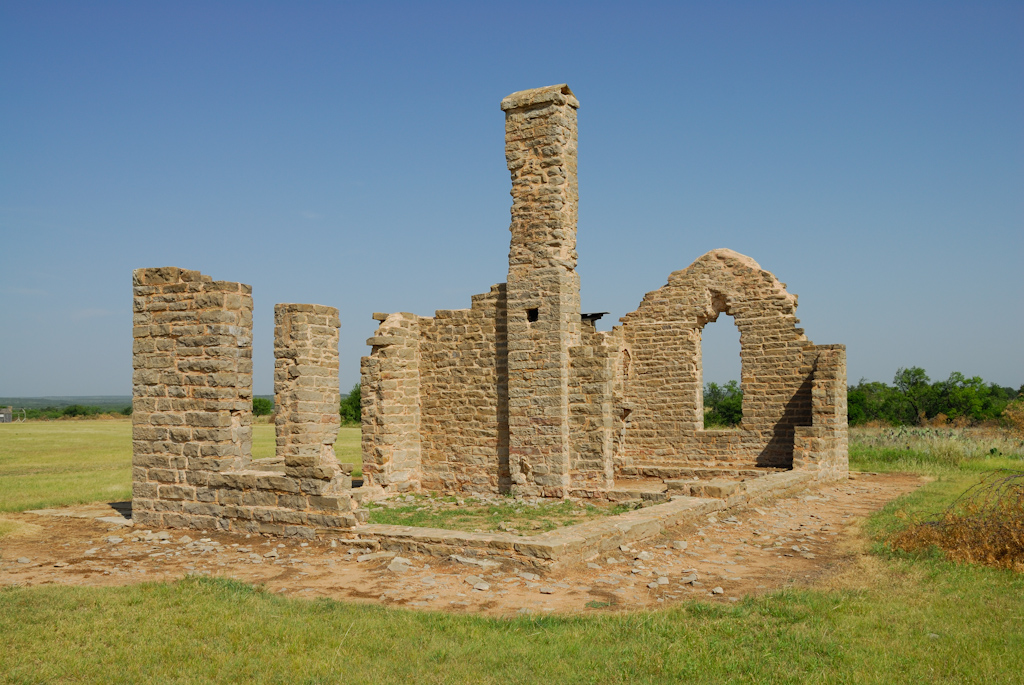
Fort Martin Scott, Fort Griffin, Fort McKavett and Fort Lancaster reveal how soldiers, settlers, travelers, ranchers and Native nations collided across the Texas frontier.
Follow the Texas Revolution through the places where colonists organized, delegates declared independence, armies surrendered and the campaign ended at San Jacinto.
Many Texas towns existed before the railroad, but rail lines changed which communities grew, where business moved and how farm and ranch products reached distant markets. The modern highway map still carries that history.
Courthouse squares were only one part of the traditional Texas town. Main streets, storefront blocks, depots and civic buildings created walkable commercial centers that still reveal how communities grew.
See how rivers and reliable water drew early Texas settlement, while rainfall and fertile soils supported denser farm communities than drier ranch country.
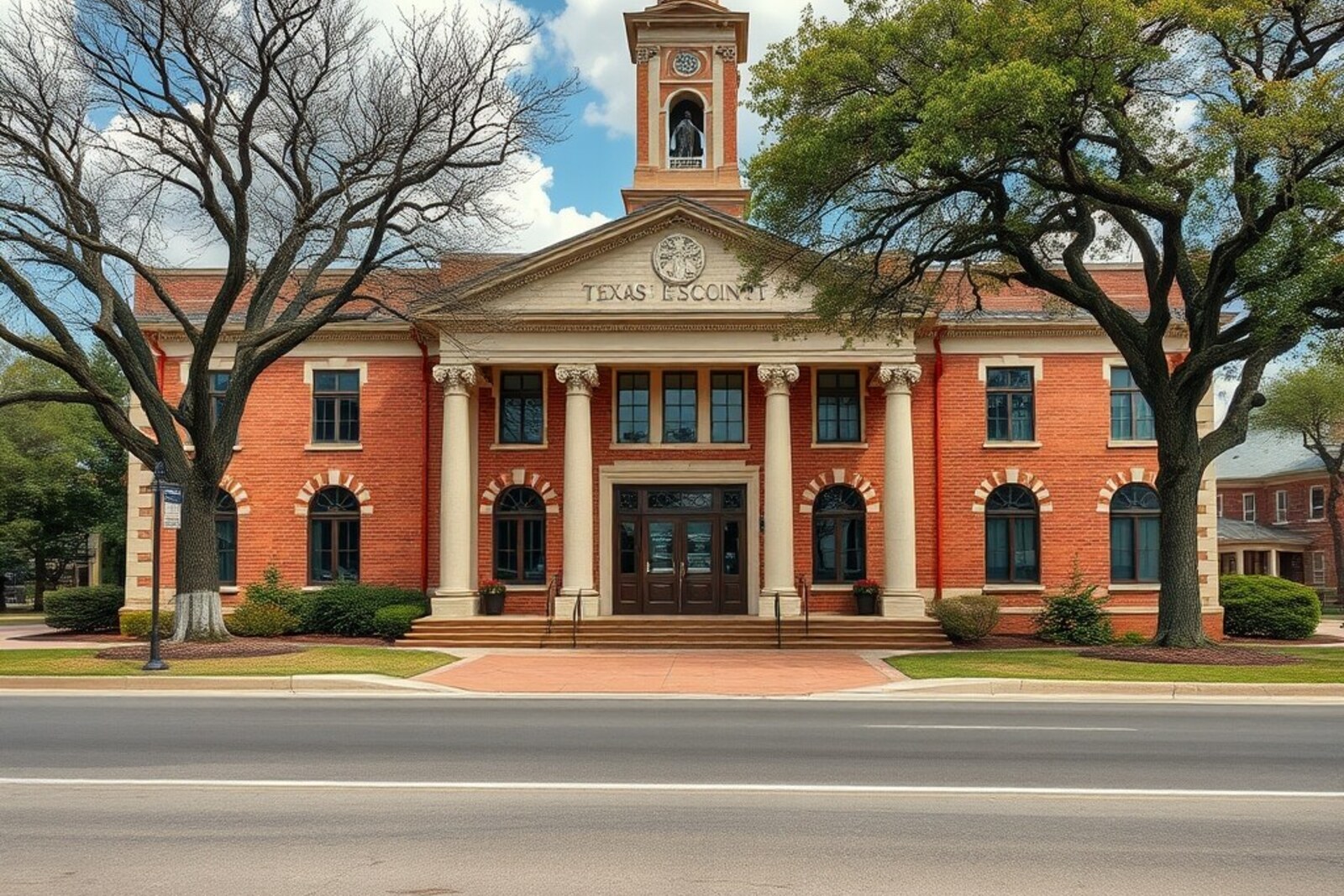
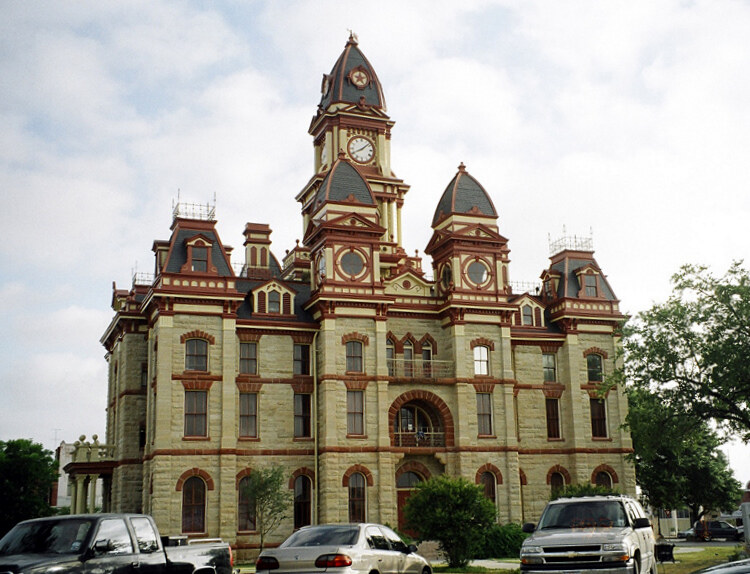
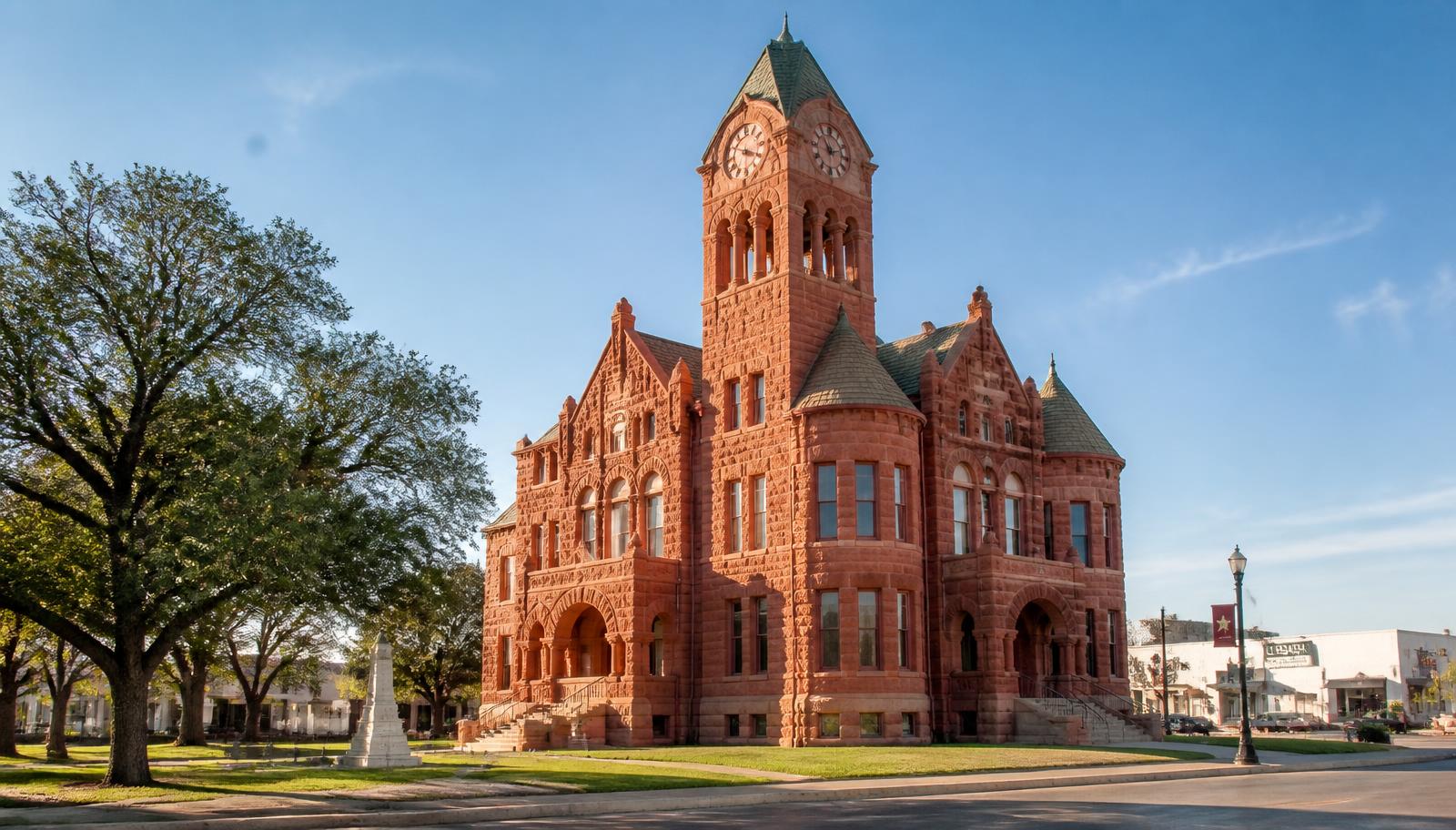
Texas courthouses share a civic purpose but not a single look. Their towers, domes, stone, brick and symmetry reflect different eras, budgets, architects and ideas about what public buildings should say about a county.
Across Texas, county courthouses still anchor town squares built for a different age. Their architecture, politics and geography explain how local communities grew around public life—and why the old center of town still matters.
Texas has one border on the map and many cultural borders on the ground. Indigenous homelands, Spanish and Tejano settlement, Southern migration, slavery and freedom, European immigration, ranching, railroads, oil and modern global migration all created places that can feel distinctly Texan and distinctly different from one another.
The six flags are more than a theme-park name. They trace the governments that claimed Texas across centuries—and explain why the phrase still carries so much weight here.
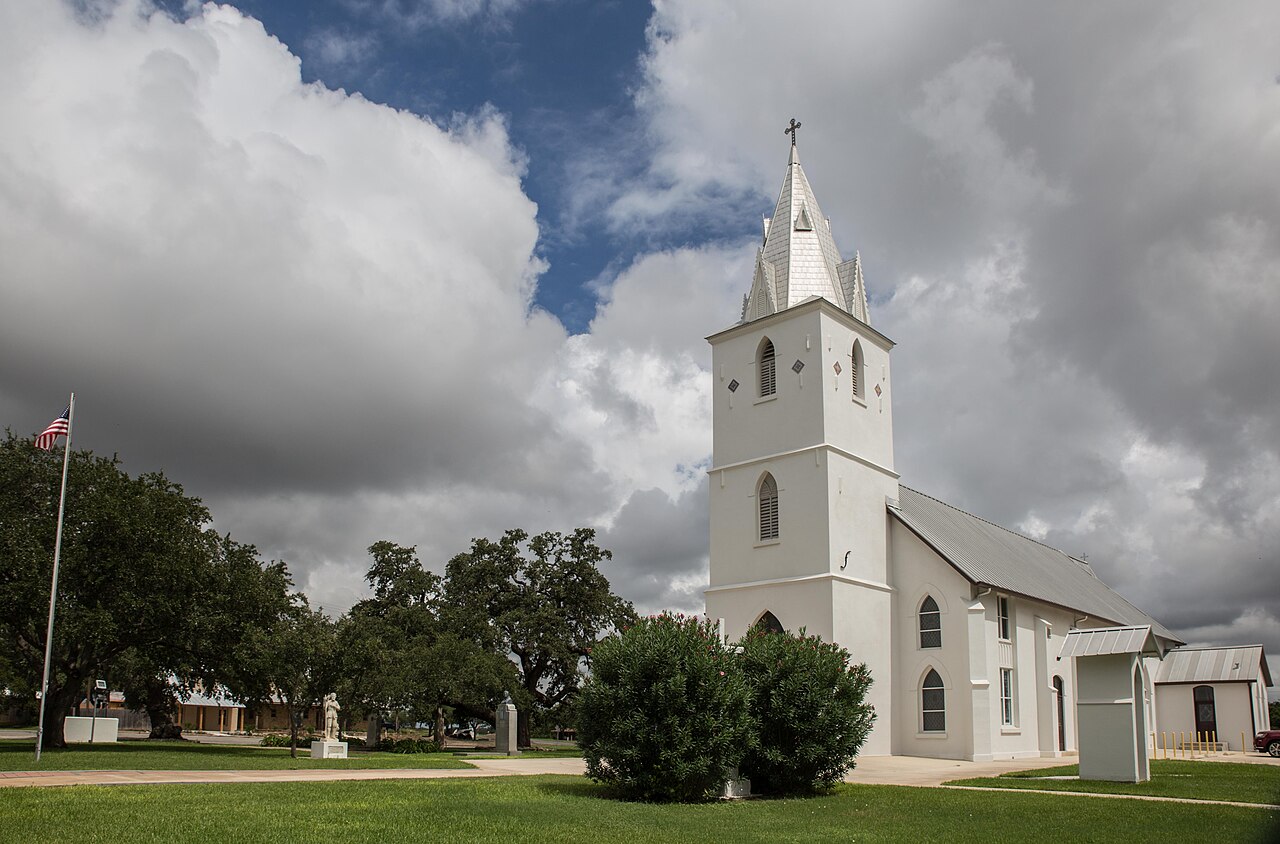
Texas towns carry layers of migration in their churches, dance halls, bakeries, plazas, festivals and family names. German, Czech, Mexican and Tejano traditions did not sit outside Texas culture—they helped build it.
Texas has more counties than any other state. The reason is written into the state's size, settlement patterns and an old practical idea: local government had to be close enough for people to reach it.
Why 'stock tank' became ordinary Texas ranch language for small man-made ponds built to water livestock—and why the term now gets used far beyond cattle country.
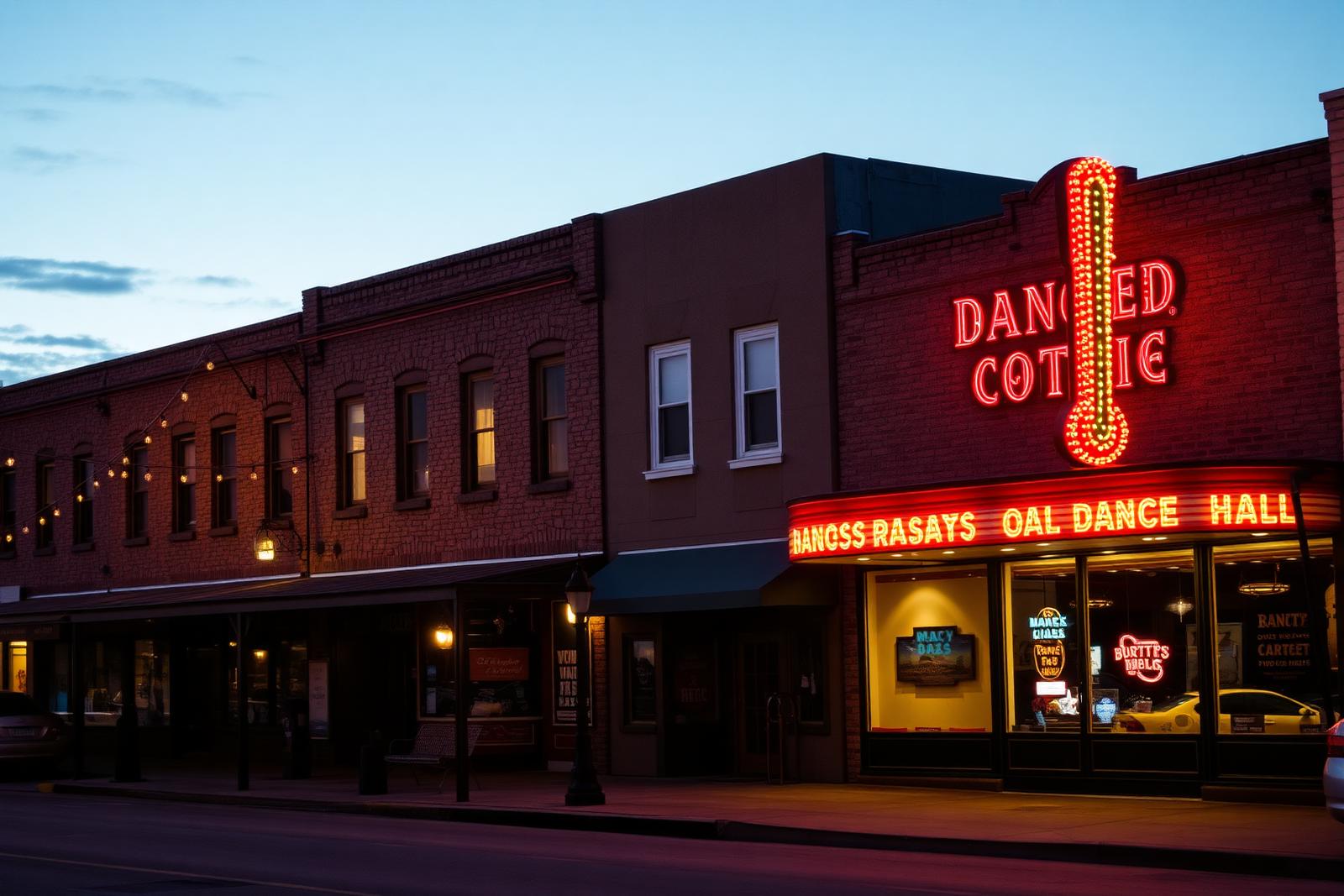
Why historic Texas dance halls survive only when communities can keep roofs dry, floors sound, events active and old buildings useful enough to earn another generation of care.