texas history
Historic San Antonio Road Trip: Missions, King William, the Alamo and Downtown
Plan an independent two-day historic San Antonio route with four National Park Service missions, the Alamo, Spanish plazas, Tejano history, King William houses and verified visitor-access caveats.
The most useful San Antonio history trip is not one long list of landmarks. The city has three overlapping historical landscapes: the downtown plazas shaped by the Spanish presidio and a civilian settlement; the King William and Southtown homes tied to immigrants, business and architectural preservation; and the four National Park Service missions along the San Antonio River. Their stories are intertwined, but their locations, access rules and historical periods differ. This guide joins them without misrepresenting active churches, government offices, hotels and private residences as museums.
At a glance: three circuits, two days and the access rules that matter
- Downtown plazas and Alamo district: San Fernando Cathedral, Bexar County Courthouse, Spanish Governor's Palace, Casa Navarro, the Alamo, the Menger Hotel and La Villita. Most outdoor connections are walkable, but each site has different rules.
- King William and Southtown: walk the historic residential streets, visit Guenther House or a bookable historic house, and view Steves Homestead from public rights-of-way unless current access is independently confirmed.
- Mission Reach: follow the four National Park Service missions north-to-south—Concepción, San José, San Juan and Espada—with an optional separate Espada Aqueduct visit. The Alamo is a fifth mission in the UNESCO property but not one of the four park districts.
- Allow two days for a thoughtful trip: one downtown/King William day and one mission corridor day. A fast highlights visit is possible, but it loses the context that makes this route worthwhile.
Why San Antonio has five missions—not just the Alamo
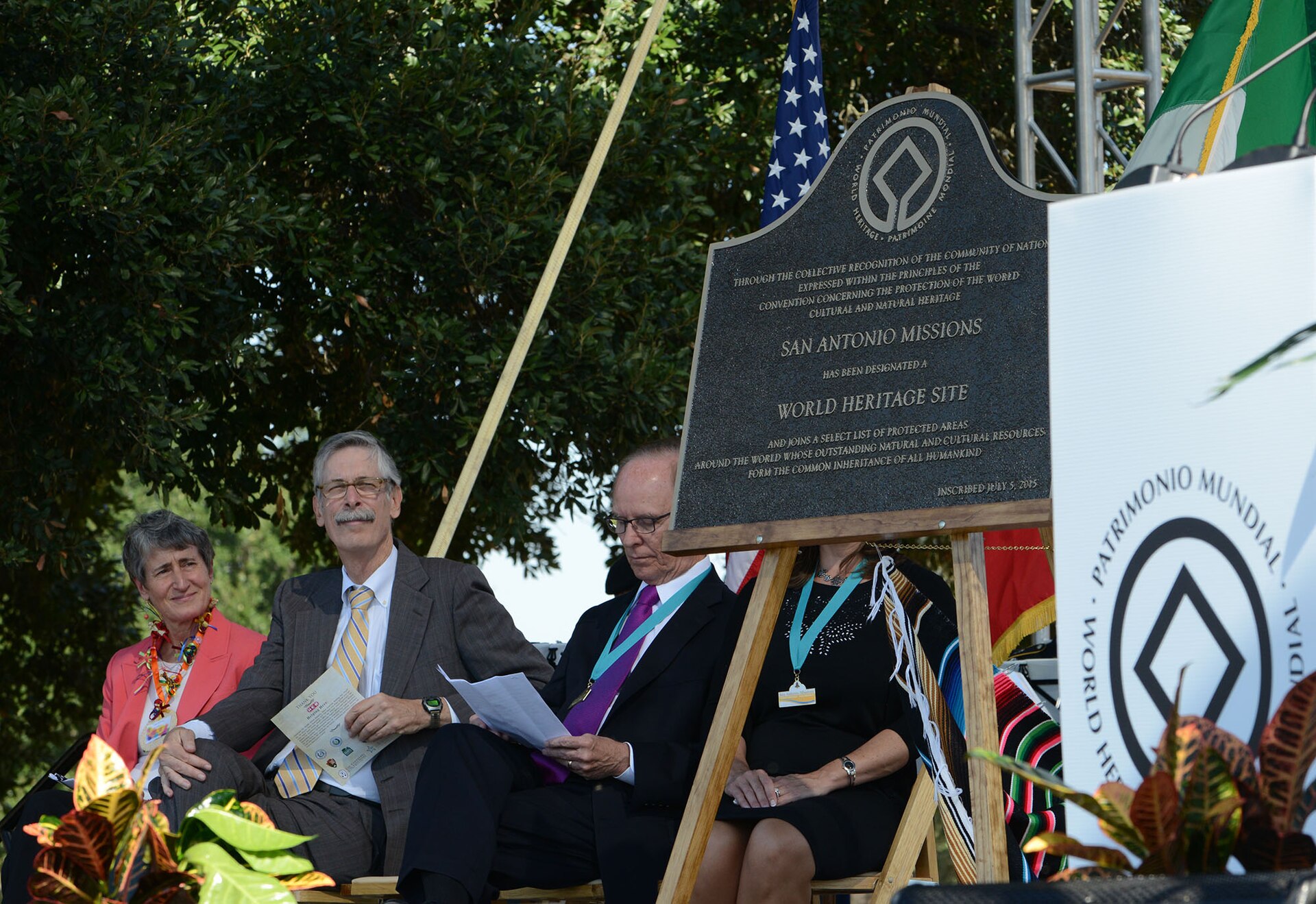
Franciscan missions and Spanish administrators worked along the San Antonio River in the eighteenth century. Mission Valero was the first San Antonio mission and later became the Alamo; Mission San José followed in 1720. Mission Concepción, Mission San Juan and Mission Espada moved into this river corridor in 1731 after earlier periods in East Texas. UNESCO recognized the San Antonio Missions cultural landscape in 2015. The National Park Service protects four mission districts; the Alamo's separate management and visitor policies require its own planning.
These were not simply five churches. They were settlements with residences, irrigation canals, fields, workshops, religious conversion and defense. Indigenous peoples from multiple distinct communities sustained the work, often under severe colonial pressures. The modern label Coahuiltecan sometimes groups different peoples together; it must not erase the identities and lives of individuals and descendants. Interpret the missions through religious practice, displacement, culture, architecture, labor and surviving communities instead of a triumphalist single-version story.
Day one, morning: the presidio and Main Plaza civic center
Begin at San Fernando Cathedral on Main Plaza. Its congregation began in 1731 with the Canary Islander settlement, while the highly visible Gothic Revival front belongs to nineteenth-century remodeling. This distinction between a religious institution's founding and its changing architecture is fundamental. Check worship schedules; visitors enter a living parish, not a secular exhibit.
Study the adjacent Bexar County Courthouse from Main Plaza. James Riely Gordon's Romanesque Revival building represents the later city of civic stonework and judicial administration. A useful historian's caution: Bexar County's official account says it was completed in 1897, while the Texas Historical Commission says 1896. The 1892 cornerstone is documented by the county. Rather than falsely resolve this disagreement, the site guide identifies both records. The courthouse still operates, so confirm current security and accessibility requirements if you have legitimate business inside.
Next walk to Spanish Governor's Palace, a rare surviving eighteenth-century residence associated with the Presidio San Antonio de Béxar. Its thick stone walls and inner courtyard put the Spanish colonial civic center on a human scale. The City of San Antonio manages it, and admissions/hours are different from the active cathedral and courthouse. The Palace connects meaningfully to nearby plazas; it should not be treated merely as a photogenic old room.
For a crucial Tejano perspective, continue to Casa Navarro, the 1850s home associated with José Antonio Navarro. He was a merchant, political leader and signer of the Texas Declaration of Independence. The Texas Historical Commission identifies the surrounding historic Laredito neighborhood as central to understanding San Antonio beyond its military history. According to the THC's current visitor information, the property normally operates Tuesday–Sunday, 10 a.m.–4:30 p.m., with changing admission prices. Check the official website before departure.
Day one, afternoon: Alamo Plaza, La Villita and the commercial city
At the Alamo, begin with Mission San Antonio de Valero, not just the 1836 battle. The mission's earlier Indigenous and Spanish history, the changing fortification landscape and later preservation disputes all deserve attention. Entry systems and museum exhibits evolve; use the Alamo's own current booking and access policies. A short stay limited to a battle narrative cannot substitute for the UNESCO mission landscape.
Across Alamo Plaza, the Menger Hotel opened in 1859 as Mary and William Menger extended their brewing and lodging business. The hotel embodies the city's nineteenth-century regional commerce and hospitality development. Theodore Roosevelt's Rough Riders connection is documented, but the oft-repeated tale of him shooting holes into the Menger Bar should be presented as a legend unless separately established by primary evidence. It remains a hotel, so public-area and bar rules are determined by its operator.
Continue toward La Villita Historic District beside the River Walk. Its compact pedestrian streets contain evidence of Spanish and Mexican civilian settlement, later German and French immigrant building, and the 1939 preservation effort that helped create today's arts community. NPS describes 27 contributing buildings; the City notes no public parking within the village itself. Visit for architecture, markers, and public streets even if you do not shop.
Day one, late afternoon: King William houses and preservation
King William, south of downtown, is primarily an inhabited neighborhood, not an outdoor museum in which every door welcomes tourists. Victorian, Greek Revival and Italianate houses and streets are best experienced respectfully from public sidewalks. Look at the way river proximity, prosperous immigrant entrepreneurs and later preservation campaigns shaped the district.
The Guenther House provides a useful introduction to German-Texan industrial wealth. Carl Hilmar Guenther's 1859 residence and the neighboring Pioneer Flour Mills complex form one story. The venue now operates a restaurant, shop and historic displays; the current official site lists restaurant hours Wednesday through Sunday, 8 a.m.–2 p.m. Do not assume that restaurant hours guarantee full museum access or that dining reservations include private history tours.
The Steves Homestead is an essential correction to older San Antonio heritage itineraries. The Conservation Society of San Antonio reports that its house-museum operation ran from 1954 through 2022 and that it SOLD the property in 2022. Although the nineteenth-century residence remains architecturally significant, current public interior tours must not be promised without new direct confirmation. View respectfully from public rights-of-way and use Villa Finale's separately published visitor program if you want an actual historic-house interior experience.
Day two: ride or drive the four-mission corridor
Follow the sites north to south: Concepción, San José, San Juan and Espada. The National Park Service says these are distinct areas, not four buildings on one campus. Routes along Mission Reach can be explored by bicycle, but plan around heat, physical ability, trail conditions, traffic crossings and the return journey. Do not infer a universal cycling duration or route from the mere presence of a bike trail.
Start at Mission Concepción for the remarkable original church and fresco remnants. Then spend the greatest interpretive time at Mission San José, where the NPS visitor center and a larger compound give context to the mission system. San José offers scheduled ranger programs, commonly at 10 and 11 a.m. when available; capacity and weather can limit participation. This means you may prefer to start at San José for a guided program and then visit Concepción, depending on your actual departure and desired route.
Move on to Mission San Juan for the acequia and demonstration farm; its agricultural role is not accurately captured in a quick picture of the church facade. Finish at Espada to learn about weaving, masonry and the system of water that made these settlements possible. The historic Espada Aqueduct is a separate nearby stop and needs its own location guidance. NPS information station hours commonly run 10 a.m.–4:30 p.m. at the southern sites; outdoor grounds, contact stations, churches and ranger programming do not share one universal schedule.
Which of the San Antonio historic stops is right for you?
- For the architecture enthusiast: compare Concepción's surviving stone and frescoes with San José's ornate details, the courthouse's Romanesque Revival design, and King William residential architecture.
- For someone studying Tejano history: prioritize Casa Navarro, the early civic plazas, the Alamo's broader history and the Indigenous and Tejano perspectives across the missions.
- For younger children: begin with NPS exhibits and a ranger-led mission experience; add outdoor breaks. Avoid trying to visit every site interior in one hot afternoon.
- For wheelchair users and visitors with limited mobility: confirm NPS program access and separate historic church entries; courthouse security and older house floors may differ considerably. Do not assume access from a general accessibility badge.
- For travelers without a car: downtown and parts of King William are the easier circuit. A complete four-mission trip requires deliberate transit or cycling planning.
- For a short weekend: choose downtown and a comprehensive visit to San José, rather than racing through fifteen sites and understanding none of them.
Historical dates worth knowing
- 1690: the institution later known as Mission Espada originated in East Texas.
- 1718: San Antonio de Béxar presidio and Mission Valero belonged to the early settlement process.
- 1720: Mission San José was established.
- 1731: Canary Islander civilian settlement and movement of three other missions into the San Antonio River corridor.
- 1755–1756: Concepción's church dedication and Espada's church completion mark major surviving architecture.
- 1850s: Casa Navarro's preserved home, Guenther House and the Menger Hotel document different parts of nineteenth-century San Antonio.
- 1876: the Steves Homestead was built; the same year is associated with Villa Finale's original house.
- 1890s: Gordon's Bexar County Courthouse redefined the Main Plaza civic landscape.
- 1939: La Villita arts-oriented preservation initiative took shape.
- 2015: the San Antonio Missions received UNESCO World Heritage inscription and the restored courthouse was rededicated.
- 2022: the Conservation Society sold Steves Homestead; outdated tourist guides describing routine public tours should be corrected.
Frequently asked questions
Are the San Antonio missions all in one park?
Four missions—Concepción, San José, San Juan and Espada—are districts of San Antonio Missions National Historical Park. The Alamo is a fifth mission in the UNESCO inscription but has separate management, exhibits and visitor arrangements.
Is the San Antonio historic road trip free?
The NPS missions are free to enter. Other historic sites, museum interiors, optional tours, hospitality venues and parking can charge fees. Always check the official operator rather than assuming the entire circuit has one ticket.
Can you tour Steves Homestead?
Not on the basis of an old itinerary. The former operator states the site was sold in 2022. Present public access is unverified, so it should be an exterior heritage viewing stop unless the current owner publishes visitor permission.
Can I bike the San Antonio Mission Trail?
The Mission Reach trail system connects areas along the river, but site entry and church access differ from trail accessibility. Check the City, river authority and NPS maps, plan for weather, and arrange a safe return trip.
Which one should I visit if I have only one hour?
Choose San José for the most extensive NPS visitor-center interpretation of the mission system. For a downtown walk without a car, Main Plaza's cathedral, courthouse exterior and Governor's Palace area better explain the civic origin of the city.
What should I check the morning of my trip?
Check NPS alerts and ranger program notices, official historic-site open hours, active cathedral and mission church services, weather and heat, accessibility and actual public parking. Historic homes and hotel interiors require their own current policies.
Methods, sources and continuing review
This independent guide compares the Texas Historical Commission's historical route, primary NPS park and mission records, San Antonio city sources, Bexar County's courthouse history, the cathedral's parish history and the current property/venue operators. The older 2020 itinerary was checked against operator updates available October 12, 2026. We explicitly disclose conflicting official courthouse dates and the 2022 Steves Homestead sale; we never infer access from an archival tourism article. Variable access, rates and visitor policies should be re-verified before use. Historical claims should be refreshed from authoritative records on a longer cadence.
Image credit: Steven B Yount · CC BY-SA 4.0 · Wikimedia Commons
Primary source: National Park Service, Texas Historical Commission and local primary heritage operators ↗
Sources and further reading
- Texas Historical Commission: 2020 San Antonio historic road trip ↗
- National Park Service: Mission history and planning ↗
- National Park Service: mission operating hours ↗
- NPS: Ranger programs and accessibility ↗
- NPS: La Villita Historic District ↗
- Texas Historical Commission: Casa Navarro ↗
- San Fernando Cathedral: parish history ↗
- Bexar County: courthouse history ↗
- Texas Historical Commission: Bexar Courthouse restoration ↗
- The Guenther House: current operating hours ↗
- Conservation Society: Steves Homestead sale and history ↗
- City of San Antonio: La Villita visitor policies ↗
- The Menger Hotel: hotel history ↗
Plan Your Visit
Places connected to this story
Destinations explicitly tied to this article in the Texas Defined guide.
San Antonio · Bexar County
The Alamo
San Antonio's best-known historic landmark: the former Mission San Antonio de Valero, where more than three centuries of mission, military, revolutionary and preservation history converge in the heart of downtown.
Best season: Fall through spring for comfortable downtown walking; in summer, visit near opening for cooler temperatures and lighter crowdsUpdated Oct 2026- Historic Alamo Church and Long Barrack
- Alamo Exhibit and the Ralston Family Collections Center
- Living History demonstrations and interpretation of the mission and 1836 battle
San Antonio · Bexar County
Menger Hotel
An operating historic hotel opened by Mary and William Menger in 1859, associated with nineteenth-century commerce, the Alamo Plaza visitor district and Theodore Roosevelt's Rough Riders.
Best season: Year-round; most convenient on a downtown walking circuit.Updated Oct 2026- 1859 opening
- Mary and William Menger's brewery and lodging enterprise
- Victorian lobby and bar
San Antonio · Bexar County
La Villita Historic District
San Antonio's historic La Villita neighborhood combines centuries of Indigenous, colonial, Mexican and immigrant settlement with a modern arts village by the River Walk.
Best season: Fall through spring for comfortable outdoor exploration.Updated Oct 2026- Historic 27-building district
- Colonial street pattern and later architecture
- Artisans and independent shops
San Antonio · Bexar County
San Fernando Cathedral
A 1731 religious community and living civic landmark whose nineteenth-century Gothic Revival front connects colonial San Antonio with its later urban history.
Best season: Year-round for a short Main Plaza architecture walk.Updated Oct 2026- Founded with the Canary Islander settlement in 1731
- Nineteenth-century Gothic Revival front
- Historic Main Plaza
San Antonio · Bexar County
Historic Bexar County Courthouse
The red sandstone Romanesque Revival courthouse by James Riely Gordon is a working seat of county government and a leading Texas historic-preservation project.
Best season: Year-round; convenient to combine with Main Plaza on a downtown walk.Updated Oct 2026- James Riely Gordon architecture
- 1890s government building
- 2015 rededication after restoration
San Antonio · Bexar County
Spanish Governor's Palace
The Spanish Governor's Palace is an eighteenth-century Spanish Colonial residence in downtown San Antonio and the last visible architectural trace of the Presidio San Antonio de Béxar complex.
Best season: Year-round historic house; fall through spring is most comfortable for combining the interior rooms and courtyard with a longer downtown heritage walk.Updated Oct 2026- Spanish Colonial architecture
- Presidio San Antonio de Béxar
- Eighteenth-century rooms and courtyard


From the magazine
More stories to read next
Then & Now
El Camino Real de los Tejas in Texas: Historic Trail, Sites and Visiting Guide
October 17, 2026 · About 4 minutes
Then & Now
Butterfield Overland National Historic Trail in Texas: Where to Visit and What Survives
October 17, 2026 · About 3 minutes