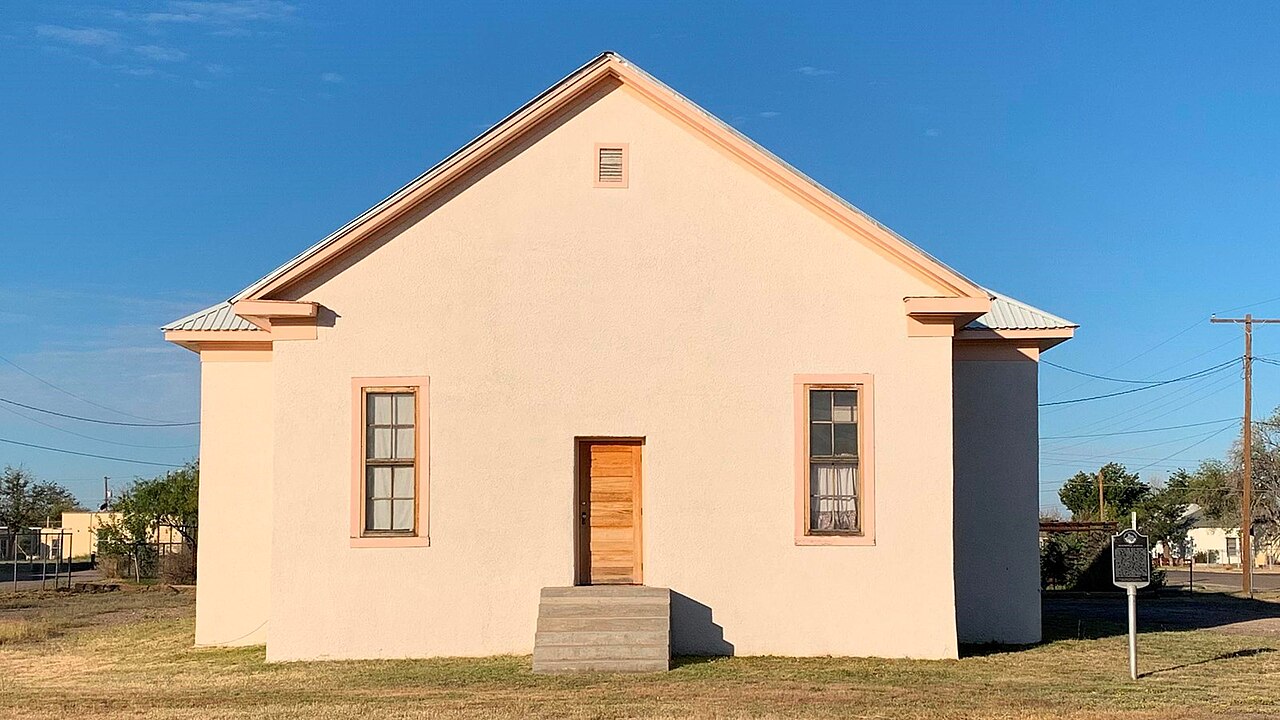
Marfa began in 1883 as a railroad water stop and freight headquarters, but its modern identity is unusually layered for a town of its size. The Presidio County Courthouse and the Central Marfa Historic District preserve the civic and railroad-era landscape, while the Blackwell School National Historic Site tells an essential Mexican American education story. Those places matter because they keep Marfa from being reduced to its contemporary-art reputation alone.
Art is nevertheless central to why travelers cross West Texas to get here. Donald Judd's move to Marfa in the 1970s helped turn the town into an internationally recognized center for permanently installed contemporary art, with the Chinati Foundation and Judd Foundation anchoring a broader network of galleries and creative spaces. The contrast between large-scale art, spare architecture and the Chihuahuan Desert is part of the experience, so a schedule that allows time between stops works better than trying to race through a checklist.
Marfa also functions as a regional base for the Davis Mountains and Big Bend country. The Marfa Lights viewing area, dark skies, Fort Davis, Alpine and long scenic highways all make sense as extensions of a visit, but the distances are real. Plan fuel, food and operating hours before leaving town, especially on Sundays or during quieter seasons. A two-night stay makes it much easier to see both the historic and art sides of Marfa without turning the trip into continuous driving.