
County Guide
Presidio County
Marfa may get the headlines, but Presidio County stretches far beyond its art-world reputation — across ranch country, volcanic mountains, an ancient river corridor and one of the oldest continuously inhabited corners of the Big Bend.
- Guide type
- Texas county guide
- County seat
- Marfa, Texas
- Source check
- Official source checked
- Last reviewed
- August 4, 2026
Verified county profile
What the data says about Presidio County
The 2020 Census counted 6,131 residents across about 3,855 square miles of land. Dividing those two Census figures gives roughly 1.59 residents per square mile.
Census geography also records about 1 square miles of water. Water represents approximately 0.0% of the county's mapped land-and-water area.
Marfa is the verified county seat.
Texas Defined does not add an unsourced list of local communities. Additional places appear here only when the structured place directory contains a verified county relationship.
Understand the bigger picture
These Texas Explained guides add statewide context to the geography, settlement and infrastructure behind Presidio County.
Explore Texas Explained →Historic places in this county
History you can visit in Presidio County
Texas Defined currently connects 2 historic destinations to this county guide.
Statewide context
Where Presidio County sits in the county data
These ranks use the same Texas State Library and U.S. Census county dataset as the statewide comparison. A rank is shown only when that metric is available for the county and the comparison set; missing source values are excluded rather than estimated.
- 2020 population
- #191
- of 254 counties with source data
- land area
- #4
- of 254 counties with source data
- population density
- #231
- of 254 counties with source data
- water share
- #237
- of 254 counties with source data
Property tax rates
Taxing units in Presidio County
Texas property taxes are imposed by separate local taxing units. The table below lists finalized statewide records associated with Presidio County. A district appearing here does not mean every property in the county pays that district; use the exact parcel record to determine jurisdiction.
Checking finalized local tax rates…
Made, built & born here
Texas products and companies tied to this county
Texas Defined separates products actually made or processed locally from companies that were founded, headquartered or operate major facilities here.
Headquartered here
Marfa Brands
Marfa
Small-batch lifestyle and fragrance brand associated with Marfa.
Manufacturing footprints change. A Texas headquarters or founding city is not presented as proof that every current product is made in Texas.
Browse the statewide Made in Texas guide →At a glance
The county in numbers
- County seat
- Marfa, Texas
- 2020 population
- 6,131
- Land area
- 3,855 sq. mi.
- Water area
- 1 sq. mi.
- Population density
- 1.59 / sq. mi.
- Water share
- 0.0%
County questions
Quick answers about Presidio County
What is the county seat of Presidio County?
Marfa, Texas is the county seat of Presidio County.
How many people live in Presidio County?
The 2020 U.S. Census counted 6,131 residents in Presidio County.
How densely populated is Presidio County?
Using the 2020 Census population and Census land-area figure, Presidio County has about 1.59 residents per square mile. This is a derived density figure, not a separate Census estimate.
What cities and communities are in Presidio County?
Presidio County includes communities such as Marfa. City limits, mailing addresses and county boundaries do not always match, so verify an exact address when county jurisdiction matters.
Where do I look up property taxes in Presidio County?
TexasDefined has not yet published a county-specific property-tax guide for Presidio County because its local source verification is still incomplete. Use the statewide county property-tax directory and the official local office links on this page while verification is pending.
How do I research industries and employers around Presidio County?
Start with the Texas industries hub to understand the statewide sector system, then use Made in Texas and local sources to verify which companies and facilities are actually tied to Presidio County. TexasDefined does not treat a statewide industry page as proof that a specific employer operates in this county.
How do I find official Presidio County government information?
Start with the official Presidio County website for county departments, services, courts and records. For property values, exemptions and protests use the appraisal district; for tax bills and payments use the office designated by the taxing unit. TexasDefined links to the statewide property-tax county directory until this county-specific tax guide passes source verification.
Property taxes
County property-tax resources
Property-tax questions in Presidio County involve several separate authorities. Until the county-specific tax guide passes source verification, use the statewide county property-tax directory plus the official appraisal and tax-office resources shown here.
Property & county services
Official local resources
Property appraisal
The Comptroller directory entry is undated or more than two years old. This guide does not display potentially outdated individual contact details. Follow the official county directory link to verify the current office.
Comptroller office listing updated 2024-05-13; confirm contact details with the district before visiting.
Tax office
Tax assessor-collector: Nancy Valdez Arevalo
Phone: 432-729-4081
301 Highland St. Marfa, Texas 79843
Comptroller office listing updated 2025-02-19; confirm vehicle and tax service details with the office before visiting.
Waterways
Rivers connected to Presidio County
Explore these rivers in their regional context. A county connection alone does not establish public river access, camping, parking or a safe paddling launch.
County feature
The story of Presidio County
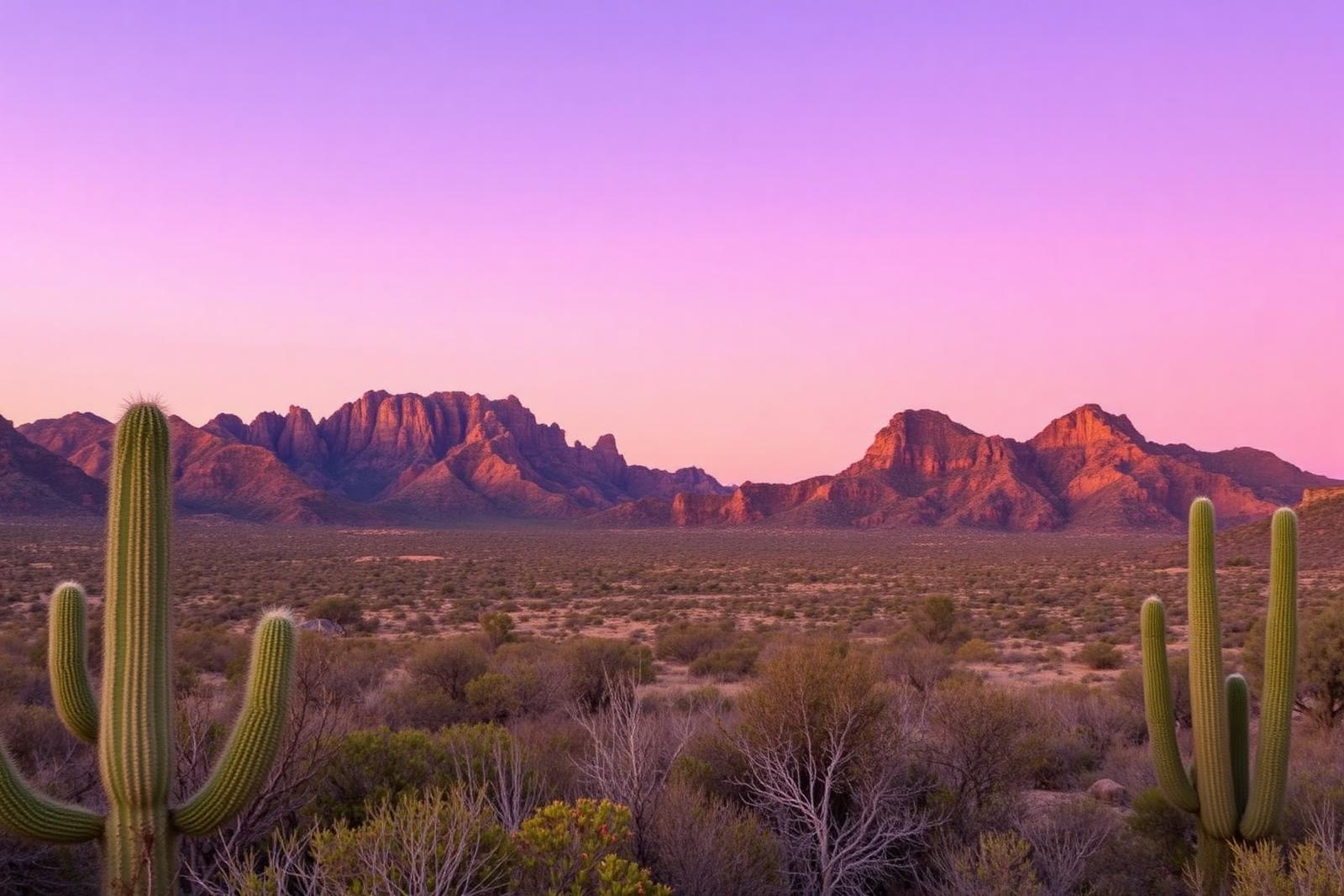
Presidio County: Where Marfa, the Rio Grande and the Big Bend Borderlands Meet
Marfa may get the headlines, but Presidio County stretches far beyond its art-world reputation — across ranch country, volcanic mountains, an ancient river corridor and one of the oldest continuously inhabited corners of the Big Bend.
Published August 8, 2026 · 10 min read
Presidio County contains one of Texas' great geographic contradictions. Its county seat, Marfa, is internationally known for minimalist art, contemporary galleries and a mysterious light on the horizon. Drive south, though, and the county opens into ranches, mountains, desert and a Rio Grande settlement story that reaches back centuries before Marfa existed.
That contrast is the point. Presidio County is not simply 'the county with Marfa.' It is a borderlands county whose history has been shaped by Indigenous peoples, Spanish and Mexican settlement, trade across the Rio Grande, ranching, military posts, railroads and the enormous distances of the Chihuahuan Desert.
A county that once covered much more of West Texas
Presidio County was created in 1850, when Texas was still organizing local government across a vast and lightly populated western frontier. Its original boundaries were much larger than today's county. Over time, new counties were carved from that territory as settlements grew and the Trans-Pecos acquired a more detailed political map.
The name comes from the Spanish word presidio, meaning a fortified military settlement. That alone hints at how much older the human geography here is than the modern county line. Long before Texas county government arrived, the Rio Grande corridor connected communities, farms, trade routes and military outposts.
Presidio begins with water
The city of Presidio sits where the Rio Conchos flows into the Rio Grande. In an arid region, that meeting of rivers made the area unusually valuable for agriculture and settlement. Indigenous communities farmed in the river valleys long before Europeans entered the region, and Spanish expeditions later recognized the strategic importance of the same place.
The modern international boundary can make the river look like the edge of the story. Historically, it was often the center of it. Families, livestock, goods and ideas moved through a connected borderland in which communities on opposite banks depended on one another.
Presidio remains one of the clearest places in Texas to see that border history as lived geography rather than an abstract line on a map.
Fort Leaton was a trading post, not a lonely frontier fort
Just east of Presidio stands Fort Leaton State Historic Site, an enormous adobe complex begun in the 1840s by trader Benjamin Leaton. Despite its name, Fort Leaton was primarily a private trading post and fortified residence rather than a conventional U.S. Army fort.
Its location made sense. The Chihuahua Trail connected northern Mexico with the settlements and military economy developing farther north, and the Rio Grande corridor supported a web of commerce. Traders dealt in livestock, agricultural goods and manufactured products while travelers sought supplies and protection.
Today the restored adobe compound is one of the county's most useful historical stops because its thick walls make the borderlands economy tangible. Presidio County was never isolated from Mexico; its communities developed through that relationship.
Marfa started with the railroad
Marfa's modern story begins in the early 1880s with the railroad. The settlement developed as a water stop on the Southern Pacific line and soon became a regional shipping and service center for ranch country. Presidio County voters made Marfa the county seat in 1885.
The railroad changed the scale of life in the Trans-Pecos. Cattle, supplies, mail and passengers could move more reliably across distances that had previously demanded wagon travel. Marfa grew into the courthouse town at the center of that network.
Its 1886 Presidio County Courthouse still dominates the town center. The ornate courthouse feels almost improbable against the spare West Texas landscape, which is part of its charm: a grand statement of civic permanence built when Marfa was still a very young railroad town.
Then Marfa became an art capital nobody would have predicted
Nearly a century after the railroad arrived, artist Donald Judd began moving to Marfa in the 1970s. He was drawn to the space, light, architecture and distance from established art centers. His projects eventually helped turn former military and industrial spaces into permanent settings for large-scale works.
The Chinati Foundation and Judd Foundation made Marfa an international destination for art and architecture. Galleries, artists, designers, filmmakers and curious travelers followed. The result is one of the strangest cultural transformations of any small Texas county seat: a ranching and railroad town that also became shorthand in the global contemporary-art world.
That reputation can obscure the town's older layers. Marfa is still a county seat serving ranch country and border communities. The art scene did not replace the West Texas town; it became another chapter laid over it.
The Marfa Lights refuse to leave the story
Long before contemporary art made Marfa famous, stories circulated about unexplained lights visible southeast of town. Accounts describe distant points of light that appear, move, divide or disappear over the desert.
Explanations have ranged from atmospheric effects and distant vehicle headlights to more imaginative theories. The appeal survives precisely because no single explanation has ended the folklore. A roadside viewing area east of Marfa gives travelers a place to watch the horizon for themselves.
Whether a visitor sees something mysterious or simply a dark West Texas sky, the Marfa Lights have become part of Presidio County's cultural identity — a bit of folklore unusually well matched to a landscape where distances can be difficult to judge.
The landscape is doing more work than it first appears
Presidio County lies in the Chihuahuan Desert, but 'desert' does not mean flat or monotonous. The county includes broad basins, grasslands, volcanic formations, rugged mountain country and the Rio Grande canyon corridor. Elevation and rainfall differences create surprisingly varied habitats.
Ranching has long depended on that landscape, especially in the higher grasslands around Marfa. Farther south, the terrain grows hotter and more visibly desert-like as roads descend toward Presidio and the river.
This is one reason a drive through the county feels so dramatic. Marfa and Presidio belong to the same county, yet climate, elevation, architecture and vegetation can make them feel much farther apart than the mileage suggests.
A road trip that earns the word scenic
Texas Highway 67 connects Marfa with Presidio, dropping through mountain and desert country toward the Rio Grande. From Presidio, travelers can follow Farm to Market Road 170 east through the Big Bend Ranch State Park corridor, one of the state's most celebrated drives.
That route also provides a natural connection to neighboring Brewster County. County lines matter for government, but the Big Bend landscape ignores them. Presidio County's river settlements, ranch country and mountains are part of the same broader Trans-Pecos story that continues toward Terlingua, Alpine and Big Bend National Park.
A few Presidio County facts worth remembering
- Presidio County was created in 1850 and once covered a much larger piece of the Trans-Pecos than it does today.
- The city of Presidio occupies an ancient settlement corridor near the confluence of the Rio Conchos and Rio Grande.
- Fort Leaton began in the 1840s as a fortified private trading post along an important borderlands trade route.
- Marfa developed as a Southern Pacific railroad stop in the 1880s and became the county seat in 1885.
- The landmark Presidio County Courthouse was completed in 1886.
- Artist Donald Judd's move to Marfa in the 1970s helped transform the small ranching town into an international contemporary-art destination.
- Stories of the Marfa Lights predate Marfa's modern art fame and remain one of Texas' best-known pieces of unexplained-light folklore.
Why Presidio County is worth understanding as a whole
It is easy to visit Marfa and leave thinking you have seen Presidio County. You have not. Marfa is one remarkable expression of the county, but the fuller story runs south to the river and backward through centuries of borderlands history.
The county works best as a sequence: courthouse and railroad history in Marfa, ranch country on the highway, adobe walls at Fort Leaton, the old settlement corridor at Presidio, and the Rio Grande bending east toward some of the wildest scenery in Texas.
Taken together, those places explain why county-by-county travel is such a useful way to understand Texas. Presidio County contains an art destination famous around the world, but its deeper identity comes from the landscape and the people who have crossed, farmed, traded, ranched and built communities in it for generations.
Sources & verification
Research and official records
Research references support the editorial history and places described above. The official directories below help verify current county seats, census geography, property tax offices and vehicle services. Office personnel, contact details and links can change; check the agency website before traveling.
A claim-by-claim county-specific source list has not yet been published for this guide. The official starting points below are not a substitute for documented historical research.
Further county history research
Use the published county history as independent background reading, not as proof that every claim in this guide has been checked against that reference.
Town and local attraction guides
Explore Presidio County in more depth
Explore these independent town guides for history, primary-source links, area attractions, trip timing, access considerations and nearby places. Town boundaries and regional side trips are distinguished from the county itself.
Explore this county
State parks in Presidio County
Visit-ready local park guides with official maps, facilities research and nearby trip ideas. Review current park alerts and reservations before setting out.
Texas' largest state park, stretching through remote Chihuahuan Desert mountains, canyons and Rio Grande country west of Presidio with rugged roads, trails and primitive camps.
Local places to visit
More to explore in Presidio County
These additional local places complement the park, museum, beach and other destination guides on this county page. They are not ranked. For events, swimming, tours or restricted properties, always check current visitor information before traveling.
- Parks & recreation
Marfa Mystery Lights Viewing Area
Public roadside viewing area nine miles east of Marfa on US 90; unusual lights are not guaranteed, and visitors should stay in designated parking and viewing space.
RV parks & campgrounds
RV camping around Presidio County
TexasDefined currently connects 5 RV park or campground directory entries to this county. Verify hookups, rig limits, rates and reservations with the operator before travel.
- Apache Village RV ParkMarfa, Texas
- Marfa Lights RV ParkMarfa, Texas
- Tumbleweed RV ParkMarfa, Texas
- Big Bend Ranch State Park RV AreasPresidio, Texas
- Loma Alta RV ParkPresidio, Texas
Texas tournaments
Tournaments & competitions near Presidio County
Browse TexasDefined’s statewide tournament directory across golf, rodeo, team sports, fishing, BBQ, chess, esports, academic competitions and more. County relationships are published only when a location can be assigned confidently; current dates, venues and entry details require organizer verification.
Texas high school football
High school football in Presidio County
See current UIL football programs whose TEA school-directory records are in Presidio County. Use the statewide finder to compare a specific high school or ISD before choosing where to live.
Open the statewide football finder →Loading current UIL football programs…
What this tells you: current 2026–28 UIL classification, football division, district and six-man/11-man format. School, ISD, city and county context is attached only when Texas Education Agency AskTED produces an unambiguous campus match; uncertain matches are deliberately omitted.
All-time state-final history: title and appearance totals use UIL’s Football All-Time Appearances table, supplemented with newer completed state-final rows from the official State Archives when that all-time table trails the latest archive. Totals appear only on an exact normalized UIL school-name match.
Recent state-final detail: the game-level list covers the eight completed UIL championship seasons from 2018–19 through 2025–26. No history badge does not mean a weak program; it means the source did not produce an exact normalized school-name match.
This is not a “best school” rating. Football placement and recent championship history are only parts of researching a program. Attendance zones, transfers, eligibility and campus assignments can change, so confirm an exact address and student eligibility with the school district and UIL before making a move.