
guides
25 Things Texas Does Differently Than Every Other State
Some are legal, some cultural, some geographic and some simply the result of scale. Together they explain why Texas often feels like its own category.
Texas is not unique because every stereotype is true. It is distinctive because unusual combinations of history, law, geography, scale, food, language and civic culture show up in everyday life.
1. It was an independent republic
The Republic of Texas period remains unusually visible in symbols, historic sites and state identity.
2. State pride is part of ordinary life
The Texas flag, shape of the state and Lone Star appear on homes, businesses, clothing, food packaging and public spaces with a frequency that surprises newcomers.
3. Barbecue has regional rules
Central Texas brisket culture gets the headlines, but East Texas, South Texas and other regional traditions add different meats, sauces and service styles.
4. High school football can function like civic infrastructure
In many communities the stadium is where the town gathers, bands perform, traditions are repeated and generations reconnect.
5. County identity still matters
With 254 counties, Texas uses county government, courthouses and county seats as a major part of its civic geography.
6. The landscape changes on a road trip
Drive far enough and you can move from pine forest to prairie, limestone hills, desert mountains or subtropical brush without leaving the state.
7–25. More distinctly Texas patterns
- Breakfast tacos are a normal morning food, not a novelty.
- Kolaches and klobasneks are embedded in road-trip culture.
- German, Czech, Mexican, Tejano and Southern traditions overlap visibly.
- Rodeos are both major spectacles and local community events.
- Dance halls remain active social spaces.
- Ranch and oil-field vocabulary enters ordinary conversation.
- Frontage roads shape how people navigate highways.
- Toll roads can be central to metro commuting.
- Water rights, drought and reservoirs matter to everyday growth discussions.
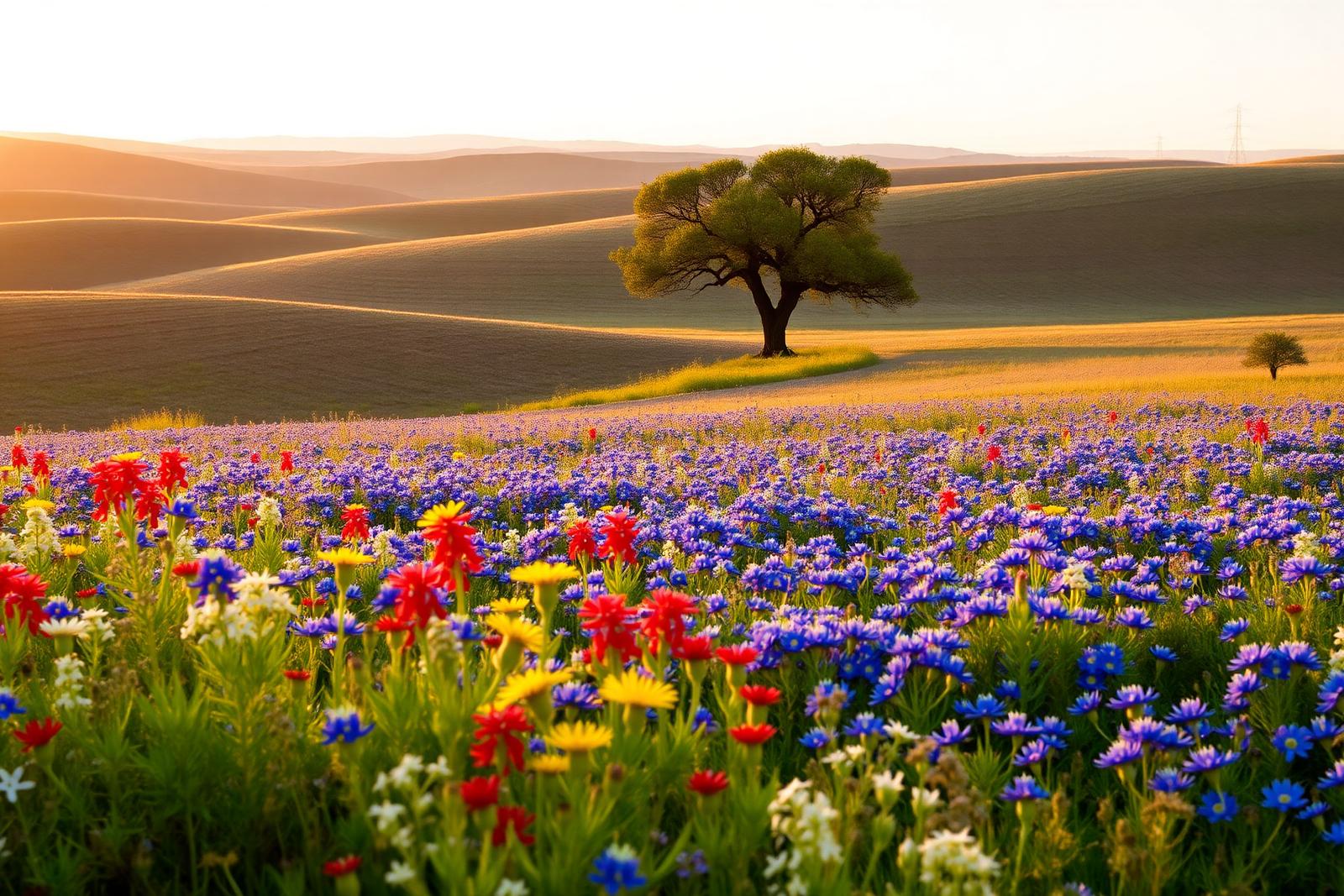
- Bluebonnet photos are a seasonal ritual.
- The State Fair has a 55-foot cowboy mascot.
- County courthouse squares anchor many small towns.
- Tex-Mex is its own cuisine, not simply Mexican food with cheese.
- Friday-night football traditions can organize entire weekends.
- The Gulf Coast and West Texas can feel worlds apart.
- Roadside barbecue and gas-station food can be serious destinations.
- Major cities contain strong regional and immigrant food cultures.
- Long-distance driving is treated as normal.
- Texas history is unusually present in public identity.
Texas difference is usually a combination, not a single novelty
Many individual Texas traits exist elsewhere: barbecue, rodeos, county government, oil production, bilingual communities and high-school football are not exclusive to one state. What feels distinctive is the way those systems overlap across a very large geography with a strong public memory of the Republic era and a visible state identity.
That combination is why a courthouse square, ranch road, breakfast taco shop, energy landscape and football stadium can all feel like parts of the same story without being reducible to one stereotype. Texas identity is broad enough to include border culture, Black Texas history, German and Czech settlement, Gulf Coast trade, East Texas Southern traditions and western ranching history.
County geography explains more than visitors expect
Texas has 254 counties, and county seats remain an important layer of civic geography. Historic courthouses anchor many downtowns, and the Texas Historical Commission describes them as major community assets tied to civic activity, history and culture. Driving through county seats can therefore reveal settlement patterns and local identity that interstate exits miss.
The same scale shapes politics, roads, water, school systems and emergency planning. A statewide statement can be technically true while daily life differs sharply between El Paso, Houston, the Panhandle and the Rio Grande Valley. Good Texas explanations keep that regional variation visible.
The useful question is why the pattern exists
Rather than collecting oddities, ask what created them. Immigration shaped food and language. Railroads and cattle routes shaped towns. Oil and gas changed cities and rural landscapes. Military installations influenced whole regions. River systems, drought and storms still shape where people live and how communities prepare.
That approach makes Texas feel less like a collection of slogans and more like a place whose modern habits can be traced to geography, institutions and history.
Official symbols show how deliberately Texas names its identity
The Texas State Library and Archives Commission maintains the official list of state symbols and the legislative resolutions behind them. The list reaches far beyond the flag and bluebonnet into foods, animals, music, plants, sports and cultural designations. That does not mean every symbol is equally important in daily life; it shows that Texans have repeatedly used the legislative process to attach public meaning to recognizable pieces of the state's landscape and culture.
Place designations work the same way. Communities have been formally recognized for particular industries, foods, wildlife, history and traditions. Those labels are most useful when they lead to the local story behind them rather than becoming trivia. A visitor who sees a designation should ask what museum, festival, landscape, business tradition or historic site explains why the title exists.
Courthouse towns make civic history visible on an ordinary road trip
Texas courthouses are unusually useful travel landmarks because many towns grew around them. The Texas Historical Commission's courthouse program describes these buildings as long-standing centers of public and business life, and restored courthouses remain anchors for downtown streets, festivals and community events. That makes a county-seat stop a practical way to see architecture, government and local identity in the same place.
This is also why Texas can feel decentralized despite its strong statewide brand. County seats, school districts, river authorities, regional economies and distinct metro areas all create layers of local identity. The state-wide symbols are real, but so are the differences between the Valley, El Paso, East Texas, the High Plains, the Gulf and Central Texas.
What is actually different and what is just a stereotype?
A useful test is whether the pattern can be tied to a real institution, landscape or historical pathway. The county system is measurable. The Republic era is documented. State symbols have legislative records. Barbecue and foodways have regional histories. By contrast, claims that every Texan dresses, votes, eats or talks the same way collapse as soon as the state is examined region by region.
The strongest Texas stories therefore explain causes and variation. They show why a pattern developed, where it is strongest, who shaped it and how it changed. That is more durable than a list of exaggerated quirks and gives readers a framework they can use when they encounter a new town, tradition or landscape.
Another useful difference is how often statewide identity and local identity coexist without cancelling one another. A resident can strongly identify with the Valley, East Texas, the Panhandle, El Paso or a particular county and still use the same state symbols and historical vocabulary as someone hundreds of miles away. That layered identity is more revealing than any claim that Texas has one uniform culture, because it explains how recognizable statewide habits persist across very different landscapes and communities.
Primary source: Texas State Library and Archives Commission — State Symbols ↗
Plan Your Visit
Places connected to this story
Destinations explicitly tied to this article in the Texas Defined guide.
Fredericksburg · Gillespie County
Fredericksburg
Fredericksburg is a German-Texan Hill Country destination built around a walkable historic core, museums, independent shops and restaurants, with Texas Wine Country and major outdoor stops close enough to turn a downtown visit into a full weekend.
Best season: Fall through spring for walking Main Street and outdoor side trips; spring wildflower season and holiday weekends are especially popular and can be crowdedUpdated Sep 2026- Fredericksburg Historic District
- National Museum of the Pacific War
- Pioneer Museum

From the magazine
More stories to read next
The Texas Guidebook
Texas Wine Country: Regions, Vineyards and Planning a Wine Weekend
October 12, 2026 · About 8 minutes
The Texas Guidebook
Newman's Castle in Bellville: The Baker, the Moat and His Family's Legacy
October 11, 2026 · About 15 minutes

