
Skip to content

Casting technique

How to Fish Crankbaits in Texas

A crankbait is a hard-bodied moving lure designed to swim, wobble or vibrate through a specific part of the water column. The practical question is not simply whether to throw one, but which style reaches the cover, depth and speed you need without spending the whole retrieve above or below the fish.

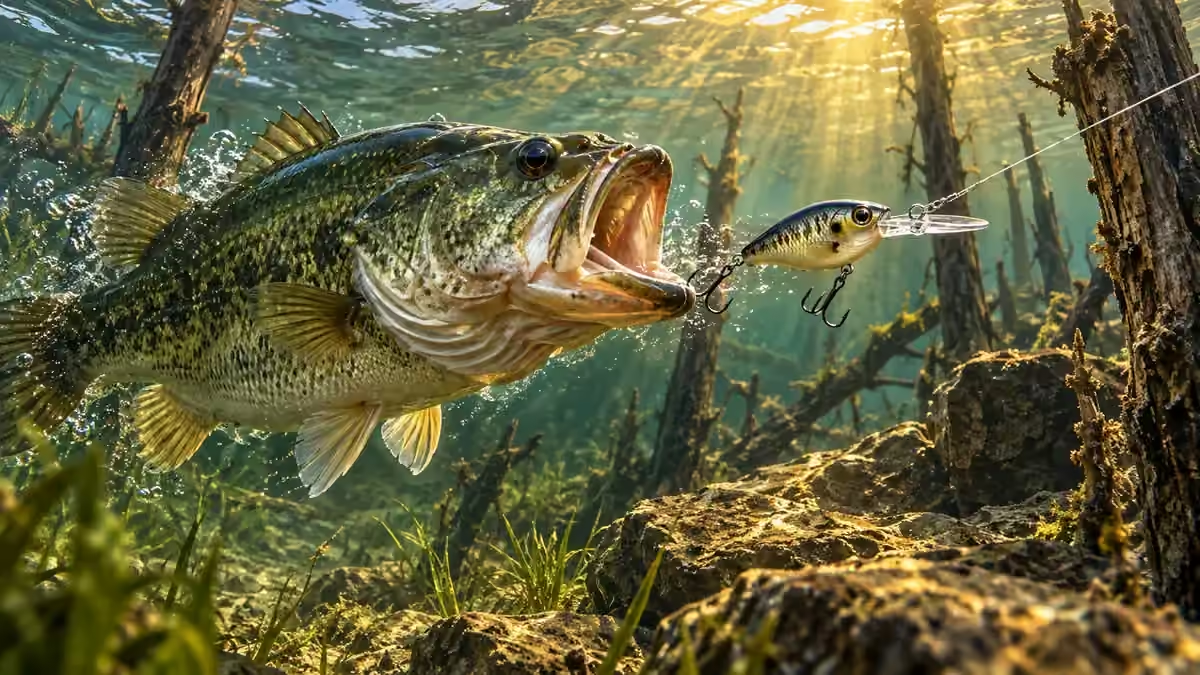
Largemouth bass approaching a diving crankbait around submerged timber and rock
AI-generated editorial illustration by Texas Defined using OpenAI image generation. Representative crankbait fishing scene; not a photograph of a specific Texas lake or catch.

Lake guides

60

Lake-linked species

7

Species documented in this method’s linked lake records

Seasonal scope

All year

This method has a year-round lake record, not a daily catch forecast

A Texas example from the source record

What Lake Texoma Tells Us

What Texas Parks & Wildlife documents

TPWD describes crankbaits along rocky shorelines in fall and deeper-diving crankbaits around offshore structure when bass move away from shore.

Read the TPWD reservoir guide ↗

How to use that information

A shallow-running lure and a deep diver are not interchangeable just because both are called crankbaits. Choose a running range that reaches the structure without constantly hanging up.

Lure labels give approximate running depth, not a measurement of where fish are on a specific trip.

Compare two actual Texas waters

Rocky shoreline or offshore structure? Change the running depth

The same lure category serves two different parts of a reservoir. The depth you can repeatedly reach matters more than a one-size-fits-all crankbait.

Lake Texoma

Documented by TPWD: TPWD recommends working crankbaits near brush and rocky shorelines in fall for largemouth and spotted bass. When bass move offshore as water warms, deeper-diving crankbaits are one option near submerged structure.

Planning decision: Start shallower when contacting a rocky bank in fall, then select a suitable deeper runner only after identifying an offshore target.
Canyon Lake

Documented by TPWD: TPWD names main-lake points, rocky shores and flooded timber as places where anglers work crankbaits on Canyon Lake.

Planning decision: Cast along a point or rock transition, but change line angle or choose another presentation before a deep-diving bait repeatedly hangs in timber.

What changes your first cast?

Match the lure's actual running zone to the target; note where it first contacts cover and whether that contact is useful or only fouling the hooks.

TPWD does not supply a universal diving-depth chart. Cast length, line and lure design alter the depth you actually reach.

Texas Defined editorial analysis based on linked Texas Parks & Wildlife reservoir guides. These are comparisons of published fishery descriptions, not firsthand trip reports or evidence of today's catch. TPWD pages reviewed 2026-11-13; the date is not a current fishing report.

When to use

When to Use Crankbaits

When you need to cover water and find active fish rather than soak one spot.

When bass are relating to riprap, points, timber, vegetation edges, channel swings or other repeatable structure.

When baitfish or crawfish are moving and a reaction presentation can imitate that movement.

When wind or stained water makes a moving bait easier for fish to locate.

Choose the setup

Crankbait Types by Depth and Cover

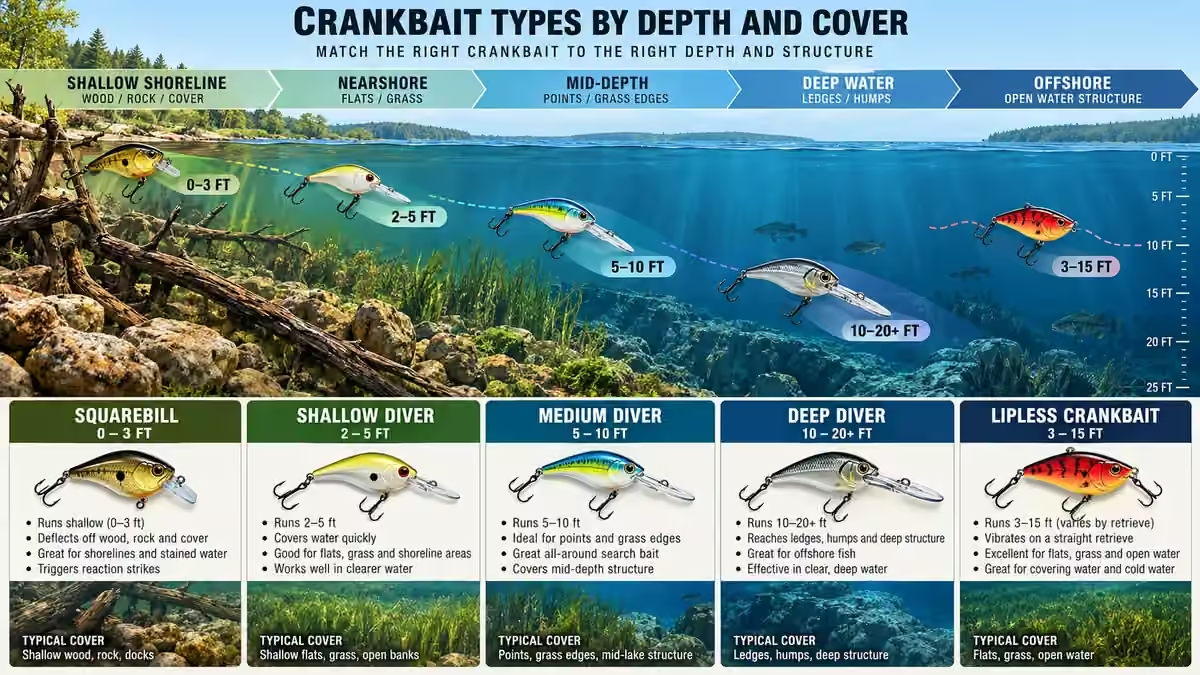
Running depth is the first decision. Pick the lure that can actually reach the zone you are trying to fish; color and finish come after depth, cover and retrieve speed.

Crankbait depth-and-cover guide showing squarebill, shallow-diving, medium-diving, deep-diving and lipless crankbait zones
AI-generated educational illustration by Texas Defined using OpenAI image generation. Use the depth ranges as a guide; actual running depth varies by lure design, line diameter, cast length and retrieve speed.
SquarebillShallowShallow wood, rock, docks and deflection fishing
Shallow diverShallowBanks, riprap and shallow points
Medium diverMid-depthPoints, grass edges and channel transitions
Deep diverDeepLedges, humps, roadbeds and offshore structure
Lipless crankbaitVariableFlats, grass and covering open water

Zone 1

Surface / very shallow

Zone 2

Shallow

Zone 3

Mid-depth

Zone 4

Deep

On the water

Choose crankbait depth by actual contact

Published dive ranges are approximations affected by cast length, line and retrieve. Start with the situation that matches your water, then make one adjustment at a time.

Shallow wood or rock

Start: A buoyant squarebill that deflects off cover

Adjust: Pause briefly after contact, then resume

Watch for: Repeated dredging through snags is not productive deflection

Mid-depth points

Start: A lure rated to reach the target zone

Adjust: Adjust cast angle and retrieve speed first

Watch for: Running-depth labels are not sonar measurements

Deep ledges

Start: A deeper diver where water depth and route make it practical

Adjust: Change lure or presentation when line angle prevents contact

Watch for: Avoid submerged timber and navigation hazards

Where to fish

Where to Fish Crankbaits

  1. Squarebills around shallow wood, riprap, docks and other deflection targets.
  2. Medium divers along points, creek-channel edges and the outside edge of vegetation.
  3. Deep divers across ledges, roadbeds, humps and offshore structure when fish are deeper.
  4. Lipless crankbaits over flats, through sparse grass and across broad areas where fish may be roaming.

How to fish

How to Fish Crankbaits

  1. Choose a bait that reaches the target zone, then make the lure contact or narrowly clear the structure you are trying to fish.
  2. Use a steady retrieve as the baseline, then test speed changes, brief pauses and direction changes when fish follow without committing.
  3. Let squarebills deflect off cover instead of steering them through open water whenever the cover allows it.
  4. With lipless crankbaits around vegetation, a pull-and-release or rip-and-fall retrieve can help the lure break free and trigger reaction strikes.

Target differences

Where Crankbaits Fit Best

This section describes how anglers may apply the method to different fish. The source-backed lake connections counted above are limited to Guadalupe bass, Largemouth bass, Red drum, Smallmouth bass, Spotted bass, Walleye, White bass in the published database. A species discussed below is not automatically verified for every lake on this page.

Largemouth bass

Match running depth to shoreline cover, vegetation edges, points and offshore structure.

Smallmouth bass

Rock, bluffs and hard-bottom transitions are high-value crankbait situations where repeated bottom contact can matter.

White bass

Small crankbaits can fit schooling or river-run situations when baitfish-sized moving presentations match the forage.

Rod, reel, line and rigging

Basic Tackle and Rigging Setup

A moderate or moderate-fast rod helps keep treble-hooked fish pinned while still allowing accurate casts.
Line diameter affects running depth: thinner line generally lets a diving crankbait reach deeper than thicker line.
A reel in a moderate retrieve range is easier to control across multiple crankbait styles than an extremely fast reel.
Check treble hooks and split rings frequently because hard contact with rock, wood and fish can dull or damage them.

Seasonal guide

Season-by-Season Guide

Water temperature, wind, lake level and fish position change how a method works. Use the seasonal starting points below alongside current reports and local access conditions.

Spring

Shallow-to-medium runners and lipless baits can cover warming flats, secondary points and shoreline cover as fish move toward spawning areas.

Summer

Deeper-running crankbaits become more useful on points, ledges, creek channels and offshore structure, especially when fish leave the bank.

Fall

Follow baitfish movement. Flats, creek arms, riprap and wind-blown banks can all become efficient places to cover water with moving baits.

Winter

Slower retrieves, tighter wobble and repeated passes through high-percentage structure can matter more than simply covering maximum water.

Common mistakes

Common Mistakes to Avoid

  • Choosing a lure by color before choosing the correct running depth.
  • Fishing the bait through featureless water instead of deliberately contacting cover or structure.
  • Using one retrieve speed all day even when water temperature, wind and fish activity change.
  • Ignoring hook condition after repeated contact with rock, timber or shell.

Verified lake coverage

Texas Lakes Covered in This Guide

Start with these 3 Texas lake examples. Each links to water-specific target species and seasonal information. All 60 covered lakes are listed below; check local access, fishing rules and recent reports before traveling.

Browse all Texas fishing lake guides → to compare additional waters.

Browse all 60 lakes for crankbaits (alphabetical)

Choose a lake to see its species, seasonal information and access notes. The presence of a method here is not a prediction of current fishing conditions.

Current conditions

Check Current Conditions Before You Fish

Before fishing with crankbaits, check your setup and the conditions on the water.

  • Check the depth of the point, ledge or shoreline cover you intend to work; select a diving range that actually reaches it.
  • Review water clarity and wind before choosing a tight wobble, broad wobble or lipless presentation.
  • Confirm lake level and submerged-hazard conditions so deliberate bottom contact does not become an avoidable snag or boating risk.

Review dated fishing reports and archives, bait and fishing regulations, weather, access and water conditions before a trip.

Keep exploring

Compare presentations that solve a nearby problem instead of treating one technique as the answer for every depth, cover type or fish position.

Practical questions

Crankbaits Questions, Answered

How do I choose crankbait depth?

Start with the depth of the cover or structure you need to reach. A crankbait is most useful when it can contact or narrowly clear the target zone for a meaningful portion of the retrieve.

Why does line size matter with crankbaits?

Line diameter changes resistance and can affect how deeply a diving lure runs, so the same crankbait may not reach the same depth on every setup.

When should I use a lipless crankbait?

Lipless crankbaits are useful for covering flats, fishing over or through sparse vegetation and reaching variable depths by changing retrieve speed and sink time.

Sources

Sources and Verification

Compiled by the Texas Defined editorial team from cited TPWD reservoir descriptions and the linked fishing lake records. The original comparisons distinguish published findings from editorial interpretation and practical planning advice. They are not independent field tests, proof of an active bite, or a substitute for current regulations and notices. Each lake guide retains its own source trail. Read our editorial policy, source methodology or request a correction.