Skip to content

Casting technique

How to Fish Topwater in Texas

Topwater fishing keeps the lure on or near the surface and is most effective when fish are willing to feed upward.

Several topwater popper fishing lures arranged together for surface fishing
Topwater popper lures. Kevin Behrendt / Wikimedia Commons · CC BY-SA 4.0. · Photo source · License terms

Lake guides

54

Lake-linked species

6

Species documented in this method’s linked lake records

Seasonal scope

All year

This method has a year-round lake record, not a daily catch forecast

A Texas example from the source record

What Canyon Lake Tells Us

What Texas Parks & Wildlife documents

TPWD lists early morning and evening topwater opportunities for largemouth bass and notes that cloudy conditions can extend surface activity.

Read the TPWD reservoir guide ↗

How to use that information

Start with light, shade and surface activity. A walking bait can cover open water; a popper lets you slow down beside a point or target. If fish stop rising, switch depth rather than extending a dead surface pattern.

Cloud cover and time of day are clues, not guarantees; check wind, water conditions and actual fish activity.

Compare two actual Texas waters

Canyon's open rock and Rayburn's cover change the surface plan

A surface strike is an opportunity, not a year-round guarantee. Start with light, cover and visible feeding rather than a fixed topwater schedule.

Canyon Lake

Documented by TPWD: TPWD describes early-morning and evening topwater fishing for largemouth bass, with the possibility of longer surface activity on cloudy days. The lake has no aquatic vegetation listed.

Planning decision: Try a walking bait along a rocky point or a popper held near an isolated target when fish can see the surface presentation.
Sam Rayburn Reservoir

Documented by TPWD: TPWD highlights summer low-light topwater opportunities; after sunrise, bass often move toward vegetation edges, brush piles, deeper ledges and channels.

Planning decision: Fish a reachable edge at first light, then change depth or use a weedless presentation instead of continuing a surface retrieve over inactive water.

What changes your first cast?

When fish miss the bait, pause and try a changed cadence once. When surface feeding stops, inspect the next depth band before swapping colors.

Cloud cover and low light are habitat clues, not current conditions. Canyon Lake's TPWD profile also carries a fish-consumption advisory and zebra-mussel warning: check those notices separately.

Texas Defined editorial analysis based on linked Texas Parks & Wildlife reservoir guides. These are comparisons of published fishery descriptions, not firsthand trip reports or evidence of today's catch. TPWD pages reviewed 2026-11-13; the date is not a current fishing report.

When to use

When to Use Topwater

Low light, cloud cover and schooling activity.

Warm-water periods when fish are shallow.

Around vegetation, points and flooded cover.

When baitfish are visibly being chased near the surface.

Choose the setup

Choose the Surface Presentation

Topwater styles solve different problems. Match the lure to cover, wave action, forage and how much movement you want in one spot.

Walking baitSurfaceOpen water, points, schooling fish and covering broad areas
PopperSurfaceTargets, pauses, calm pockets and keeping a bait near one piece of cover
Buzzbait / plopper styleSurfaceCovering water around shallow cover and active fish
FrogSurface / vegetationMats, emergent vegetation and snag-prone shallow cover

Cadence at a glance

Topwater Cadence at a Glance

Topwater is not one retrieve. Use the lure style to decide whether the bait should travel continuously or spend more time beside one target.

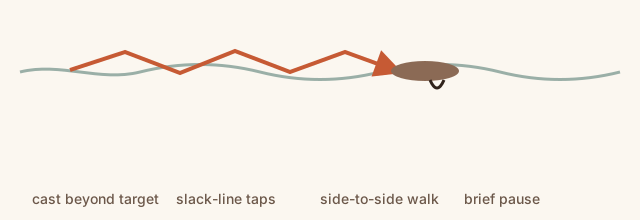
Walking bait
Walking topwater lure zig-zagging across the surface with a brief pause
cast beyond target
slack-line taps
side-to-side walk
brief pause

Use a repeatable rhythm, then change speed or pause length before changing lures.

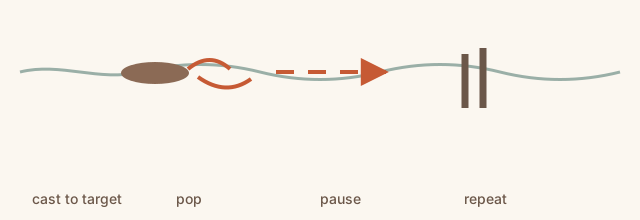
Popper
Popper moving in short surface bursts separated by pauses beside cover
cast to target
pop
pause
repeat

Longer pauses keep the lure beside isolated cover instead of racing it away.

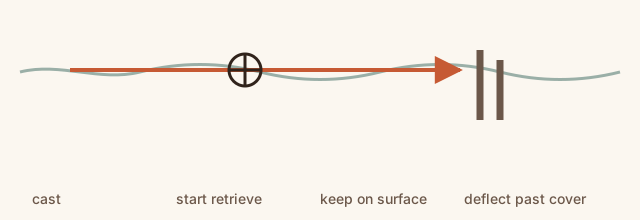
Buzzbait / plopper
Buzzbait or plopper moving steadily across the surface and past cover
cast
start retrieve
keep on surface
deflect past cover

A steadier retrieve is useful for covering water and finding active fish.

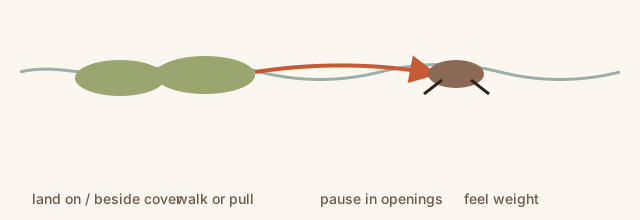
Frog
Topwater frog crossing vegetation and pausing in an opening
land on / beside cover
walk or pull
pause in openings
feel weight before hookset

Pause in high-value openings and avoid reacting only to the splash.

On the water

Surface lures by cover and strike behavior

Use surface chop, vegetation and fish response to decide on cadence. Start with the situation that matches your water, then make one adjustment at a time.

Open water activity

Start: A walking bait with a repeatable cadence

Adjust: Pause after a missed strike

Watch for: Set the hook on line pressure rather than the splash

Matted vegetation

Start: A weedless frog over openings and edges

Adjust: Pause in holes and maintain control of hooked fish

Watch for: Treble hooks snag dense grass

Calm pockets

Start: A popper worked at isolated targets

Adjust: Alternate subtle pops and extended pauses

Watch for: Continuous loud retrieves may move fish without hookups

Where to fish

Where to Fish Topwater

  1. Grass edges and open pockets.
  2. Points, seawalls and riprap.
  3. Shallow flats and creek mouths.
  4. Around schooling fish in open water.

How to fish

How to Fish Topwater

  1. Start with a deliberate cadence, then change speed before changing lures.
  2. Pause beside isolated cover where a fish has time to track the bait.
  3. For walking baits, keep slack in the line so the lure can turn side to side.
  4. Delay the hookset until you feel weight rather than reacting only to the splash.

Target differences

Topwater by Target

This section describes how anglers may apply the method to different fish. The source-backed lake connections counted above are limited to Guadalupe bass, Hybrid striped bass, Largemouth bass, Smallmouth bass, Striped bass, White bass in the published database. A species discussed below is not automatically verified for every lake on this page.

Largemouth bass

Focus on low-light shallows, vegetation edges, isolated cover and feeding lanes.

White, striped and hybrid bass

Surface-feeding schools can make topwater effective in open water, but move deeper when the fish stop feeding upward.

Smallmouth bass

Rocky points and clear-water structure can produce surface opportunities when fish are active and willing to rise.

Rod, reel, line and rigging

Basic Tackle and Rigging Setup

A rod with some tip flex helps cast and work surface lures.
Monofilament or braid can help keep the line near the surface depending on cover.
Use stronger tackle around heavy vegetation.
Inspect trebles because topwater fish often swipe rather than fully engulf the bait.

Seasonal guide

Season-by-Season Guide

Water temperature, wind, lake level and fish position change how a method works. Use the seasonal starting points below alongside current reports and local access conditions.

Spring

Becomes stronger as water warms and fish move shallow.

Summer

Early morning, evening and overcast periods often extend surface activity.

Fall

Schooling baitfish can create excellent open-water topwater opportunities.

Winter

Usually more situational; warm spells and active shallow fish can still create windows.

Common mistakes

Common Mistakes to Avoid

  • Setting the hook at the splash instead of after feeling the fish.
  • Working every lure at the same cadence.
  • Ignoring baitfish size.
  • Using surface presentations when fish are clearly feeding deeper.

Verified lake coverage

Texas Lakes Covered in This Guide

Start with these 5 Texas lake examples. Each links to water-specific target species and seasonal information. All 54 covered lakes are listed below; check local access, fishing rules and recent reports before traveling.

Browse all Texas fishing lake guides → to compare additional waters.

Browse all 54 lakes for topwater (alphabetical)

Choose a lake to see its species, seasonal information and access notes. The presence of a method here is not a prediction of current fishing conditions.

Current conditions

Check Current Conditions Before You Fish

Before fishing with topwater, check your setup and the conditions on the water.

  • Check surface chop, wind direction and safe access before choosing a popper, walking bait, frog or faster-moving surface lure.
  • Identify whether the intended area has open water, sparse cover or matted vegetation; each calls for a different surface presentation.
  • Treat dawn, dusk and seasonal patterns as planning clues, then confirm current fish activity rather than assuming a surface bite.

Review dated fishing reports and archives, bait and fishing regulations, weather, access and water conditions before a trip.

Keep exploring

Compare presentations that solve a nearby problem instead of treating one technique as the answer for every depth, cover type or fish position.

Practical questions

Topwater Questions, Answered

Why do I miss topwater strikes?

Setting the hook at the splash is a common cause. Wait until you feel the fish's weight before making a controlled hookset.

Is topwater only for early morning?

No. Low light is a common window, but cloud cover, wind, schooling activity and warm-water feeding can extend surface opportunities beyond dawn.

What should I change first when fish follow but do not strike?

Change cadence and pause length before abandoning the presentation. Speed and rhythm often matter as much as switching lure styles.

Sources

Sources and Verification

Compiled by the Texas Defined editorial team from cited TPWD reservoir descriptions and the linked fishing lake records. The original comparisons distinguish published findings from editorial interpretation and practical planning advice. They are not independent field tests, proof of an active bite, or a substitute for current regulations and notices. Each lake guide retains its own source trail. Read our editorial policy, source methodology or request a correction.