
Skip to content

Casting technique

How to Fish Spinnerbaits in Texas

Spinnerbaits combine flash, vibration and a single-hook profile that can move efficiently through shallow cover, vegetation and stained water.

Spinnerbait fishing lure with wire arm, blades, skirt and single hook
Spinnerbait fishing lure. E tac / Wikimedia Commons · CC0 1.0 public-domain dedication. · Photo source · License terms

Lake guides

58

Lake-linked species

2

Species documented in this method’s linked lake records

Seasonal scope

All year

This method has a year-round lake record, not a daily catch forecast

A Texas example from the source record

What Lake Fork Tells Us

What Texas Parks & Wildlife documents

TPWD identifies spinnerbaits among common spring bass lures along shoreline spawning areas at Lake Fork.

Read the TPWD reservoir guide ↗

How to use that information

Use that as a cover-and-season clue, not an instruction to throw the same spinnerbait everywhere. Adjust blade lift and weight so the bait travels beside the cover without rising out of the strike zone.

The TPWD example supports a general largemouth-bass use; it does not verify smallmouth or Guadalupe bass associations for every lake.

Compare two actual Texas waters

Lake Fork and Sam Rayburn: two reasons to cover shallow water

The fishing window is more specific than the name of the bait. Cover position and season determine whether a moving spinnerbait is a sensible first search lure.

Lake Fork

Documented by TPWD: TPWD includes spinnerbaits with shoreline lures used for largemouth bass during the spring spawning period, approximately mid-February through April.

Planning decision: Work identifiable shoreline cover with a lure that runs cleanly beside it; a wider, slow-turning blade can help keep track of the bait in stained water.
Sam Rayburn Reservoir

Documented by TPWD: TPWD says bass are generally more active for longer periods and nearer shallow water during fall, winter and spring, with spinnerbaits and crankbaits common choices.

Planning decision: Use the bait to test a shallow cover line, then switch position or presentation when fish retreat to vegetation, brush or deeper edges.

What changes your first cast?

Change one variable—blade lift, overall weight or retrieve speed—so the spinnerbait stays close to the cover you intended to fish.

These TPWD lake examples are not proof that every spinnerbait species listed elsewhere occurs in either reservoir or that bass are actively chasing today.

Texas Defined editorial analysis based on linked Texas Parks & Wildlife reservoir guides. These are comparisons of published fishery descriptions, not firsthand trip reports or evidence of today's catch. TPWD pages reviewed 2026-11-13; the date is not a current fishing report.

When to use

When to Use Spinnerbaits

Windy banks and low-light periods.

Stained water where vibration helps fish locate the bait.

Around shallow wood, grass and docks.

When baitfish are active and bass are willing to chase.

Choose the setup

Choose a Spinnerbait for Water and Cover

Blade shape, overall weight and retrieve speed change lift, vibration and flash. Pick the combination that stays in the target zone.

Colorado-heavy bladeShallow–midStained water, slower retrieves and situations where stronger vibration helps
Willow-heavy bladeShallow–midCovering water, baitfish profiles and faster retrieves
Tandem bladesShallow–midGeneral-purpose balance of flash, vibration and lift
Heavier slow-roll setupMid-depth–deepDeeper cover, ledges and keeping the bait down during a controlled retrieve

Retrieve at a glance

Spinnerbait Control at a Glance

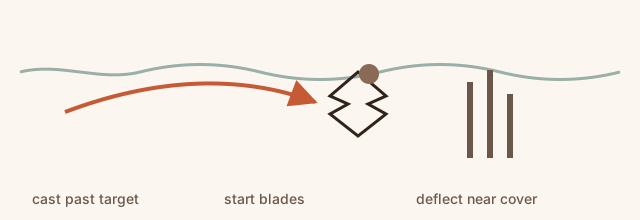
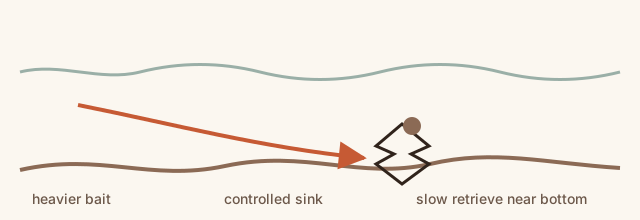
The same lure can occupy different parts of the water column by changing weight, blade lift and retrieve speed.

Shallow cover
Spinnerbait traveling just under the surface and deflecting beside shallow cover
cast past target
start blades
deflect near cover

Keep the bait close enough to wood, grass or docks to create a reaction opportunity.

Slow roll
Heavier spinnerbait sinking and moving slowly near the bottom
heavier bait
controlled sink
slow retrieve near bottom

Use enough weight to maintain depth without letting the lure simply drag or foul.

On the water

Spinnerbait choices by water visibility

Blade vibration, lure size and retrieve speed work together. Start with the situation that matches your water, then make one adjustment at a time.

Stained, windy water

Start: A vibration-forward blade choice run close to cover

Adjust: Slow down until blades turn consistently

Watch for: Too slow can stall blades

Vegetation and timber

Start: A single-hook spinnerbait cast past the target

Adjust: Raise the tip at contact and let the lure settle

Watch for: Grass fouling can feel like a strike

Clear, calm water

Start: A compact, subtle spinnerbait profile

Adjust: Make longer casts with less splashing

Watch for: Fish can follow without striking

Where to fish

Where to Fish Spinnerbaits

  1. Wind-blown shorelines.
  2. Standing timber and laydowns.
  3. Grass edges and flooded vegetation.
  4. Riprap, docks and shallow points.

How to fish

How to Fish Spinnerbaits

  1. Keep the bait close to cover rather than retrieving through empty water.
  2. Vary retrieve speed until the blades run at the depth fish are using.
  3. Let the lure fall beside isolated cover before starting the retrieve.
  4. Use occasional contact with grass or wood to create direction changes.

Target differences

Spinnerbait Targets: Documented and Other Possibilities

The lake-linked species count above comes from cited records. Smallmouth and Guadalupe bass notes below are general technique applications, not additional verified lake associations.

This section describes how anglers may apply the method to different fish. The source-backed lake connections counted above are limited to Largemouth bass, Spotted bass in the published database. A species discussed below is not automatically verified for every lake on this page.

Largemouth bass

Use the lure as a cover-oriented search bait around wood, grass, docks, riprap and wind-blown banks.

Smallmouth bass

On waters where they are present, spinnerbaits can cover wind-exposed rocky structure and points when fish are willing to chase.

Guadalupe bass

Compact spinnerbaits can be easier to control in current and around river cover where larger profiles become cumbersome.

Rod, reel, line and rigging

Basic Tackle and Rigging Setup

Medium-heavy casting tackle is common for cover-oriented fishing.
Match blade size to desired lift, vibration and retrieve speed.
Use heavier line around wood and dense vegetation.
Check the wire arm after hard strikes or snags.

Seasonal guide

Season-by-Season Guide

Water temperature, wind, lake level and fish position change how a method works. Use the seasonal starting points below alongside current reports and local access conditions.

Spring

Excellent around warming shallow cover and windy spawning-area transitions.

Summer

Early, late and windy periods can keep the bite shallow; deeper slow-rolling can extend the technique.

Fall

Follow shad into creeks and across wind-blown flats.

Winter

Slower retrieves and compact profiles can work when fish remain near shallow cover.

Common mistakes

Common Mistakes to Avoid

  • Retrieving too high above the cover.
  • Choosing blade combinations without considering water clarity.
  • Avoiding contact with cover completely.
  • Failing to retune a bent wire frame.

Verified lake coverage

Texas Lakes Covered in This Guide

Start with these 3 Texas lake examples. Each links to water-specific target species and seasonal information. All 58 covered lakes are listed below; check local access, fishing rules and recent reports before traveling.

Browse all Texas fishing lake guides → to compare additional waters.

Browse all 58 lakes for spinnerbaits (alphabetical)

Choose a lake to see its species, seasonal information and access notes. The presence of a method here is not a prediction of current fishing conditions.

Current conditions

Check Current Conditions Before You Fish

Before fishing with spinnerbaits, check your setup and the conditions on the water.

  • Check wind exposure, visibility and shallow cover before picking a blade profile for lift, flash or vibration.
  • Compare the fish-holding depth with the bait's running depth; a fast retrieve can keep an otherwise suitable lure above the target.
  • Check grass growth, floating debris and local access so a cover-oriented retrieve remains practical.

Review dated fishing reports and archives, bait and fishing regulations, weather, access and water conditions before a trip.

Keep exploring

Compare presentations that solve a nearby problem instead of treating one technique as the answer for every depth, cover type or fish position.

Practical questions

Spinnerbaits Questions, Answered

When are spinnerbaits strongest?

They are especially useful around wind, low light, stained water and shallow cover when fish are willing to chase a moving bait.

Should a spinnerbait hit cover?

Controlled contact and deflection can be useful. The goal is not to snag repeatedly, but avoiding every piece of cover can keep the lure away from the highest-value strike zones.

How do blade styles change the presentation?

Broader blades generally create more lift and vibration, while narrower blades tend to create less lift and can be easier to retrieve faster or deeper.

Sources

Sources and Verification

Compiled by the Texas Defined editorial team from cited TPWD reservoir descriptions and the linked fishing lake records. The original comparisons distinguish published findings from editorial interpretation and practical planning advice. They are not independent field tests, proof of an active bite, or a substitute for current regulations and notices. Each lake guide retains its own source trail. Read our editorial policy, source methodology or request a correction.