Skip to content

Casting technique

How to Fish Soft Plastics in Texas

Soft plastics are one of the most adaptable ways to fish Texas bass water because the same bait family can be rigged weedless, weightless, on a jig head or on specialized rigs from inches of water to deep offshore structure. The key is choosing the rig for the cover, depth and mood of the fish before worrying about color.

Soft-plastic twister-tail fishing lure rigged on a jig head for casting
Soft-plastic twister lure. George Chernilevsky / Wikimedia Commons · public domain. · Photo source · License terms

Lake guides

71

Lake-linked species

4

Species documented in this method’s linked lake records

Seasonal scope

All year

This method has a year-round lake record, not a daily catch forecast

A Texas example from the source record

What Sam Rayburn Reservoir Tells Us

What Texas Parks & Wildlife documents

TPWD describes summer bass concentrating near vegetation edges, brush and deep ledges, where plastic worms and Carolina rigs are established options.

Read the TPWD reservoir guide ↗

How to use that information

That changes the first question from 'Which color?' to 'Can this rig reach the cover without fouling?' A weedless Texas rig makes sense around vegetation; a Carolina rig can search a broader ledge.

This is a seasonal habitat example, not evidence that a particular rig is producing fish there today.

Compare two actual Texas waters

A worm on Rayburn is not the same job as a worm on Canyon

Both reservoirs support soft-plastic presentations, but the structure and water clarity lead to different first casts.

Sam Rayburn Reservoir

Documented by TPWD: TPWD places many summer bass around vegetation edges, man-made brush, deeper ledges and creek channels. It lists plastic worms and Carolina rigs among the usual tactics.

Planning decision: Start with a protected-hook worm around vegetation or brush; consider a Carolina rig to cover an open ledge after locating fish.
Canyon Lake

Documented by TPWD: TPWD describes a mostly rocky, clear-to-slightly-stained highland reservoir with no aquatic vegetation listed. Soft-plastic worms, grubs and soft jerkbaits are popular; light spinning tackle is suggested for clear main-lake water.

Planning decision: Consider a smaller, more controlled finesse presentation around a point or rocky drop instead of automatically using a heavy grass rig.

What changes your first cast?

Ask which cover you need to pass through, and whether the fish are near the bottom or suspended. Rig choice follows that answer—not the brand or color of the plastic.

Neither TPWD lake profile verifies a present-day bite, an exact lure weight or the success of any particular cast.

Texas Defined editorial analysis based on linked Texas Parks & Wildlife reservoir guides. These are comparisons of published fishery descriptions, not firsthand trip reports or evidence of today's catch. TPWD pages reviewed 2026-11-13; the date is not a current fishing report.

When to use

When to Use Soft Plastics

When bass are holding tightly to vegetation, timber, docks, brush or other cover.

When pressured or inactive fish are refusing faster-moving reaction baits.

When you need precise depth control from a shallow weightless fall to deep bottom contact.

When you want to keep one presentation in a small strike zone instead of covering water quickly.

Choose the setup

Choose the Soft-Plastic Rig for the Job

Start with cover and depth. A weedless Texas rig is the broad all-purpose choice, while weightless, Carolina, drop-shot, shaky-head and Ned presentations solve more specific problems.

Texas rigShallow–deepVegetation, brush, timber, docks and other snag-prone cover
Weightless stick baitShallowDock shade, shallow cover, calm pockets and pressured fish
Carolina rigMid-depth–deepPoints, flats, roadbeds and broad bottom structure
Drop shotMid-depth–deepClear water, suspended fish, vertical targets and pressured fish
Shaky headBottomRock, points, sparse cover and difficult bottom-oriented bites
Ned rigShallow–deepRock, gravel, open bottom and highly pressured fish

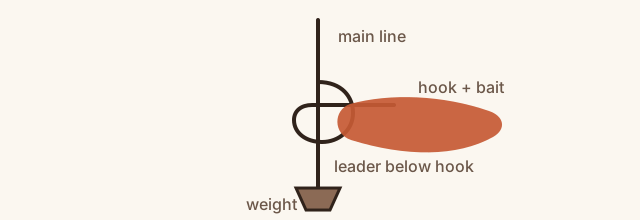
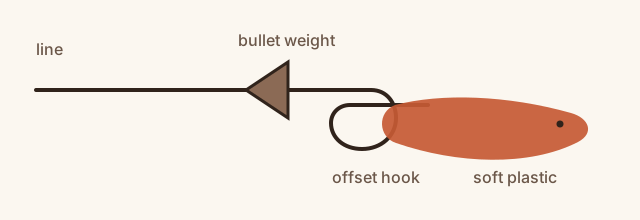
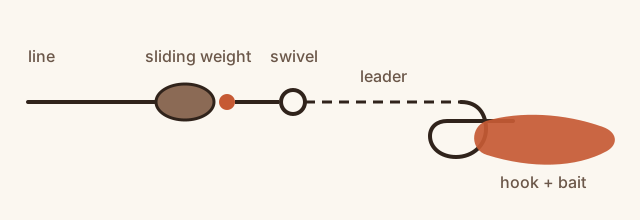
Rigging at a glance

Recognize the Basic Layout Before You Tie It

These are simplified orientation diagrams, not scale drawings. Hook style, leader length, sinker shape and exact placement should still match the cover, bait and water you are fishing.

Texas rig
Texas rig with line, bullet weight, offset hook and soft plastic worm
line
bullet weight
offset hook
soft plastic
Carolina rig
Carolina rig with sliding weight, swivel, leader, hook and soft plastic bait
line
sliding weight
swivel
leader
hook + bait
Drop shot
Drop shot rig with hook and bait suspended above a weight
main line
hook + bait
leader below hook
weight
Wacky rig
Wacky rig with a center hook through a stick bait
line
center hook
stick bait

On the water

Match the soft-plastic rig to cover

Choose hook exposure and fall speed for the actual cover rather than defaulting to one rig. Start with the situation that matches your water, then make one adjustment at a time.

Brush, timber or grass

Start: A Texas-rigged worm or creature bait with protected hook point

Adjust: Use the lightest weight that still reaches the target

Watch for: Excess weight can bury the hook in debris

Clear or pressured water

Start: A finesse worm on a drop shot, shaky head or wacky rig

Adjust: Lengthen pauses and reduce profile before constantly moving

Watch for: Exposed hooks snag easily in dense timber

Points and ledges

Start: A bottom-contact plastic crawled through changes in bottom texture

Adjust: Change cast angle and fall rate if strikes come on the descent

Watch for: Track depth and submerged hazards

Where to fish

Where to Fish Soft Plastics

  1. Hydrilla edges, reeds, flooded grass and openings in submerged vegetation.
  2. Dock shade, pilings, laydowns, brush piles and standing timber.
  3. Rocky points, creek-channel bends, roadbeds, humps and other offshore structure.
  4. Shallow spawning cover in spring and the first deeper transition water nearby.

How to fish

How to Fish Soft Plastics

  1. Cast past the target, let the bait fall on a controlled semi-slack line and watch for a twitch, sudden slack or sideways movement before it reaches bottom.
  2. Once the bait settles, use a short hop, slow drag or subtle shake, then pause. Soft plastics often work because they stay in the strike zone longer.
  3. Match sinker weight to depth, wind and the fall rate you want. Use the lightest weight that still gives reliable control and bottom or cover contact.
  4. When a bite feels different, reel down to remove slack, confirm pressure and use a controlled hookset suited to the hook and tackle.

Target differences

Match the Plastic to the Fish and Cover

Soft plastics span several Texas black-bass fisheries, but the cover and presentation should drive the rig.

This section describes how anglers may apply the method to different fish. The source-backed lake connections counted above are limited to Guadalupe bass, Largemouth bass, Smallmouth bass, Spotted bass in the published database. A species discussed below is not automatically verified for every lake on this page.

Largemouth bass

Use weedless rigs around grass, wood, docks and brush; move to finesse or offshore rigs when fish leave shallow cover.

Smallmouth bass

Prioritize rock, points and clearer water with compact bottom or finesse presentations.

Guadalupe bass

In river-oriented habitat, favor compact presentations that can be controlled around current, rock and woody cover.

Rod, reel, line and rigging

Basic Tackle and Rigging Setup

A medium to medium-heavy spinning or casting rod covers many Texas bass applications; move heavier around dense vegetation, timber and thick brush.
Use hook style and size that match the bait body and rig. Offset or extra-wide-gap hooks are common for weedless rigs; exposed hooks fit many finesse presentations.
Choose line for the cover and water clarity. Abrasion resistance matters around rock and timber, while low-visibility leaders can help in clear water.
Check the bait after every fish or snag. A torn plastic that slides down the hook, spins or no longer sits straight should be re-rigged.

Seasonal guide

Season-by-Season Guide

Water temperature, wind, lake level and fish position change how a method works. Use the seasonal starting points below alongside current reports and local access conditions.

Spring

Work warming pockets, secondary points, protected spawning areas and nearby cover. Weightless stick baits, Texas-rigged creatures and finesse worms are versatile as bass move shallow.

Summer

Split the day between shade and depth. Fish docks, vegetation and low-light shallows early, then move toward deeper points, brush, creek-channel edges and offshore structure.

Fall

Follow forage into creek arms and transition zones. Faster soft jerkbaits and swimbaits can cover water, while Texas rigs and finesse baits stay useful around isolated cover.

Winter

Slow the presentation and stay near stable structure. Shaky heads, drop shots, compact bottom baits and slow Texas rigs keep the lure in the strike zone longer.

Common mistakes

Common Mistakes to Avoid

  • Fishing too fast and never allowing the bait to pause naturally.
  • Using more sinker weight than the depth, wind or cover actually requires.
  • Watching the rod instead of the line during the fall, when many soft-plastic bites occur.
  • Using the same rig everywhere instead of changing hook, weight and presentation for grass, wood, rock, docks or open water.
  • Setting the hook on slack line instead of reeling down first.
  • Continuing to fish a torn or twisted plastic that no longer tracks correctly.

Verified lake coverage

Texas Lakes Covered in This Guide

Start with these 3 Texas lake examples. Each links to water-specific target species and seasonal information. All 71 covered lakes are listed below; check local access, fishing rules and recent reports before traveling.

Browse all Texas fishing lake guides → to compare additional waters.

Browse all 71 lakes for soft plastics (alphabetical)

Choose a lake to see its species, seasonal information and access notes. The presence of a method here is not a prediction of current fishing conditions.

Current conditions

Check Current Conditions Before You Fish

Before fishing with soft plastics, check your setup and the conditions on the water.

  • Identify the cover you will fish—vegetation, docks, timber, rock or offshore structure—before selecting a weedless or finesse rig.
  • Check wind and depth to determine whether a weightless fall can be controlled or a sinker is needed.
  • Use the lake's current conditions and access report to choose reachable, legal fishing areas rather than assuming an old seasonal pattern is active.

Review dated fishing reports and archives, bait and fishing regulations, weather, access and water conditions before a trip.

Keep exploring

Compare presentations that solve a nearby problem instead of treating one technique as the answer for every depth, cover type or fish position.

Practical questions

Soft Plastics Questions, Answered

What is the most versatile soft-plastic rig in Texas?

A Texas rig is the broad all-purpose starting point because it can be fished from shallow cover to deeper structure and can be made relatively snag resistant.

How heavy should the sinker be?

Use the lightest weight that still gives reliable control in the depth, wind and cover you are fishing. More weight is not automatically better.

When should I switch to a finesse rig?

Finesse presentations become useful when fish are pressured, inactive, holding in clear water or positioned where a slower, more precise bait is easier to keep in the strike zone.

Sources

Sources and Verification

Compiled by the Texas Defined editorial team from cited TPWD reservoir descriptions and the linked fishing lake records. The original comparisons distinguish published findings from editorial interpretation and practical planning advice. They are not independent field tests, proof of an active bite, or a substitute for current regulations and notices. Each lake guide retains its own source trail. Read our editorial policy, source methodology or request a correction.